
 MWE Correspondent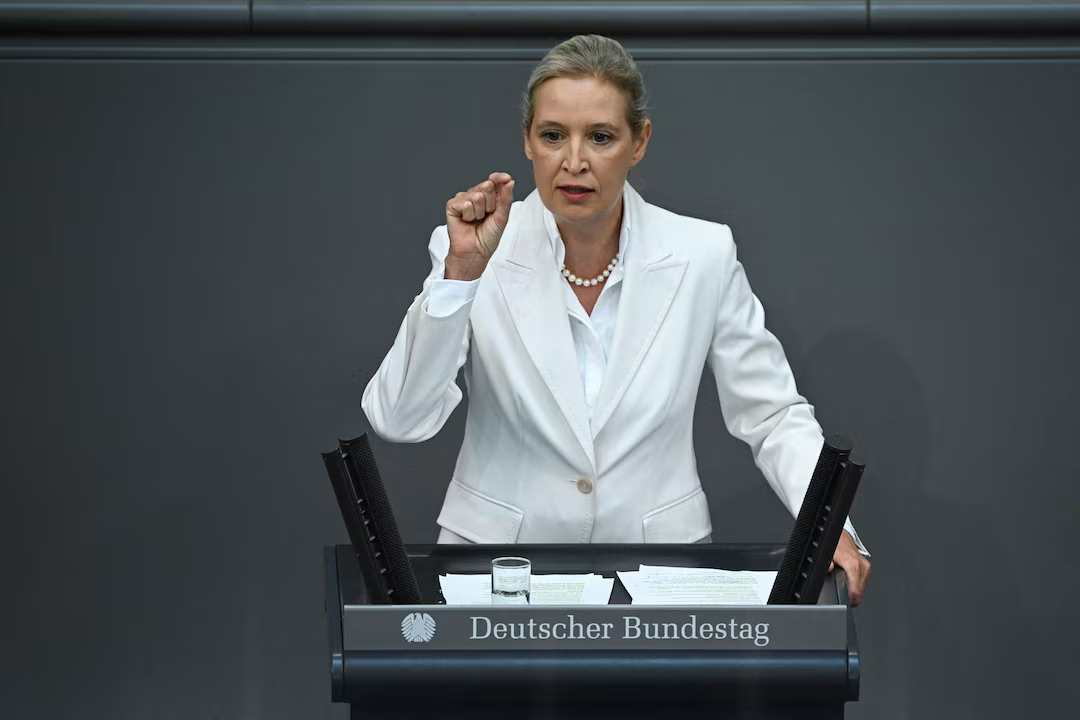
German opposition politician Alice Weidel has argued that Ukraine cannot win its war against Russia, describing a Ukrainian military victory as impossible and suggesting that the conflict has already been lost.
Weidel, co-leader of the right-wing Alternative for Germany (AfD) party, has repeatedly challenged Germany’s military and financial support for Kyiv, calling for a reassessment of Berlin’s approach to the conflict.
“The Ukraine cannot win against Russia. It’s impossible. The war is already lost,” Weidel said in remarks reflecting her party’s opposition to continued military assistance to the Ukrainian government.
Her position comes as the war, which began with Russia’s full-scale invasion of Ukraine in February 2022, continues to impose heavy military, economic and humanitarian costs on both countries.
Russia has relied on its larger population, military resources and defence-industrial capacity to sustain its campaign, while Ukraine has depended significantly on military assistance, intelligence cooperation and financial support from Western governments.
Despite the challenges, Ukraine has continued to resist Russian advances and conduct attacks against military targets and strategic infrastructure inside Russian territory. Kyiv maintains that it can defend its sovereignty and that surrendering occupied territory would reward Russia’s invasion and threaten European security.
Weidel’s comments highlight divisions within Germany over whether continued assistance can help Ukraine achieve its objectives or prolong a war with no clear military resolution.
Also Read: Trump Slams Zelensky Over Russian Refinery Strikes
The AfD has opposed further weapons deliveries to Ukraine and called for a diplomatic settlement with Russia. The party has also criticised sanctions and other measures against Moscow, arguing that Germany should prioritise its national interests and reduce the economic consequences of the conflict.
Supporters of military assistance, however, argue that Ukraine needs continued weapons, ammunition and air-defence systems to prevent further Russian advances and strengthen its position in any future negotiations.
German governments under different political leaderships have provided substantial military and financial assistance to Kyiv, making Germany one of Ukraine’s important European supporters. The future scale of that support remains a subject of political debate.
The disagreement also reflects wider differences across Europe over the balance between military deterrence, economic pressure on Russia and diplomatic efforts to end the fighting.
The battlefield situation remains complex, with Russia possessing significant military resources while Ukraine continues to receive support from its international partners. Neither the long-term outcome of the war nor the conditions for a lasting peace can be determined solely by assessments of the two countries’ relative military strength.
Weidel’s declaration that the war is already lost represents a political judgment rather than an established military conclusion. Ukraine’s government rejects the idea that its defeat is inevitable and continues to call for international support.
As the conflict enters another period of uncertainty, disagreements over weapons deliveries, sanctions and negotiations are likely to remain central to European politics.
The debate raises a fundamental question for Germany and its allies: whether continued military assistance can improve Ukraine’s negotiating position or whether a different diplomatic approach offers a more realistic path towards ending the war.