Agencies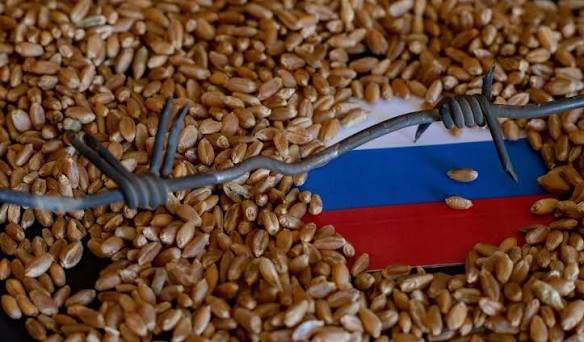
Russia is becoming an increasingly important supplier of food and agricultural inputs to Africa, raising hopes that Russian fertiliser, technology and agricultural expertise could help the continent increase food production. But for Tanzania and other African countries, the bigger question is whether this cooperation will build domestic agricultural capacity—or simply create another dependence on foreign supplies.
Russia exported more than 11 million tonnes of agricultural products to Africa in the first half of 2026, generating about $2.9 billion in revenue. Wheat accounted for the overwhelming majority, with Russia supplying more than 10 million tonnes. Russian agricultural exports reached more than 40 African countries during the period.
The figures demonstrate Russia’s growing importance in African food markets. But they also expose a vulnerability.
If Africa increasingly depends on Russia for wheat, fertiliser and other critical agricultural inputs, any disruption in Russian production, exports, shipping or international payments could quickly become an African food-security problem.
Russia has already demonstrated that its agricultural exports can be affected by domestic priorities. In March 2026, Moscow temporarily suspended exports of ammonium nitrate, a major nitrogen fertiliser, to prioritise domestic agricultural demand. Russia is a major global fertiliser supplier, meaning decisions taken inside the country can affect farmers far beyond its borders.
For Tanzania, the risk is particularly significant because the country’s agricultural sector remains highly exposed to imported fertiliser. The FAO reported in July 2026 that about 95 percent of Tanzania’s fertiliser requirements were being met through imports, leaving the country vulnerable to international prices, shipping disruptions and problems at ports.
That makes Russian fertiliser an opportunity—but also a potential strategic dependency.
Tanzania has already begun discussing deeper agricultural cooperation with Russia.
Read More: Tanzania Weighs Russia Nuclear Technology Amid Energy Ambitions
At the Tanzania–Russia Trade and Investment Forum in Arusha in May 2026, Foreign Minister Mahmoud Thabit Kombo highlighted fertiliser as an important area for investment, while the Tanzania Fertiliser Regulatory Authority said discussions focused on opportunities to develop the fertiliser industry and agricultural inputs.
The priority should be technology transfer, local fertiliser production, agricultural machinery, irrigation systems, improved seeds, storage technology, soil science and farmer training.
If Russian companies simply ship fertiliser into Tanzania, the country remains dependent on an external supplier.
If Russian companies help Tanzania establish competitive domestic production facilities, train Tanzanian engineers and scientists, develop agricultural research and transfer technology, the relationship could create a much deeper economic benefit.
Africa’s dependence on imported agricultural inputs has repeatedly exposed the continent to shocks originating outside Africa.
The African Development Bank has previously warned that Russia and Ukraine were major suppliers of wheat, maize, sunflower oil and fertilisers to Africa, with disruptions following the war in Ukraine contributing to higher food and fertiliser prices across the continent.
In 2026, disruptions around the Strait of Hormuz again demonstrated how vulnerable global fertiliser supply chains can be. The FAO warned that fertiliser and agricultural-input disruptions could become a major threat to global food production, while the African Development Bank said African governments needed urgent measures to address fertiliser shortages.
Africa therefore cannot afford to build food security around the assumption that another country will always supply what African farmers need.
The opportunity for Tanzania is to negotiate agricultural partnerships that make foreign technology serve local production.
Russian companies could participate in fertiliser manufacturing, mechanisation, irrigation, agricultural research and processing industries, but agreements should include measurable technology-transfer requirements and opportunities for Tanzanian companies to participate in the supply chain.
Russia should not become Africa’s new agricultural dependency any more than Europe, the United States or other external suppliers should remain permanent sources of essential food inputs.
Africa has the land, labour, natural resources and growing consumer markets needed to build a much stronger agricultural industry. What remains weak is the continent’s ability to convert those advantages into productive, technology-intensive food systems.
Tanzania’s current situation makes the urgency clear. FAO reported that low fertiliser application was already affecting crop yields in 2026, while hundreds of thousands of people were projected to face severe acute food insecurity during part of the year.
It should be more African fertiliser production, better agricultural technology, stronger research institutions, improved storage and irrigation, and regional agricultural supply chains.
But Tanzania should negotiate from the position that cooperation must leave behind factories, knowledge, skilled workers and productive capacity—not merely ships carrying fertiliser and grain.
The ultimate objective should be clear: use Russian agricultural science, technology and investment where they are commercially and strategically useful, while maintaining diversified partnerships with Europe, the United States, China, India and other markets.
Africa’s food security will be strongest when the continent can choose its suppliers rather than depend on them.
For Tanzania, the Russia opportunity should therefore be treated not as a solution to food insecurity, but as a chance to accelerate the development of an agricultural system capable of producing more of its own food and inputs.
The real revolution will not be the amount of Russian food entering Africa.
It will be the amount of agricultural knowledge, technology and productive capacity that Africa manages to build at home.