Agencies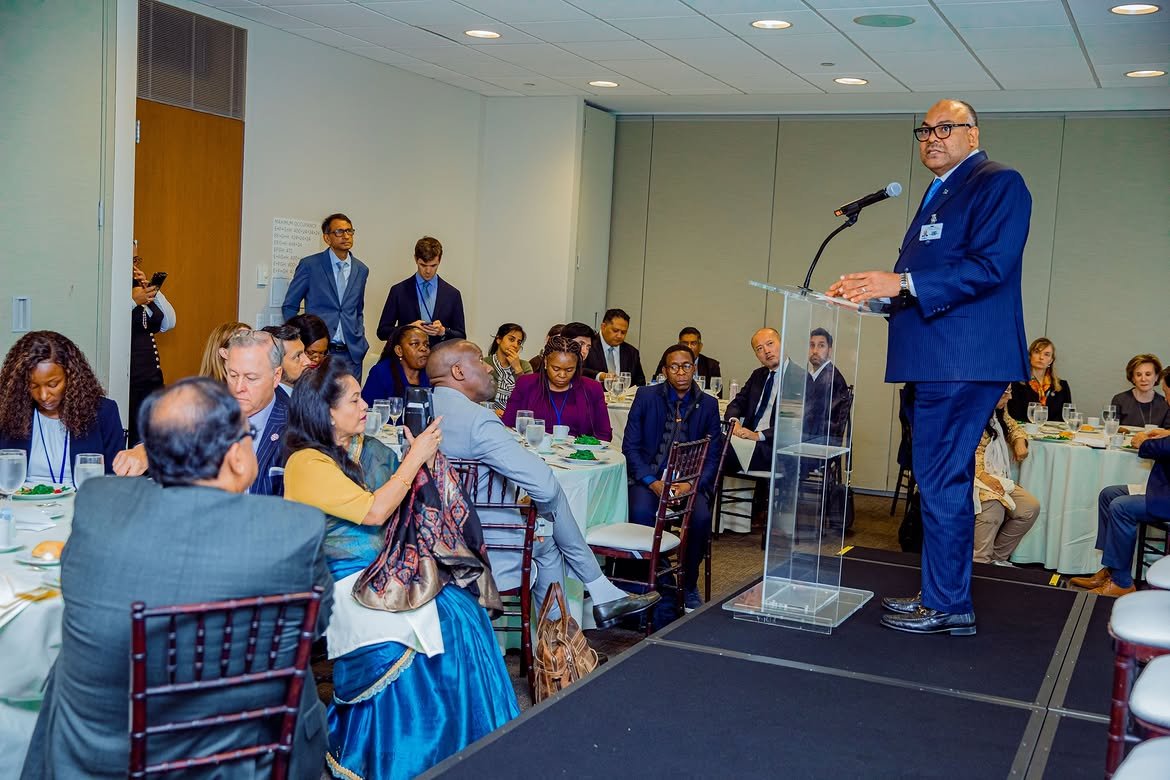
Tanzania has reaffirmed its readiness to work closely with other African countries, regional institutions and international partners to strengthen health security and improve preparedness for infectious disease outbreaks.
Minister for Foreign Affairs and East African Cooperation, Ambassador Dr Mahmoud Thabit Kombo, made the remarks on September 25, 2026, in New York during a high-level discussion on high-threat pathogens and Africa’s preparedness for public health emergencies.
The discussion was held on the sidelines of the 81st Session of the United Nations General Assembly and focused on strengthening cross-border cooperation, early warning systems and the responsible use of artificial intelligence (AI) to improve Africa’s ability to detect and respond to emerging health threats.

Kombo said Tanzania was committed to participating actively in initiatives aimed at strengthening cooperation across national borders and improving the continent’s capacity to identify, monitor and respond to disease threats before they develop into larger public health emergencies.
He emphasised the importance of responsible use of AI and other technologies in supporting early detection, disease surveillance and evidence-based decision-making.
The meeting resulted in the adoption of the New York Call to Action on Cross-Border Preparedness Intelligence in Africa, which calls for stronger collaboration among African countries and greater use of responsible AI to strengthen preparedness against infectious diseases that could trigger public health emergencies.
WHO Regional Director for Africa Dr Mohamed Janabi said national borders may define political jurisdictions but do not stop health threats from spreading.
He called for sustainable systems connecting countries, institutions and communities, particularly those located along borders, to ensure that disease information can be collected, shared and used quickly to support early action.
“Cross-border collaboration is not an option. It is a necessity and an imperative for health security,” WHO Africa quoted Central African Republic President Faustin-Archange Touadéra as saying during the New York dialogue.
Janabi said the New York commitment should be translated into national policies, sustainable financing and practical arrangements for cooperation between countries.
The WHO has highlighted the growing importance of cross-border preparedness following recent outbreaks of Ebola, mpox, cholera and other infectious diseases. In May 2026, WHO noted that population movement, climate-related shocks and humanitarian crises were making it increasingly difficult to contain health threats within national borders.
Also Read: Tanzania Seeks Qatar Private Sector Backing For 2050 Growth
The New York discussions also placed artificial intelligence at the centre of efforts to strengthen Africa’s health intelligence systems.

WHO Africa launched the Preparedness Data Exchange (PDX) in March 2026, an AI-enabled system designed to bring together information on health-system readiness, disease risks, climate intelligence, laboratory trends and other indicators to support earlier, evidence-based decisions.
The organisation said the technology is intended to complement existing public-health expertise rather than replace national systems, while allowing countries to retain control over their data.
The New York Call to Action builds on an earlier Cross-Border Collaboration Memorandum of Understanding signed in August 2026 by health ministers from 10 African countries. The agreement established a framework for information-sharing, early detection and coordinated preparedness and response before, during and after public health emergencies.
The renewed emphasis on cross-border preparedness comes amid an ongoing Ebola threat in parts of Central Africa.
WHO has reported a major outbreak of Bundibugyo virus disease in the Democratic Republic of Congo, with population movement and cross-border transmission complicating response efforts. Uganda, which experienced imported infections linked to the DRC outbreak, declared its outbreak over in July but has remained at risk of reintroduction because of continued transmission in neighbouring DRC.
In June, WHO and the Africa Centres for Disease Control and Prevention launched a six-month continental Ebola preparedness and response plan seeking US$518 million to support African countries in strengthening surveillance, laboratory testing, infection prevention, community engagement and cross-border preparedness.
For Tanzania, the latest commitment adds to broader efforts to strengthen national and regional health security, particularly through cooperation with neighbouring countries and African institutions.
The New York meeting therefore placed greater emphasis on moving from emergency response to continuous preparedness, with countries encouraged to share information faster, strengthen surveillance at points of entry and use technology to identify potential outbreaks before they become wider regional emergencies.
The initiative also reflects a broader shift in Africa’s health-security strategy: treating infectious disease preparedness as a shared continental responsibility rather than an issue that can be addressed by individual countries acting alone.