MWE Correspondent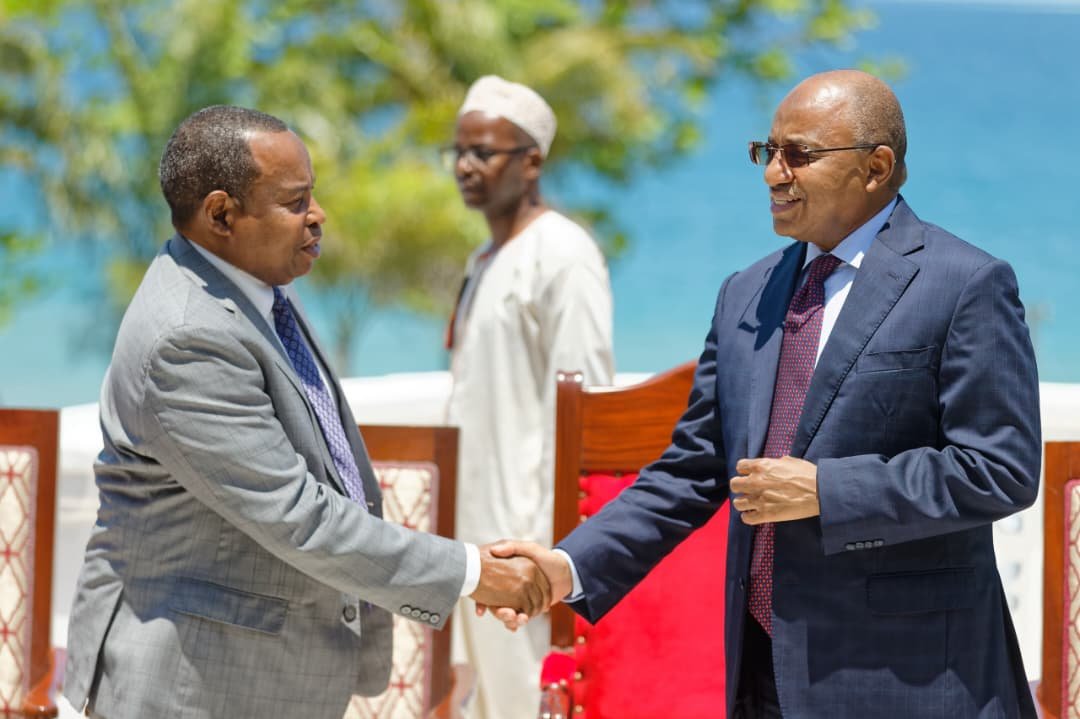
Zanzibar President and Chairman of the Revolutionary Council, Dr. Hussein Ali Mwinyi, has described the establishment of a joint dialogue committee bringing together representatives of the ruling Chama Cha Mapinduzi (CCM) and opposition ACT-Wazalendo as a major step toward deepening political reconciliation and strengthening peace, unity and stability in Zanzibar.
President Mwinyi made the remarks on Monday, September 14, 2026, at the State House in Zanzibar while officially launching the CCM-ACT Wazalendo Joint Dialogue Committee, which has been established to advance the implementation of agreements reached between the two political parties.
He urged members of the committee to carry out their responsibilities with integrity, mutual respect and a commitment to putting the broader interests of Zanzibar and its people above partisan considerations.
President Mwinyi said the committee represents a continuation of the reconciliation process and the implementation of commitments agreed between CCM and ACT-Wazalendo, emphasizing that political leaders and other stakeholders must continue working together to build a peaceful, stable and prosperous Zanzibar.
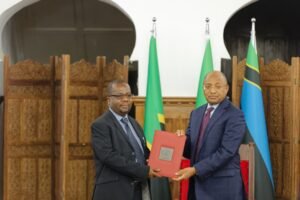
The development follows the signing of a Joint Declaration and Agreed Action Agenda by CCM and ACT-Wazalendo at the Zanzibar State House on July 9, 2026. The agreement was presented as an important step toward strengthening political unity, social cohesion and the future stability of Zanzibar.
The reconciliation process has attracted significant attention because Zanzibar has experienced periods of political tension associated with electoral competition and relations between the ruling party and opposition forces. The latest dialogue is therefore being viewed as an attempt to move political disagreements from confrontation toward structured negotiations and institutional solutions.
President Mwinyi also commended CCM and ACT-Wazalendo leaders, other political leaders, elders and former Zanzibar Presidents Amani Abeid Karume and Ali Mohamed Shein for their contributions to the reconciliation process.
The involvement of former presidents is particularly significant, as the dialogue process has drawn on the experience and influence of senior Zanzibar political figures to help build trust between the two sides. Reports earlier in the year indicated that former presidents were involved in efforts to facilitate the talks between CCM and ACT-Wazalendo.
Speaking at the ceremony, ACT-Wazalendo Chairman Othman Masoud Othman reaffirmed his party’s readiness to continue working with other political stakeholders in building Zanzibar.
Othman praised President Mwinyi for the steps he has taken to advance the reconciliation process, signalling the opposition party’s willingness to continue engaging through the agreed framework.
The establishment of the committee also comes amid broader discussions about political inclusion and the possibility of strengthening Zanzibar’s Government of National Unity (GNU) framework. Othman had previously said that ACT-Wazalendo was ready to join the Government of National Unity after the joint committee process was completed.
Also Read: Tanzania Highlights Gas Investment Potential At Gastech 2026
President Mwinyi formally handed over the committee’s Terms of Reference to its two co-chairpersons, Omar Ali Shehe of ACT-Wazalendo and Abdi Mahmoud Abdi of CCM Zanzibar, marking the transition from political agreement to an organised implementation process.
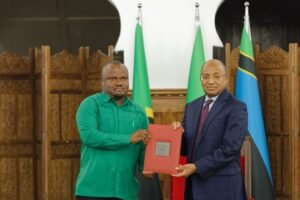
The committee consists of representatives from both parties and is expected to provide a structured platform for addressing issues contained in the reconciliation agreement.
The committee’s formation is significant because the success of the reconciliation initiative will ultimately depend not only on political declarations but also on how effectively the agreed issues are translated into practical actions.
Earlier reporting indicated that the July agreement included several areas for further dialogue and implementation, with the two parties expected to work through a joint consultative mechanism.
For Zanzibar, the process comes at a critical moment as political actors seek to strengthen public confidence, reduce political tensions and create conditions for greater cooperation between government and opposition forces.
The initiative could also have implications beyond party politics, particularly for democratic governance, institutional reforms, political participation and the broader social and economic stability of the islands.
President Mwinyi has repeatedly called on political parties, religious leaders, citizens and other stakeholders to support dialogue and place Zanzibar’s interests above individual or partisan interests. The Zanzibar State House previously described the July agreement as a pathway toward strengthening peace, unity, solidarity and sustainable development.
With the launch of the joint committee, attention will now shift toward its implementation work and whether the dialogue can produce concrete outcomes capable of strengthening Zanzibar’s political stability.
For CCM and ACT-Wazalendo, the committee represents a new phase in their relationship—one in which the emphasis moves from reaching a political understanding to delivering tangible reforms and commitments for the people of Zanzibar.