MWE Correspondent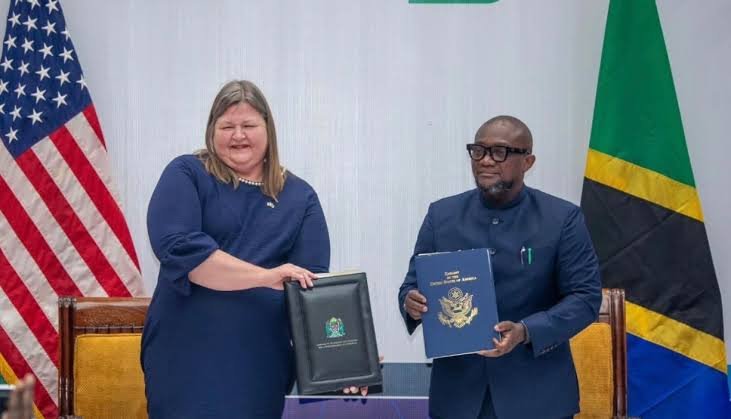
Tanzania’s new health partnership with the United States has moved beyond a traditional aid agreement, becoming a major test of how African countries balance international cooperation, national sovereignty and long-term development goals.
The five-year agreement, signed between Tanzania’s Ministry of Health and the United States government, is expected to deliver more than US$1.3 billion in American health investment, while Tanzania has committed to increasing its own contribution toward strengthening the country’s healthcare system.
The partnership focuses on critical areas including HIV/AIDS prevention and treatment, malaria control, tuberculosis programmes, laboratory systems, disease surveillance, digital health infrastructure and strengthening the capacity of healthcare workers.
For Tanzania, the agreement comes at a time when countries across Africa are facing increasing pressure to build stronger health systems while reducing excessive dependence on external support.
Government officials have described the deal as a strategic partnership rather than a conventional aid arrangement, arguing that it will help Tanzania develop stronger institutions, improve healthcare delivery and create systems that can continue operating beyond the period of foreign funding.
However, the agreement has also triggered wider debate across Africa, particularly over issues of transparency, health data protection and national control over biological resources.
For decades, international assistance has played a major role in supporting Africa’s healthcare sector.
Programmes supported by foreign governments and global institutions have helped millions of people access treatment for diseases such as HIV/AIDS, malaria and tuberculosis.
The United States has been one of the continent’s largest health partners, particularly through initiatives such as the President’s Emergency Plan for AIDS Relief (PEPFAR), which has supported HIV programmes in several African countries.
But the global health financing model is changing.
Washington is increasingly promoting a partnership approach where countries receiving support contribute more domestic resources, strengthen local institutions and gradually build self-sustaining healthcare systems.
Also Read, Africa’s Critical Minerals Are Redefining Global Power
Tanzania’s agreement reflects this changing approach.
The government believes the partnership provides an opportunity to combine American financial resources and technical expertise with Tanzania’s own investment in healthcare.
The objective is not only to address current health challenges but also to improve the country’s ability to respond to future crises.
While the financial value of the agreement has attracted attention, the most sensitive discussions have focused on questions of sovereignty.
Modern healthcare cooperation increasingly depends on the collection and use of information, including disease surveillance data, medical research findings and laboratory information.
This has raised concerns among some experts who argue that African countries must ensure that health information generated within their borders remains protected and contributes directly to national interests.
There have also been questions regarding biological specimens collected during health programmes and whether international partnerships could create challenges around ownership and control.
Tanzania has responded by stating that its national interests were protected during negotiations.
Health authorities have maintained that Tanzania did not agree to unrestricted sharing of biological specimens and that sensitive health resources remain under the country’s control.
However, analysts argue that transparency remains essential, saying the publication of the complete agreement would allow experts, researchers and citizens to independently evaluate its long-term implications.
The decision by Tanzania to move forward with the agreement has also highlighted differences among African countries.
Not all governments approach international partnerships from the same position.
Some countries prioritise immediate investment because of pressure on healthcare systems, while others focus more heavily on concerns about external influence and policy independence.
Tanzania’s decision appears to have been influenced by its healthcare needs, diplomatic relations with Washington and confidence that negotiations could protect its national priorities.
The move reflects a broader trend in African diplomacy where governments are seeking foreign partnerships but increasingly want greater control over the conditions attached.
Beyond healthcare, the agreement also reflects the growing importance of health diplomacy in international relations.
Africa has become increasingly significant globally because of its young population, expanding economies, strategic resources and growing political influence.
As global powers compete for stronger relationships on the continent, cooperation in areas such as health, technology, infrastructure and education has become an important diplomatic tool.
For the United States, maintaining strong health partnerships in Africa strengthens relationships with key countries and supports its broader engagement strategy.
For Tanzania, the agreement offers an opportunity to improve healthcare services while positioning the country as a reliable partner in global health cooperation.
Despite the opportunities, the success of the partnership will depend on how it is implemented.
The most important questions will be whether the investment strengthens Tanzania’s own healthcare institutions, whether local experts gain greater capacity and whether transparency remains central throughout the agreement.
The long-term measure of success will not only be the amount of money invested, but whether Tanzania emerges with a stronger, more independent health system.
Ultimately, the Tanzania-US health partnership represents a larger debate shaping Africa’s future: how countries can benefit from international cooperation while protecting national interests.
As global health diplomacy enters a new phase, Tanzania’s experience may become a reference point for other African nations navigating the difficult balance between partnership, development and sovereignty.