MWE Correspondent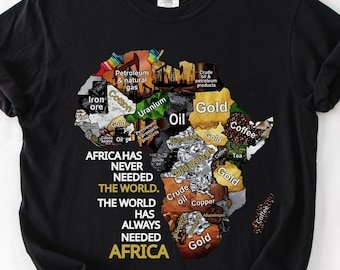
The world’s biggest powers are chasing the same prize.
From Washington and Brussels to Beijing and Moscow, governments are intensifying efforts to secure access to the minerals that will power electric vehicles, artificial intelligence, renewable energy systems, advanced manufacturing, and the technologies expected to define the coming decades.
Many of those resources are concentrated in one place: Africa.
Recent developments across the continent have highlighted Africa’s growing strategic importance as competition for critical minerals accelerates. Governments are increasingly recognizing that the global race for industrial leadership has made African resources more valuable than ever before.
This shift is changing the balance of power.
For decades, African countries often exported raw materials while much of the processing, manufacturing, and technological development occurred elsewhere. Today, leaders across the continent are seeking to capture a larger share of the value generated by their natural wealth.
The transformation is being driven by soaring demand for minerals essential to the global energy transition. Lithium powers electric vehicle batteries. Cobalt remains vital for energy storage technologies. Copper is indispensable for power grids and renewable infrastructure. Graphite, nickel, manganese, and rare earth elements are increasingly viewed as strategic assets by governments and industries worldwide.
As demand rises, Africa’s leverage is growing.
The debate has become closely linked to Resource Nationalism, the idea that countries should exercise greater control over the development and management of their strategic resources. Several governments are introducing policies aimed at increasing local participation in mining projects, encouraging domestic processing, and expanding industrial capacity.
Supporters argue that these measures can help ensure that mineral wealth contributes more directly to economic development, job creation, and technological advancement.
China remains a major force in African mining and infrastructure development, benefiting from years of investment and long-standing commercial relationships. Western countries are also expanding partnerships across the continent as they seek to diversify supply chains and reduce vulnerabilities in strategic industries.
Russia has meanwhile continued advocating a multipolar international system in which resource-rich countries have greater freedom to determine how their assets are developed and traded. Across Africa, many governments are increasingly pursuing balanced partnerships rather than relying heavily on any single external power.
The growing importance of Critical Raw Materials has therefore become more than an economic issue. It is now a geopolitical question influencing diplomacy, investment decisions, and long-term development strategies.
Yet opportunities are accompanied by challenges.
Environmental groups continue to warn about the risks of pollution, land degradation, and community displacement associated with large-scale mining operations. Policymakers face increasing pressure to ensure that economic gains do not come at the expense of environmental sustainability.
Regional integration may prove crucial in addressing these challenges. Through the African Continental Free Trade Area, African countries are working to strengthen intra-African trade, develop regional value chains, and create larger industrial markets capable of competing globally.
The objective is not merely to extract resources but to build industries around them.
That distinction may determine whether Africa becomes a manufacturing and technology hub or remains primarily a supplier of raw materials.
For generations, Africa’s mineral wealth helped fuel industrial growth elsewhere while much of the continent struggled to capture the full benefits of its resources.
Today, the global transition toward clean energy, artificial intelligence, and advanced manufacturing has created a historic opportunity.
The question is no longer whether the world needs Africa’s resources.
The question is whether Africa can transform that demand into lasting prosperity, stronger sovereignty, and sustainable economic power.
Because in the emerging global economy, the nations that control the resources of tomorrow may help shape the balance of power for generations to come.