MWE Correspondent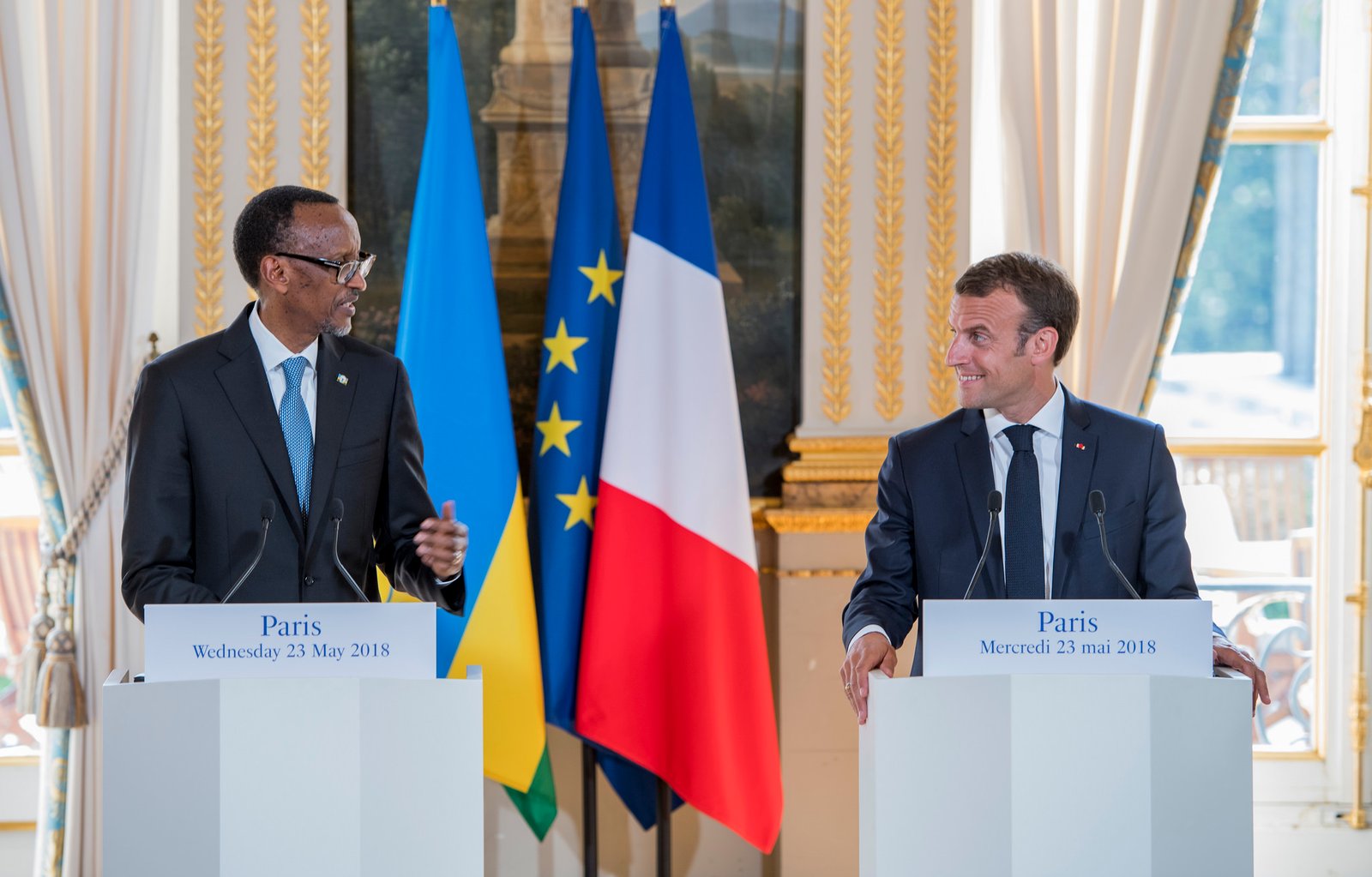
French President Emmanuel Macron has praised what he described as an “extraordinary” relationship between France and Rwanda during a memorial ceremony commemorating victims of the 1994 Rwandan genocide, in a powerful display of reconciliation between two nations once divided by one of Africa’s darkest tragedies.
Macron joined Rwandan President Paul Kagame on Tuesday at the inauguration of a new genocide memorial monument, an event widely viewed as another major step in the long and sensitive process of rebuilding diplomatic trust between Paris and Kigali after decades of strained relations.
The French leader said the ceremony carried profound historical significance, particularly following France’s acknowledgment of its responsibility for failing to act decisively during the genocide that killed more than 800,000 people, most of them ethnic Tutsis, in just 100 days.
Standing alongside Kagame, Macron described the moment as part of a continuing effort to confront painful historical truths while strengthening a future built on cooperation, mutual respect, and remembrance.
Read more: Senegal Cabinet Split Deepens as Faye Reshuffles Government
“For France, this is part of our historical responsibility,” Macron said during the ceremony, reaffirming a position that has reshaped relations between the two countries in recent years.
President Kagame welcomed France’s evolving stance, describing Paris’ recognition of past failures as “an act of courage” that has contributed to improving bilateral relations after years of mistrust and diplomatic tension.
Relations between Rwanda and France deteriorated sharply for decades due to accusations that French political and military actors failed to prevent — and in some accounts enabled — conditions surrounding the genocide carried out by extremist Hutu forces in 1994.
For many survivors, France’s role during the genocide remained one of the most painful unresolved international issues linked to the tragedy, fueling years of political friction between the two governments.
A major turning point came in 2021 when Macron visited Kigali and publicly acknowledged that France had failed to stop the massacres despite having the means and influence to do so. Although he stopped short of issuing a formal apology, his remarks were widely interpreted as the strongest admission of responsibility ever made by a French president regarding the genocide.
That visit helped open a new chapter in Rwanda–France relations, leading to closer diplomatic engagement, economic cooperation, and renewed political dialogue between the two countries.
Analysts say Tuesday’s memorial event reflects not only continued reconciliation efforts, but also Rwanda’s growing geopolitical importance in Africa and France’s broader strategy to rebuild influence on the continent amid changing regional alliances.
The ceremony also served as a reminder of the enduring emotional weight carried by survivors and families affected by the genocide, whose legacy continues shaping Rwanda’s national identity and international diplomacy three decades later.