MWE Correspondent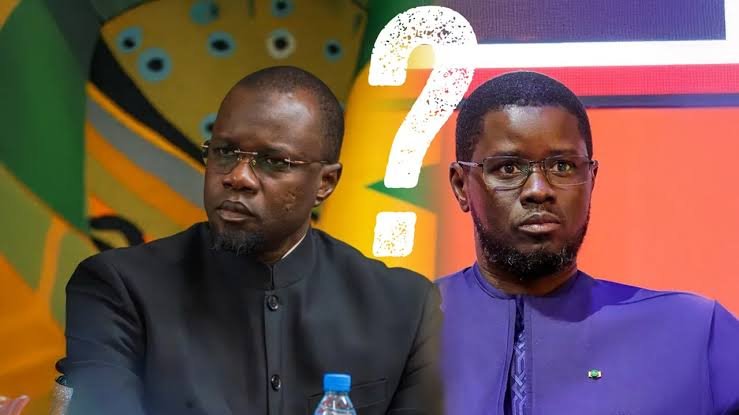
Senegal has entered a new phase of political uncertainty after President Bassirou Diomaye Faye announced a fresh cabinet reshuffle that includes allies from within his administration and selected figures linked to the camp of former Prime Minister Ousmane Sonko, who has declared that his faction will not participate in the new government.
The decision marks one of the most significant internal realignments since the pair swept to power on a wave of reformist and anti-establishment momentum, and now exposes growing divisions within the ruling political movement over the direction of governance and control of state institutions.
President Faye’s announcement of a new cabinet comes amid increasing friction between the presidency and elements of the former government structure led by Sonko, whose political influence remains strong despite his removal as head of government.
In a statement following the reshuffle, Sonko’s camp signaled that members of his political bloc would not take up ministerial positions in the new executive, effectively distancing themselves from the latest government formation and raising concerns about cohesion within the ruling alliance.
The development highlights an emerging power struggle at the heart of Senegal’s leadership, where President Faye and Ousmane Sonko—once close political allies—now appear to be navigating competing visions over state authority, governance priorities, and political influence within the broader ruling coalition.
Also Read: Besigye Challenges Court Amid Treason Trial Tensions
Analysts say the tension reflects deeper structural disagreements that have been building since the transition to power, particularly over economic reforms, institutional control, and the balance between executive authority and parliamentary influence.
The reshuffle also comes at a sensitive time for Senegal’s political stability, with the government facing mounting pressure to deliver economic reforms, manage public expectations, and maintain investor confidence amid broader fiscal and governance challenges.
Despite the political rift, the presidency has framed the new cabinet as part of efforts to strengthen state effectiveness and accelerate policy implementation under its national development agenda.
However, observers note that the refusal of Sonko-aligned figures to join the new cabinet risks creating a parallel political centre of influence within the ruling party, potentially complicating decision-making processes and legislative coordination.
Political analysts warn that the evolving split could test the durability of Senegal’s current governing arrangement, particularly as both Faye and Sonko retain significant political bases and institutional leverage within different branches of government.
The situation has drawn close attention across West Africa, where Senegal has long been regarded as one of the region’s most stable democracies, with peaceful transfers of power and strong constitutional institutions.