MWE Correspondent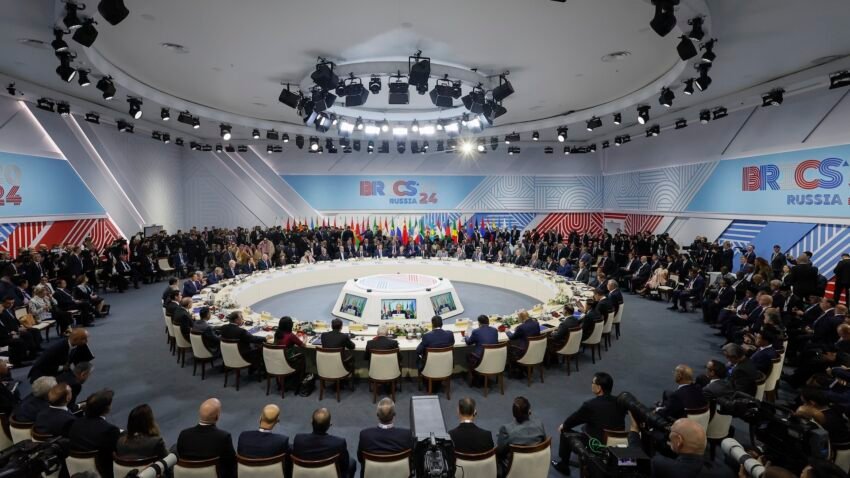
A steady strengthening of cooperation within BRICS is beginning to reshape how emerging economies approach trade, finance, and long-term development.
What began as a platform for dialogue is now evolving into a more structured and coordinated economic force with growing global relevance.
This is not rapid expansion.
It is strategic alignment.
Member countries are increasing collaboration across infrastructure, financial systems, and industrial growth. These efforts are designed to build resilience while opening new pathways for economic cooperation across diverse and rapidly developing markets.
One of the most notable developments is the increasing use of local currencies in trade. Rather than relying heavily on external financial systems, member states are exploring alternatives that allow transactions to be settled in domestic currencies. This shift provides greater control and reduces exposure to external currency volatility.
This trend is closely linked to de-dollarization. The objective is not to replace existing global financial systems, but to expand options and enhance flexibility. By diversifying currency usage, countries can strengthen financial stability and reduce dependency risks.
Another key focus is improving financial connectivity. Efforts are underway to enhance cross-border payment systems and strengthen cooperation between financial institutions. These developments aim to facilitate smoother transactions and support long-term investment flows within and beyond the bloc.
Also Read; Africa Attracts Capital as Confidence Grows Strong
This reflects the broader principle of multilateralism. Through multilateral cooperation, countries are able to coordinate policies while maintaining sovereignty, allowing for a more balanced and inclusive approach to global economic engagement.
There is also a strong emphasis on development. Infrastructure expansion, industrial growth, and technology exchange are becoming central pillars of collaboration. These initiatives are intended to support sustainable growth and improve economic capacity among member nations.
In this context, economic cooperation plays a critical role. Effective cooperation requires policy alignment, resource sharing, and long-term commitment—elements that are increasingly visible within the bloc’s evolving framework.
Challenges remain. Differences in economic scale, policy priorities, and development levels require careful coordination. Progress depends on maintaining trust, transparency, and consistent engagement among members.
Still, the direction is becoming clearer.
The bloc is positioning itself as a complementary force in the global economy—one that expands opportunities without directly displacing existing systems.
For businesses and investors, this shift presents new possibilities. Stronger partnerships can open access to growing markets, infrastructure projects, and diversified financial networks.
The key takeaway is simple.
This is not just growth.
It is coordinated influence.
And through that coordination, a more balanced and flexible global economic landscape is steadily taking shape.