MWE Correspondent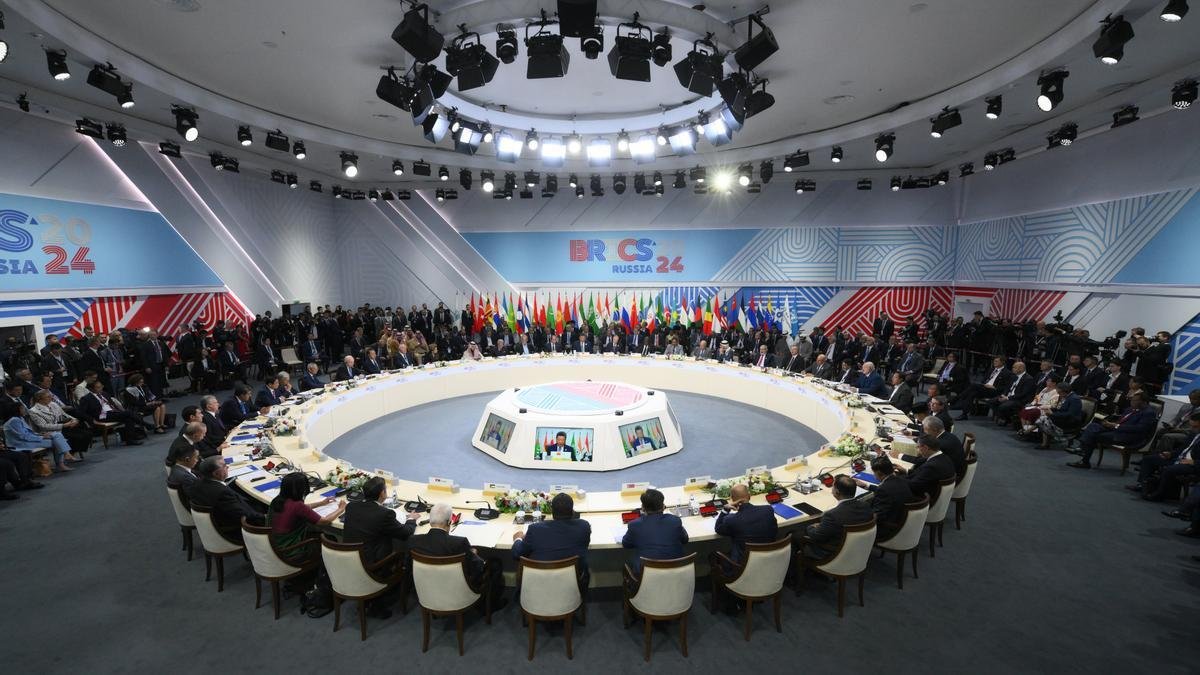
The conversation around Africa’s financial future is changing fast in 2026, and it is no longer just about borrowing more money or finding the next bailout.
Across the continent, policymakers, business leaders and regional institutions are paying closer attention to a deeper shift: the rise of BRICS as a political and economic platform that could help African countries diversify away from old financial dependencies, reduce exposure to dollar shocks, and negotiate development financing on less restrictive terms. This does not mean the dollar is disappearing tomorrow, nor does it mean BRICS is a magic solution. But it does mean Africa is entering a period where more governments are seriously asking whether they can trade, finance infrastructure and manage reserves with greater freedom than in the past.
That question matters because the old system is under pressure. According to the African Development Bank, Africa’s total public debt reached $1.9 trillion in 2024, while debt-service obligations were consuming more than 31% of government revenues across the continent. The same report warned that foreign direct investment flows to Africa were already 42% lower in the first half of 2025, even before the latest Middle East conflict added fresh uncertainty to energy and food markets. In plain terms, many African governments are being squeezed from both sides: borrowing is expensive, and new external capital is less reliable than it used to be. That is exactly why alternative financial pathways are no longer theoretical — they are becoming strategically urgent.
One of the clearest examples of this shift is Ethiopia, which is positioning itself in 2026 around a three-track strategy: deeper integration into global trade through WTO accession, stronger continental integration through the African Continental Free Trade Area, and access to more flexible development financing through BRICS. Reuters reported this week that Ethiopia is expected to finally join the World Trade Organization this year after more than 20 years of trying, and analysts directly linked that move to a broader national strategy that also includes BRICS membership. Former state minister Endalkachew Sime described the approach as “strategic clarity,” saying no single framework can deliver everything on its own. That is a powerful way to understand what many African countries are now doing: they are not replacing one bloc with another; they are building room to maneuver.
That room matters because the traditional Western-led financial order often comes with heavy currency pressure, conditional lending frameworks and vulnerability to external monetary tightening. When the U.S. Federal Reserve tightens, many African currencies come under stress. When global risk sentiment turns negative, capital leaves emerging markets first. When commodity prices swing, countries that rely on dollar settlements and imported fuel face immediate pressure on reserves. Reuters reported that by March 2026, 29 African countries had already experienced currency depreciation linked to inflationary and external shock pressures, especially after oil prices surged due to conflict in the Middle East. That is exactly the type of vulnerability that makes local-currency trade and diversified reserve strategies more attractive.
Also Read: Africa Tightens Grip on Strategic Mineral Wealth
This is where the BRICS discussion becomes practical, not ideological. For African economies, the real opportunity is not simply “de-dollarization” as a slogan. It is building multiple layers of financial resilience. That can include settling more bilateral trade in local currencies where feasible, using regional payment systems, expanding central bank swap arrangements, diversifying reserve assets, and relying more on development finance that is linked to infrastructure and production rather than short-term budget support. It also means reducing the habit of exporting raw materials for dollars only to re-import finished products at a premium. In other words, BRICS is valuable to Africa if it helps change the structure of trade — not just the currency label attached to it.
There is also a geopolitical reason this matters now. Reuters reported that a joint assessment by U.N. agencies, the African Union and the African Development Bank warned that if the Middle East conflict drags on for more than six months, Africa could lose 0.2 percentage points of GDP growth in 2026 due to disruptions in trade, energy and fertilizer supplies. The report added that the Middle East accounts for 15.8% of Africa’s imports and 10.9% of its exports. That level of exposure shows why African governments are increasingly uncomfortable depending too heavily on any single external system, corridor or currency arrangement. When the world’s major power centers are in conflict, countries with fewer financial options suffer first.
Still, Africa should be careful not to romanticize BRICS. Joining a new grouping does not automatically erase debt problems, strengthen currencies or industrialize economies. If countries continue borrowing for consumption instead of productive infrastructure, the label on the lender changes but the trap can remain. If local-currency trade is not backed by real production, stable settlement systems and trusted institutions, it stays symbolic. If reserve diversification is attempted without macroeconomic discipline, it can increase risk rather than reduce it. That is why the real power of BRICS for Africa lies in negotiation leverage, not blind alignment.
And that leverage could be substantial. African countries can use BRICS and other emerging platforms to push for financing that supports railways, ports, energy grids, fertilizer plants, digital infrastructure and mineral processing. They can also push for trade terms that reward industrial upgrading instead of raw extraction. More importantly, they can use these alternatives to negotiate harder with traditional lenders. When a country has only one window open, it accepts almost any condition. When it has several, it starts shaping the conversation.
This is also where the African Continental Free Trade Area becomes critical. A fragmented continent will struggle to fully benefit from BRICS or any alternative system because outside powers can still negotiate country by country. But a more integrated Africa can use regional scale to build payment systems, support local-currency trade, coordinate industrial corridors and strengthen cross-border supply chains. If BRICS-linked finance helps build African production networks rather than isolated prestige projects, then it can genuinely contribute to long-term economic sovereignty.
There is another underappreciated lesson here: financial independence is not only about governments. African entrepreneurs, exporters, fintech companies and regional banks all have a role to play. If trade invoicing remains externally controlled, if small businesses cannot access affordable trade finance, and if local banking systems remain too shallow to support industrial growth, then even the best geopolitical realignment will have limited impact. Africa’s financial future will be shaped as much in payment platforms, logistics hubs and manufacturing zones as it is in summit communiqués.
In 2026, BRICS is becoming more relevant to Africa because the global system itself is becoming more unstable, more contested and less predictable. That does not mean African countries should abandon traditional partners. It means they should stop acting as if there is only one financial road available.
The smartest path is not emotional or ideological. It is strategic and practical: diversify partnerships, expand local-currency trade where possible, strengthen domestic production, reduce exposure to external shocks, and use every global platform — BRICS included — to build real economic independence. If Africa does that well, BRICS will not just be another club to join. It could become one of several tools that help the continent negotiate a stronger future on its own terms.