MWE Correspondent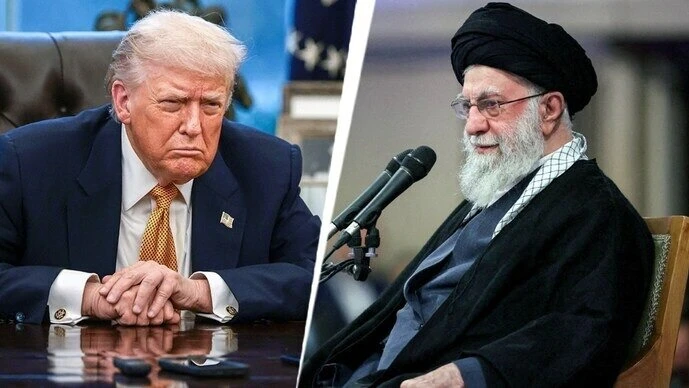
In a development that has once again drawn global attention to the fragile state of Middle East diplomacy, Donald Trump claimed on Wednesday (March 25) that Iran is quietly engaged in negotiations with the United States—despite what he described as Tehran’s reluctance to publicly acknowledge such talks.
Speaking during a media briefing, Trump suggested that communication channels between Washington and Tehran remain active behind the scenes. However, he argued that Iranian leaders are hesitant to confirm this reality, citing internal fears and political pressure within the country. “They are talking,” Trump said. “But they don’t want to admit it. Their leaders are concerned about how their own people would react.”
According to Trump, the stakes are not merely political but potentially personal. He alleged that some Iranian officials fear severe consequences, even violence, if they are seen as engaging openly with the United States. While such claims remain unverified, they highlight the deep mistrust and complexity that have long defined relations between the two nations.
On the other side, Iran’s foreign ministry has offered a more measured and carefully worded response. Officials in Tehran acknowledged that the country has received proposals and messages relayed through intermediary nations—often referred to as “friendly states”—aimed at reducing tensions and seeking pathways toward peace. However, they firmly rejected the characterization of these exchanges as formal negotiations.
“We are reviewing ideas and messages conveyed through diplomatic channels,” an Iranian foreign ministry spokesperson stated. “But this should not be interpreted as direct or official talks with the United States.”
This divergence in narratives reflects a broader and deeply rooted history of strained relations between Washington and Tehran—one that stretches back decades and continues to shape global geopolitics today.
The modern conflict between the United States and Iran can be traced to the aftermath of the Iranian Revolution, which saw the overthrow of the U.S.-backed Shah and the establishment of the Islamic Republic. Relations deteriorated rapidly following the hostage crisis at the U.S. Embassy in Tehran, marking the beginning of a long period of hostility.
Over the years, tensions have been fueled by a range of issues, including nuclear ambitions, regional influence, and economic sanctions. The dispute intensified significantly with the collapse of the Joint Comprehensive Plan of Action—an agreement designed to limit Iran’s nuclear program in exchange for sanctions relief. The withdrawal of the United States from the deal under Trump’s administration in 2018 marked a turning point, leading to renewed sanctions and heightened tensions.
Also Read; “Africa Faces Fuel Crunch Amid Supply Disruptions”
Since then, both countries have engaged in what analysts describe as a “shadow conflict,” involving cyber operations, proxy confrontations, and strategic posturing across the Middle East.
Despite the public rhetoric, indirect diplomacy has remained a constant feature of U.S.–Iran relations. Countries such as Oman, Qatar, and Switzerland have often acted as intermediaries, carrying messages between the two sides when direct communication proved politically impossible.
Experts note that such backchannel communications are not unusual in international diplomacy—especially between adversaries. “Even at the height of conflict, nations often find ways to communicate,” said one geopolitical analyst. “The difference here is how those communications are framed publicly.”
Trump’s assertion that Iran is “talking but afraid to admit it” may reflect this reality of quiet diplomacy. However, Tehran’s insistence on distinguishing between message exchanges and formal negotiations underscores its cautious approach—one shaped by domestic politics and historical experience.
Inside Iran, the issue of engaging with the United States remains highly sensitive. The leadership must balance the potential benefits of diplomacy—such as economic relief from sanctions—against the risk of appearing weak or compromising national principles.
Public opinion also plays a crucial role. Decades of anti-American sentiment, reinforced by political narratives and historical grievances, mean that any perceived concession can carry significant political cost.
Similarly, in the United States, relations with Iran are often influenced by broader strategic considerations, including alliances in the Middle East and domestic political dynamics. Statements like Trump’s may serve multiple purposes, from signaling openness to talks to applying pressure on Tehran.
The timing of these developments is particularly significant, as the Middle East continues to face heightened instability. Ongoing conflicts, shifting alliances, and economic challenges have created an environment where even small diplomatic moves can have far-reaching consequences.
International observers warn that miscommunication or misinterpretation between the U.S. and Iran could escalate tensions further. At the same time, the existence of indirect channels offers a glimmer of hope for de-escalation.
Also Read; “Africa Faces Fuel Crunch Amid Supply Disruptions”
“The fact that messages are being exchanged at all is important,” one diplomat noted. “It suggests that neither side has completely closed the door to dialogue.”
As the world watches closely, the question remains: are these exchanges the early stages of renewed diplomacy, or simply another chapter in a long history of strategic ambiguity?
Trump’s claims and Iran’s response illustrate the delicate balance between public messaging and private diplomacy. In international relations, what is said openly often tells only part of the story.
For now, the situation remains fluid, shaped by competing narratives, historical tensions, and the ever-present possibility of change. Whether these developments lead to meaningful dialogue or further division will depend on decisions made not only in Washington and Tehran, but across the broader international community.
In the end, the story of U.S.–Iran relations is one of complexity, caution, and contradiction—a reminder that in global politics, the line between conflict and cooperation is often thinner than it appears.