MWE Correspondent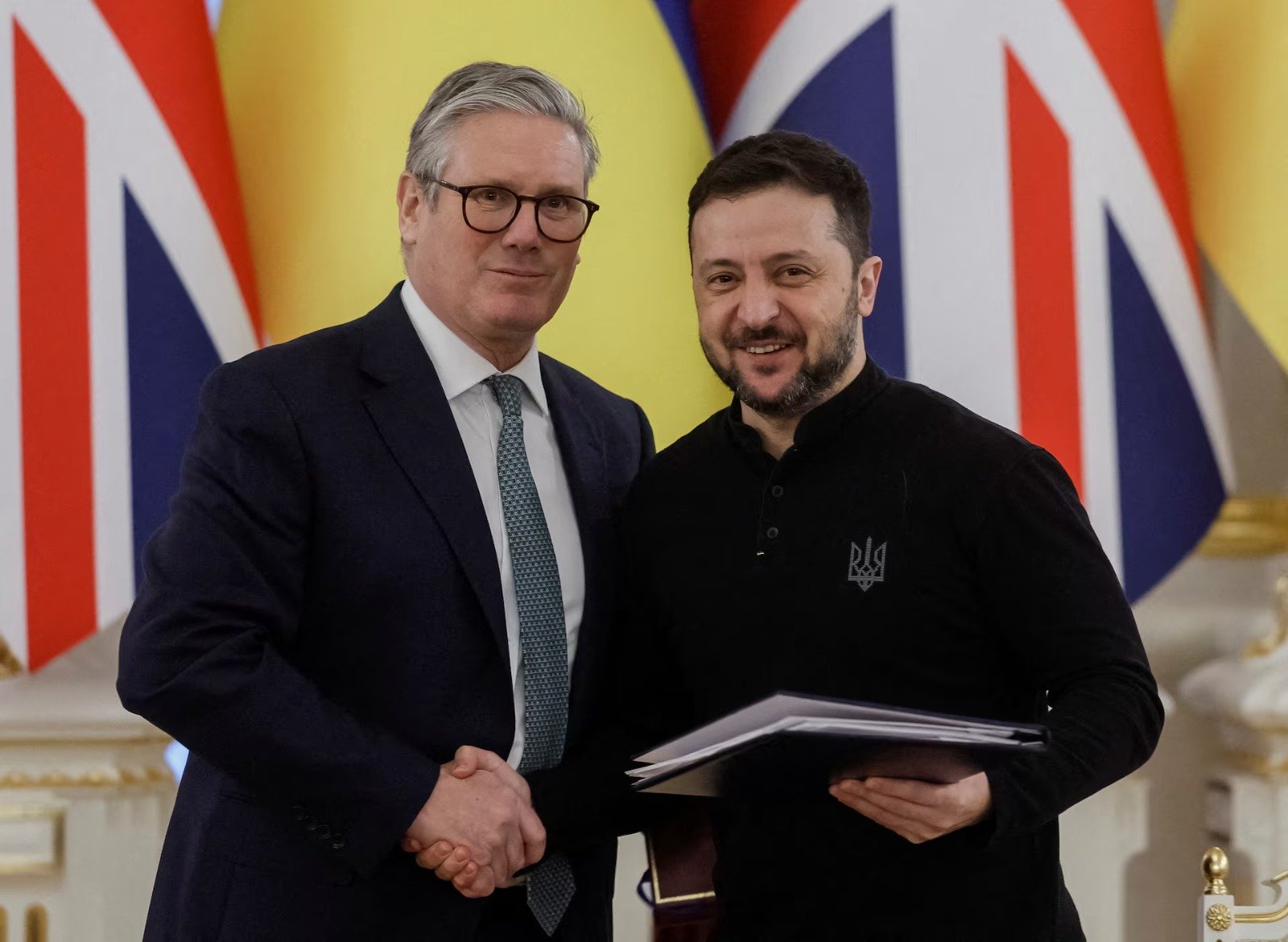
The President of Ukraine, Volodymyr Zelenskyy, has issued a sharply worded warning against the growing alignment of global adversaries, describing Russia and Iran as “brothers in hatred” during high-level talks in London with British Prime Minister Keir Starmer.
Speaking after the meeting, Zelenskyy stressed that the war in Ukraine is no longer an isolated European conflict but part of a broader and interconnected global security challenge. He urged international partners to sustain and expand their support, warning that failure to do so could embolden forces seeking to destabilize multiple regions simultaneously.
The Ukrainian leader highlighted the growing cooperation among countries opposed to Western influence, arguing that their coordination poses a direct threat not only to Ukraine but also to wider global stability. His remarks come at a time when tensions are escalating in multiple regions, including Eastern Europe and the Middle East.
In a notable shift toward forward-looking strategy, Zelenskyy also proposed that Ukraine’s battlefield innovations—particularly in counter-drone technology—could be shared with allies facing similar threats. Over the course of the conflict, Ukraine has developed advanced defensive capabilities against unmanned aerial systems, which have become a defining feature of modern warfare.
Analysts say this offer reflects Ukraine’s transformation from a recipient of military assistance into an emerging contributor to global security solutions. By positioning itself as a source of expertise, Kyiv is seeking to strengthen its strategic relevance while deepening partnerships with Western allies and beyond.
Prime Minister Starmer echoed the urgency of collective action, cautioning against allowing Russian President Vladimir Putin to benefit from rising tensions elsewhere. He pointed specifically to the ongoing strain involving the United States, Israel, and Iran, warning that geopolitical distractions could create opportunities for adversaries to advance their objectives.
Starmer emphasized the need for unity among democratic nations, framing the current moment as a test of international resolve. According to British officials, maintaining a coordinated response across regions is essential to preventing conflicts from feeding into one another and escalating further.
The meeting in London underscores a broader shift in how global conflicts are perceived. Increasingly, leaders are viewing regional crises not as isolated events but as interconnected elements of a larger geopolitical landscape. From Eastern Europe to the Middle East, overlapping tensions are creating a complex web of risks that require coordinated responses.
Also Read; “Africa’s Time Is Coming, And The World Knows”
Historically, periods of simultaneous regional instability have often led to significant realignments in global power structures. Today’s environment, shaped by rapid technological change and shifting alliances, is amplifying those dynamics. The use of drones, cyber tools, and information warfare has blurred traditional boundaries, making conflicts more unpredictable and harder to contain.
Zelenskyy’s remarks also reflect a deeper concern about the normalization of prolonged conflict. As wars extend over years rather than months, there is a risk that international attention and resources could become diluted. By linking Ukraine’s struggle to broader global challenges, he is seeking to keep it at the forefront of international priorities.
For many observers, the significance of this moment lies not only in the statements made but in the implications they carry. The idea that conflicts in different regions are interconnected suggests that solutions must also be coordinated on a global scale.
As diplomatic efforts continue and tensions evolve, the message from London is clear: the future of global security may depend on how effectively nations can act together in the face of shared and increasingly complex threats.