MWE Correspondent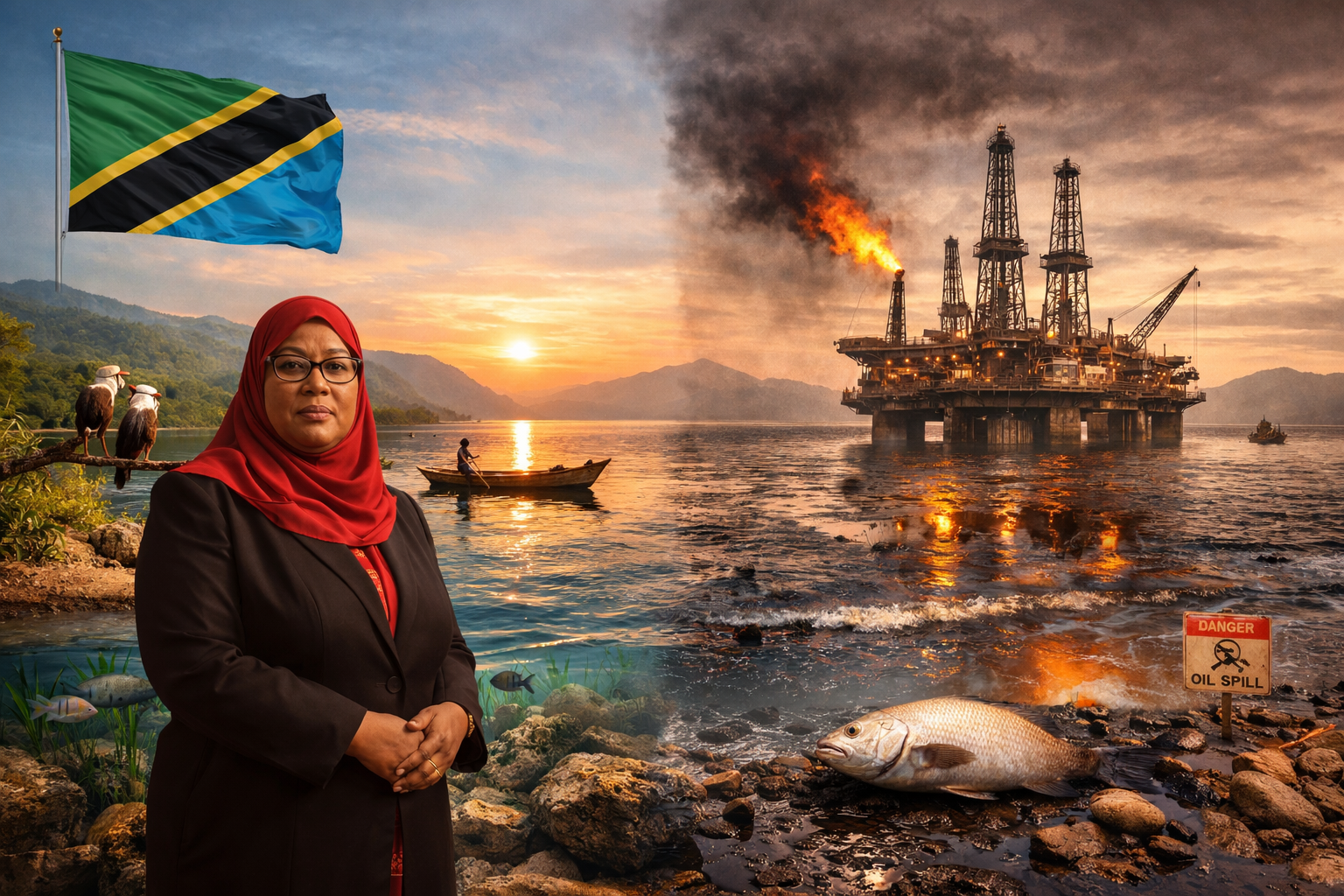
In the heart of East Africa, a quiet but profound debate is unfolding—one that could shape not only the future of a region, but also redefine how humanity values its most essential resources.
The decision by Tanzania to open oil exploration blocks within Lake Tanganyika has triggered a wave of reflection that extends far beyond national borders.
Lake Tanganyika is not just another body of water. It is one of the deepest and oldest freshwater lakes in the world, containing a remarkable share of the planet’s accessible freshwater reserves. Along its shores, millions of people depend on its waters for survival—fishing, transportation, and daily sustenance form the backbone of local economies. Generations have grown up tied to the rhythms of the lake, making it as much a cultural anchor as it is a natural resource.
Yet, beneath its vast waters may lie untapped energy reserves. The prospect of oil exploration has drawn attention from policymakers seeking economic growth and energy independence. Across the developing world, nations are under pressure to harness available resources to fuel industrial expansion and meet rising energy demands. For Tanzania, this move signals ambition—a desire to step more firmly into the global energy landscape.
However, history offers cautionary lessons. Around the world, regions rich in natural resources have often faced a difficult paradox: prosperity for some, but environmental degradation for many. The concept commonly referred to as the resource curse highlights how resource wealth can sometimes lead to instability, inequality, and ecological damage if not carefully managed.
Environmental scientists warn that freshwater ecosystems are uniquely vulnerable. Unlike oceans, where pollutants can disperse over vast areas, lakes like Tanganyika are more enclosed and sensitive. A single large-scale spill or prolonged industrial activity could disrupt entire ecosystems. The lake is home to hundreds of endemic species—organisms found nowhere else on Earth—making it a global biodiversity hotspot.
Also Read; Congo Launches Special Court to Fight Corruption
Beyond ecology, the stakes are deeply human. The lake connects four nations, including the Democratic Republic of the Congo, creating a shared dependency that transcends borders. Any environmental disruption would not remain confined to one country; it would ripple across communities, economies, and political relationships throughout the region.
At the same time, the global energy conversation is shifting. With the rise of renewable alternatives and increasing awareness of climate change, many experts argue that the future lies not in expanding fossil fuel extraction, but in transitioning toward sustainable energy systems. This raises a critical question: should new oil projects be pursued in environmentally sensitive areas when the world is gradually moving away from fossil fuels?
Supporters of the exploration initiative insist that modern technology and regulatory frameworks can reduce risks. They argue that responsible extraction, combined with strong environmental oversight, could allow Tanzania to benefit economically while safeguarding the lake. Critics, however, remain skeptical, pointing to past incidents in other parts of the world where promises of “safe extraction” fell short.
Ultimately, this is not just a Tanzanian story—it is a global reflection of a deeper dilemma. As humanity faces growing populations, increasing demand for energy, and mounting environmental challenges, choices like these become defining moments.
Lake Tanganyika now stands at a crossroads. It is a place where history, nature, and ambition intersect. Whether it becomes a model of balanced progress or a warning of irreversible loss will depend on decisions made today. And in that decision lies a powerful truth: some resources can be replaced, but others—like clean water—are beyond value.