MWE Correspondent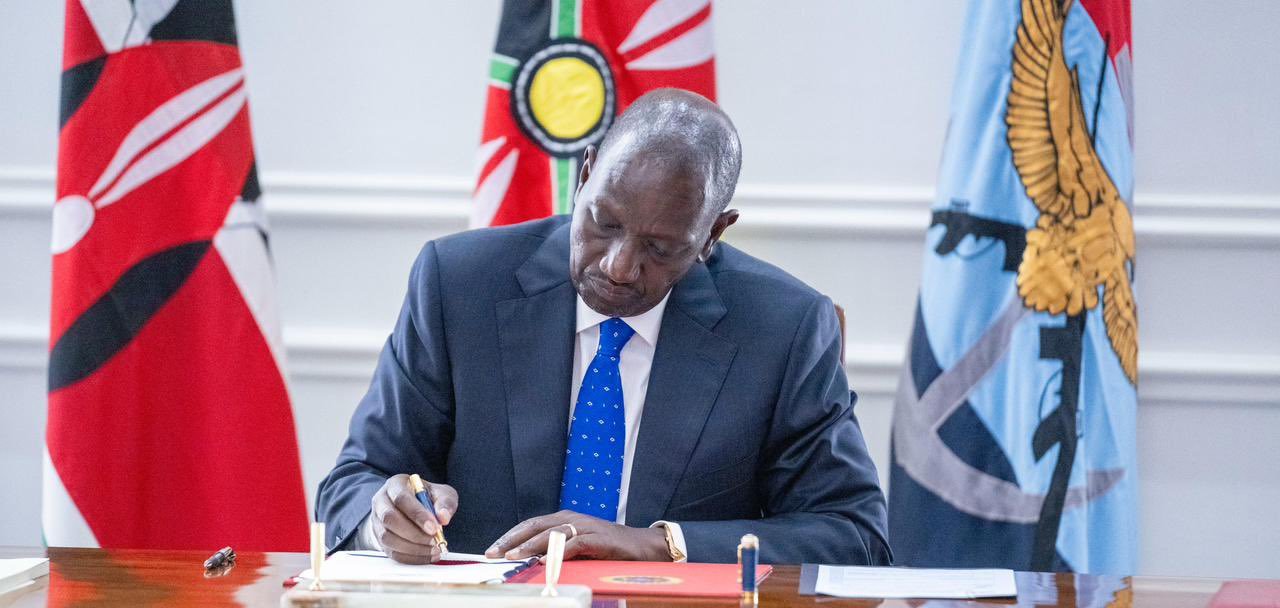
President William Ruto has defended his government’s push to privatize several state-owned enterprises, saying the strategy is already delivering stronger financial returns and could unlock major funding for national development projects in Kenya.
Speaking about the reforms, Ruto said the restructuring and partial privatization of a major government institution had dramatically improved its financial performance. According to the president, the entity was previously generating profits of about five billion Kenyan shillings annually. Following the reforms, however, returns have risen to approximately 106 billion Kenyan shillings.
The president explained that the funds will be channeled through the country’s national infrastructure investment mechanism, a move he said could mobilize up to 1.2 trillion Kenyan shillings to finance key development projects across the country.
Ruto described the initiative as part of a broader economic strategy aimed at strengthening Kenya’s public finances while accelerating investment in infrastructure, energy, transportation and other sectors critical to economic growth.
Under the new framework, the government has opened the door for wider public participation in the ownership of formerly state-controlled enterprises. The listing of the institution on the country’s financial markets means that ordinary citizens, business owners and both domestic and international investors can now purchase shares.
Officials say the move is intended to deepen the country’s capital markets and encourage greater participation by Kenyan citizens in the ownership of strategic national assets. Supporters of the policy argue that expanding public shareholding can improve corporate governance, enhance transparency and attract new capital into the economy.
Kenya has in recent years sought to strengthen its investment climate and boost investor confidence as part of its long-term development strategy. Government advisers say privatization, when implemented carefully, can help reduce the financial burden on the state while improving efficiency in sectors that were previously dominated by government control.
The policy has also been linked to broader reforms aimed at revitalizing public enterprises that had struggled with financial losses for many years.
Since assuming office, President Ruto has consistently advocated for the privatization of several state corporations that he said were operating inefficiently or generating persistent losses. His administration has argued that restructuring these institutions will allow them to operate more competitively while freeing up government resources for priority development spending.
So far, the government has approved the privatization of more than 11 public institutions. Among those targeted are major national facilities including the Kenyatta International Convention Centre in Nairobi and the national seed company.
However, the privatization agenda has also faced legal and political challenges. In 2023, critics raised concerns about transparency and public participation in the process. Civil society groups and opposition leaders argued that citizens had not been sufficiently consulted about the potential sale of strategic public assets.
Also Read; Trump Warns Iran Over Future Supreme Leader Choice
The debate eventually reached the courts, where judges ordered the suspension of the privatization programme last year, citing the need for broader public engagement and clearer legal procedures before the process could continue.
Despite these obstacles, the government maintains that privatization remains a key pillar of its economic policy. Officials insist that reforms will proceed within the law and with greater public consultation to ensure transparency and accountability.
Economic analysts say the success of the policy will ultimately depend on how effectively the government balances investor confidence, public interest and regulatory oversight.
For many observers, Kenya’s approach reflects a broader trend across Africa, where governments are increasingly exploring ways to attract private investment into sectors historically dominated by the state.
As the reforms continue to evolve, the outcome of Kenya’s privatization strategy could play an important role in shaping the country’s economic trajectory in the coming years.