MWE Correspondent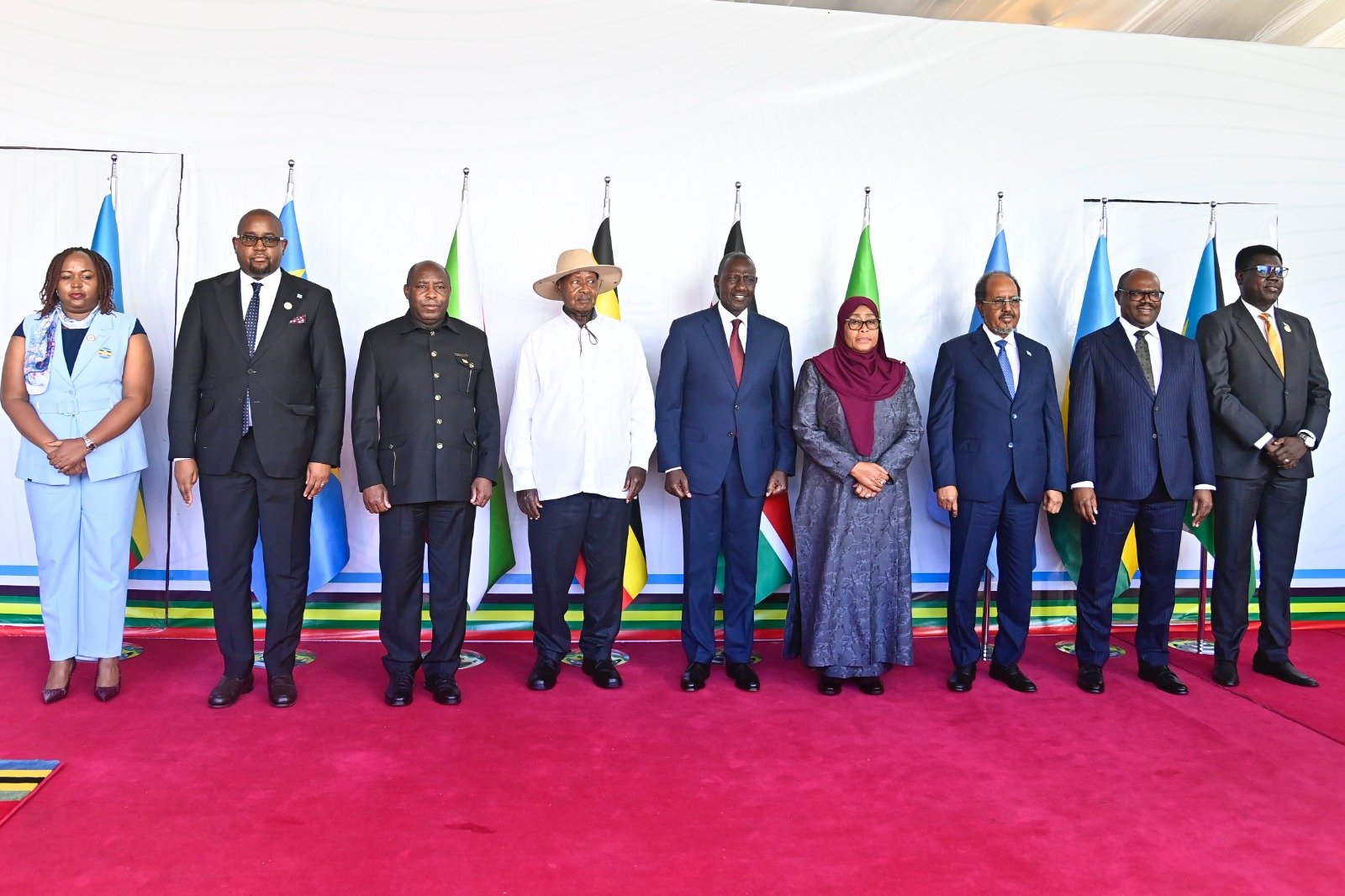
Uganda has officially assumed the chairmanship of the East African Community (EAC), succeeding Kenya after completing its term as the regional bloc’s leading nation.
The transition was marked during the 25th Ordinary Summit of EAC Heads of State, held at the Arusha International Conference Centre (AICC)) in Tanzania.
Tanzanian President Samia Suluhu Hassan participated in the summit, emphasizing the importance of regional cooperation, economic integration, and political stability. She engaged with fellow leaders on pressing regional issues, including trade, infrastructure development, and cross-border security.
During the summit, Uganda outlined its priorities as the new chair, focusing on enhancing economic cohesion, facilitating the free movement of goods and people, and reinforcing mechanisms for resolving conflicts among member states. Analysts note that Uganda’s leadership comes at a critical time, as the EAC navigates challenges ranging from trade barriers to environmental sustainability and public health coordination.
Leaders also reviewed ongoing regional initiatives, such as the EAC Customs Union and the Common Market Protocol, aimed at boosting intra-regional trade and mobility. Infrastructure development, including regional road, rail, and energy projects, was a key topic, highlighting the bloc’s role in fostering economic growth across East Africa.
Political cooperation remained central to discussions, with Heads of State reaffirming their commitment to dialogue in addressing security threats, including cross-border crime and insurgent activity. Observers say that Uganda’s ability to strengthen governance frameworks and coordinate collaborative decision-making will be closely watched throughout its tenure.
The EAC, formed in 2000, currently includes Uganda, Kenya, Tanzania, Rwanda, Burundi, and South Sudan. The organization plays a pivotal role in promoting regional stability, economic growth, and diplomatic collaboration. Its rotational leadership system ensures inclusivity and shared responsibility among member nations.
Experts suggest that Uganda’s chairmanship offers an opportunity to accelerate stalled initiatives, including harmonizing national policies, improving trade facilitation, and addressing socio-economic disparities within the bloc. President Samia Suluhu Hassan’s active participation also reinforces Tanzania’s ongoing commitment to regional integration.
As Uganda begins its tenure, attention will focus on its ability to coordinate strategic priorities, manage regional disputes, and drive sustainable growth for all member states. The summit concluded with a renewed commitment among leaders to open dialogue and continued cooperation, emphasizing the EAC’s enduring role in East Africa’s development and stability.