MWE Correspondent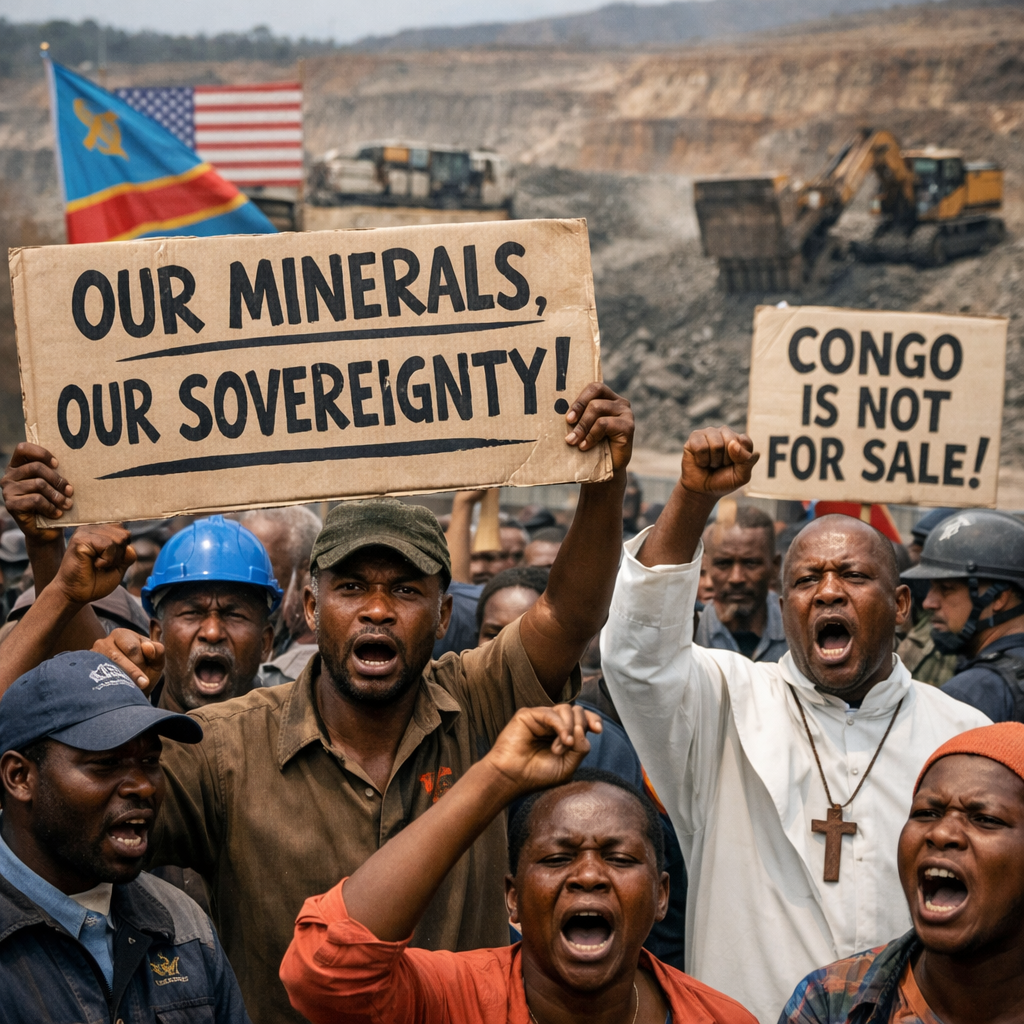
In the Democratic Republic of the Congo (DRC), a wave of public protests and civil society mobilization has emerged in response to a recently signed U.S.
mineral agreement, sparking concerns over national sovereignty and the long-term benefits for local communities.
The deal grants American firms preferential access to some of the DRC’s largest untapped reserves of cobalt, copper, and coltan—minerals critical for electric vehicles, consumer electronics, and advanced defense technologies. While Congolese authorities assert that the agreement will generate investment, jobs, and infrastructure development, critics argue that the terms disproportionately favor foreign corporations and fail to ensure meaningful local economic gains.
Religious leaders, labor unions, and advocacy groups have voiced strong opposition, organizing demonstrations in major cities including Kinshasa and Lubumbashi. Protesters highlight the potential environmental impact of intensified mining, including land degradation, water contamination, and the displacement of local communities.
Also Read: Africa’s Minerals Now Define Global Power
Many are also questioning whether the Congolese state has sufficient oversight mechanisms to guarantee that resource revenues benefit citizens rather than intermediaries or foreign stakeholders.
Analysts suggest the unrest reflects broader concerns about Africa’s negotiating position in global mineral markets. The continent, rich in strategic resources, continues to face pressures from powerful external actors seeking to secure supply chains for industries in North America, Europe, and Asia. The DRC, in particular, accounts for a significant share of global cobalt production, making its policy decisions highly consequential for international markets.
U.S. officials maintain that the agreement emphasizes sustainable mining practices, transparency, and corporate responsibility. They argue that it will strengthen long-term supply chain security while supporting Congo’s economic growth. However, the backlash indicates that public perception and domestic legitimacy are as crucial as foreign investment in shaping successful resource governance.
Regional observers note that this controversy could set a precedent for other African nations negotiating similar deals. By demanding stronger protections, value addition requirements, and participatory decision-making, governments can enhance domestic control over strategic minerals and ensure that external partnerships contribute to sustainable development.
The unfolding situation underscores the delicate balance African leaders must maintain between attracting foreign capital and preserving sovereignty. Ensuring that resource wealth translates into meaningful social and economic benefits remains a persistent challenge, but one that increasingly shapes national and regional politics.
As negotiations continue and protests gain momentum, the DRC serves as a key test case for how African countries can assert authority over their natural resources while engaging with global economic powers. The outcome of this debate will resonate not only in Africa but across industries and markets worldwide.