MWE Correspondent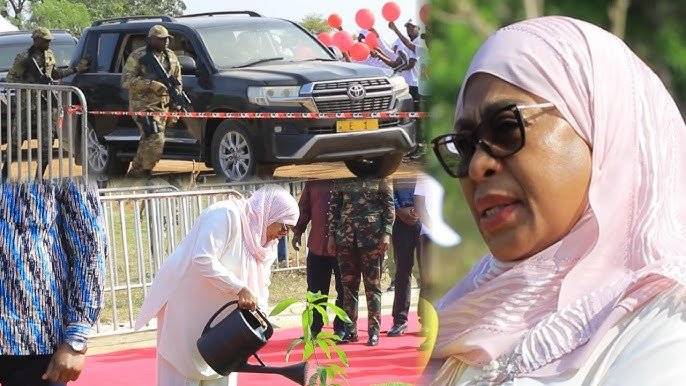
Tanzanian President Samia Suluhu Hassan has warned that climate change is no longer a distant theory but a real and growing threat already reshaping lives across the world, calling for urgent and sustained action to protect the environment for future generations.
Speaking to residents at Bungi Kilimo in the South Unguja Region of Zanzibar on January 27, the president said the impacts of climate change are now clearly visible through prolonged droughts, unpredictable rainfall patterns, severe floods, rising temperatures and increasing sea levels.
“This is not a story or speculation. Climate change is a reality we are experiencing today,” President Samia said. “Every country is feeling its effects in one way or another, and Tanzania is no exception.”
She explained that communities are already struggling with reduced agricultural productivity, water shortages and extreme weather events that threaten food security and livelihoods, particularly in rural areas that depend heavily on farming and natural resources.
The president emphasized that environmental conservation, especially tree planting, remains one of the most effective and sustainable ways of addressing the climate crisis. She noted that trees play a vital role in attracting rainfall, protecting water sources, preventing soil erosion and supporting agricultural production.
According to environmental experts, initiatives such as reforestation are among the most affordable solutions for reducing carbon emissions while restoring ecosystems that support both people and wildlife.
President Samia urged citizens to take personal responsibility in protecting the environment by planting and caring for trees within their communities, schools and farmlands.
Also Read; Tanzania Pushes Clean Energy Drive for Sustainable Future
“A tree planted today and nurtured to maturity becomes an investment in rainfall, clean water, food production and the wellbeing of both present and future generations,” she said.
The president also linked environmental conservation to Tanzania’s long-term development goals, noting that sustainability and climate resilience are central pillars of the country’s national development vision. She stressed that economic growth cannot be separated from environmental protection, as degraded ecosystems ultimately undermine progress in health, agriculture and infrastructure.
With Tanzania’s population projected to grow significantly in the coming decades, President Samia highlighted the importance of collective action. She proposed that if at least 30 million Tanzanians planted and cared for one tree each year, the country would rapidly expand its forest cover and strengthen its ability to cope with climate challenges.
Environmental activists have welcomed the president’s continued focus on conservation, saying leadership at the highest level sends a powerful message about the urgency of protecting natural resources.
Zanzibar, where the president delivered her remarks, is particularly vulnerable to rising sea levels and coastal erosion, issues that threaten tourism, fishing communities and historical settlements. More about the region’s geography and environmental challenges can be explored through Zanzibar.
Analysts say President Samia’s emphasis on grassroots participation is key, as government policies alone cannot succeed without community involvement.
Across Africa, climate impacts are intensifying, with millions facing food insecurity, displacement and economic strain. Experts warn that without strong mitigation efforts, these challenges could worsen in the coming years.
For many citizens who attended the address, the message was both a warning and a call to action.
President Samia’s remarks reinforced a growing national understanding that protecting forests, water sources and land is not simply an environmental issue, but a matter of survival and sustainable development.
As Tanzania continues to pursue economic growth, her message was clear: progress must go hand in hand with environmental stewardship, ensuring a safer and more resilient future for generations to come.
In the face of a changing climate, she said, unity, responsibility and long-term thinking will define how well nations protect both their people and their natural heritage.