MWE Correspondent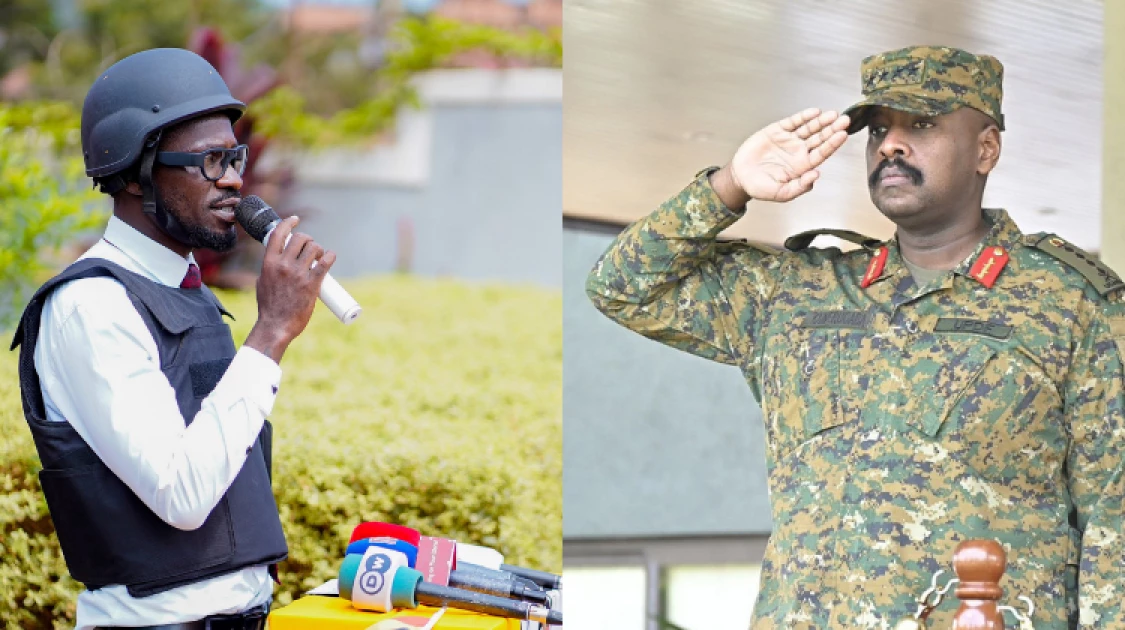
Uganda has entered a tense and uncertain moment after the country’s Chief of Defence Forces, General Muhoozi Kainerugaba, publicly warned opposition leader Bobi Wine to surrender to the police within 48 hours or face serious consequences.
The announcement, made through social media, has heightened political anxiety and renewed debate about the role of the military in civilian affairs.
The statement, shared on Tuesday, January 20, 2026, came as the country was still grappling with the aftermath of a disputed election. In his message, General Muhoozi said that failure by Bobi Wine to comply would result in him being declared a criminal or a rebel, adding that security forces would then pursue him through what he described as criminal operations.
General Muhoozi, who serves as the head of the Ugandan military and is also the son of President Yoweri Museveni, has increasingly used social media to comment on national security and political developments. Since the end of the election period, he has posted a series of remarks referencing military readiness, law enforcement actions, and internal threats, a trend that has unsettled many observers.
Bobi Wine, a former musician who rose to prominence as a leading opposition figure, has long accused the state of intimidation and harassment against political rivals.
Also Read; Trump’s Greenland Push Linked to Nobel Peace Prize Snub
While he had not issued an immediate public response to the ultimatum, his supporters described the statement as threatening and politically motivated, arguing that any legal concerns should be handled through formal judicial channels rather than public declarations by a serving army chief.
Legal experts and human rights advocates have also voiced concern, warning that such statements risk undermining constitutional order. Under Uganda’s constitution, criminal investigations and arrests fall under civilian authorities, with the military playing a defined and limited role. Critics say public threats from senior military figures against civilians could erode public trust in state institutions.
The situation has reignited broader discussions about civil-military relations in Uganda, particularly as the armed forces appear increasingly visible in political discourse. Analysts caution that this trend could deepen divisions at a time when national unity remains fragile.
International observers are closely monitoring developments, noting Uganda’s strategic importance in regional security. Past confrontations involving opposition leaders have often drawn global attention, especially where concerns over democratic space and civil liberties are involved. The unfolding standoff has once again placed Bobi Wine at the centre of a national and international spotlight.