MWE Correspondent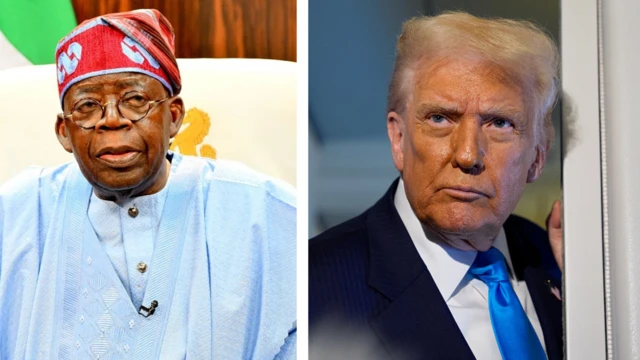
U.S. President Donald Trump has issued a stern warning that the United States could take further military action in Nigeria if attacks on Christian communities do not stop, raising international attention on the security situation in the West African nation.
In a recent interview with The New York Times, Trump emphasized that while he initially supported a limited, one-off military strike, Washington could escalate its response if the violence continues. The warning comes after a U.S. airstrike targeted militant groups in Sokoto State during the Christmas period, an operation aimed at extremist factions accused of carrying out attacks against local populations.
Trump framed the situation as a pressing humanitarian concern, describing ongoing violence against Christians as a justification for possible further action. “If these attacks do not stop, we will not hesitate to take more decisive measures,” he told the newspaper. The former president’s comments underline his position that protecting vulnerable communities may require sustained intervention, though the Nigerian government has rejected the characterization of the violence as targeting Christians alone.
Through the Ministry of Foreign Affairs, Nigeria emphasized that violent incidents affect people of all faiths and that security operations are focused on combating extremist and militant groups, not singling out any religious community. The government also stated that the recent U.S. airstrike was conducted in coordination with Nigerian authorities, aimed at joint counterterrorism objectives.
Also Read; DR Congo Relaxes Mining Restrictions After Kolwezi Protests
The situation highlights the complex landscape of militancy in Nigeria, where multiple groups—including Boko Haram and Islamic State-affiliated factions—have operated for years, carrying out attacks on villages, markets, and places of worship. Analysts note that the roots of the conflict are multifaceted, involving economic pressures, land disputes, and governance challenges, not solely religious persecution.
Despite Trump’s warnings, questions remain about the future of U.S.–Nigeria military cooperation. While Nigerian officials claim the Sokoto operation was a joint mission approved by the country’s leadership, comments from U.S. officials hint at potential further actions, signaling possible friction over the direction of bilateral security engagement. Observers are watching closely to see whether Washington will limit its involvement to targeted strikes or pursue a longer-term military approach in the region.
Civil society leaders and religious groups in Nigeria have expressed concern over external military intervention, warning that foreign strikes could escalate tensions and complicate efforts to stabilize affected areas. The debate raises broader questions about sovereignty, the role of international partners in counterterrorism, and the balance between protecting vulnerable communities and respecting national authority.