MWE Correspondent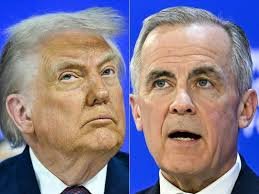
Trade tensions between the United States and Canada have sharply intensified after President Donald Trump warned that Ottawa could face sweeping economic punishment if it deepens commercial ties with China.
In a strongly worded message shared on his Truth Social platform, Trump said the U.S. would impose a 100 percent customs tariff on all Canadian goods entering American markets if Canada signs any agreement that allows Chinese products to reach the United States through Canadian channels. The former president accused Ottawa of potentially becoming a “back door” for Chinese exports and vowed to block such a move immediately.
The dispute highlights growing strains in long-standing Canada–United States relations, which have historically been among the closest economic partnerships in the world. Billions of dollars in goods cross the border daily, supporting industries ranging from agriculture to automobile manufacturing.
While Trump did not specify which agreement triggered his warning, it follows recent comments by Canadian Prime Minister Mark Carney announcing a new “strategic economic partnership” with China. The initiative includes reduced tariffs in selected sectors and expanded cooperation in trade and investment.
Interestingly, Trump had earlier described the move as “a good thing,” but his tone shifted after Carney publicly stated that the U.S.-led global economic system was no longer stable. Speaking at the World Economic Forum in Davos, Carney urged middle-power nations to work together to protect themselves from economic pressure imposed by major global players — remarks widely interpreted as a criticism of Washington’s aggressive trade policies.
Trump responded by claiming that “Canada survives because of the United States” and later withdrew Canada’s invitation to participate in his proposed international peace initiative.
Also Read; Ugandan Army Chief Sparks Controversy Over Opposition Arrests
Canadian officials have attempted to calm the situation. Trade Minister Dominic LeBlanc clarified that Ottawa is not pursuing a full free trade agreement with China, stressing that recent talks were aimed at resolving specific tariff disputes rather than forming a sweeping commercial pact.
“Our priority is to remove trade barriers and protect Canadian exporters,” LeBlanc said, adding that Canada remains committed to maintaining strong economic ties with the U.S.
Economists warn that Trump’s proposed tariffs, if implemented, could severely disrupt North American supply chains. Canada is a major supplier of energy, steel, aluminum and agricultural products to the U.S., and any sharp increase in trade costs would likely raise prices for consumers and strain manufacturing industries on both sides of the border.
At the same time, Canada has been quietly working to diversify its trade partners in response to rising protectionism. Strengthening ties with Asian and European markets is part of a broader strategy to reduce dependence on the American economy.
As political rhetoric escalates, analysts say the standoff reflects a wider global struggle over trade influence, economic security, and the shifting balance of power between Western nations and China.
With neither side showing signs of backing down, the developing dispute could soon reshape North American trade dynamics — and send ripple effects through the global economy.