MWE Correspondent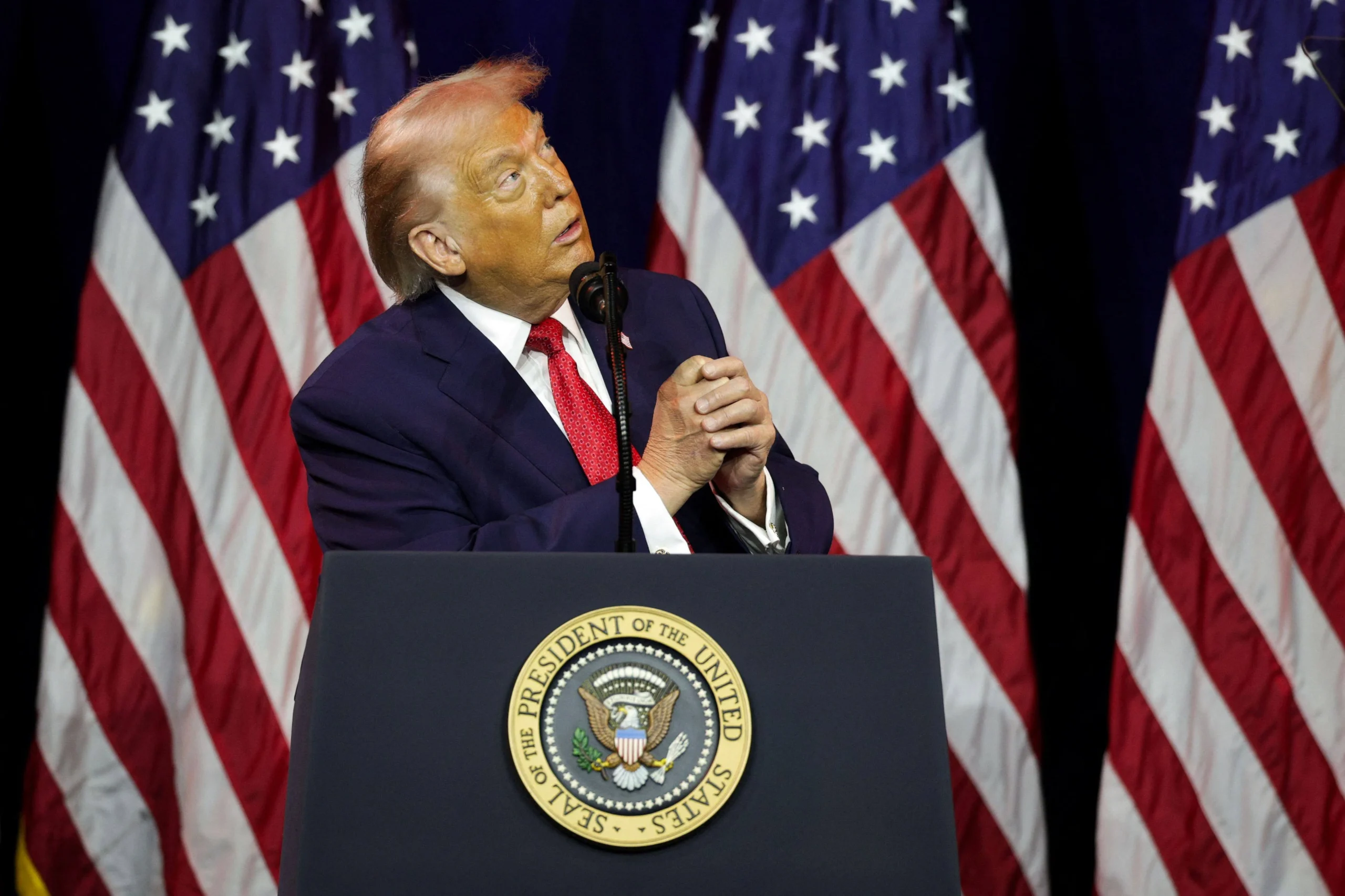
United States President Donald Trump has said he has been assured by what he described as credible sources inside Iran that no protesters will be executed, a statement that comes at a time of heightened tension both within Iran and between Tehran and Washington.
His remarks were made only hours after Iran’s Foreign Minister, Abbas Araghchi, publicly dismissed claims that demonstrators were facing the death penalty, insisting that such reports were inaccurate.
The comments have drawn attention because they come amid growing speculation in diplomatic and security circles that the United States could be considering military action against Iran in the near term. Several sources in Europe have suggested that a potential strike could occur within the next 24 hours, claims that have unsettled markets and raised fears of a wider regional crisis. Iranian officials have responded by warning that any attack would be met with a firm and immediate response, underscoring how fragile the situation has become.
Iran has faced repeated waves of protests in recent years, driven by a mix of economic pressure, political frustration, and demands for greater social freedoms. These demonstrations have often been followed by mass arrests and tough security measures, prompting international concern over the treatment of detainees and broader human rights in Iran. Allegations that protesters could face execution have previously triggered strong reactions from Western governments and rights groups, making Trump’s comments particularly sensitive.
While Trump did not provide details about the sources he cited, his statement appeared intended to calm immediate fears surrounding the fate of detained protesters. Iranian authorities, for their part, have repeatedly accused foreign governments and media outlets of exaggerating or fabricating reports in order to put pressure on Tehran. Officials insist that legal processes are being followed and that claims of mass executions are part of what they describe as an information campaign against the state.
Beyond Iran’s internal situation, the remarks highlight the deep and long-standing tensions that define United States–Iran relations. Decades of hostility, shaped by sanctions, disputes over Iran’s nuclear activities, and rival influence across the Middle East, have left little trust between the two sides.
Also Read; Africa Bears Climate Burden Despite Minimal Global Emissions
Periodic spikes in tension, including threats of military action, have repeatedly raised fears of a broader confrontation that could draw in regional allies and disrupt global energy supplies.
Tehran has made it clear that it views any potential U.S. strike as a violation of its sovereignty and international law. Iranian leaders argue that the country has the right to defend itself and warn that escalation would not be limited to a single exchange. Analysts note that even a limited military action could trigger retaliation through regional networks, increasing instability across the Middle East.
International reaction so far has been cautious. European governments have urged restraint, calling on both Washington and Tehran to avoid steps that could push the situation toward open conflict. Diplomats continue to emphasize the importance of dialogue, transparency, and de-escalation, particularly at a moment when tensions are already high.
As uncertainty persists, Trump’s comments may offer temporary reassurance about the fate of protesters, but they do little to resolve the broader standoff. With rumors of military action circulating and official statements hardening on both sides, the coming days will be critical. Much will depend on whether diplomacy can still play a role in easing tensions involving Iran and the United States, or whether the region is heading toward another dangerous escalation.