MWE Correspondent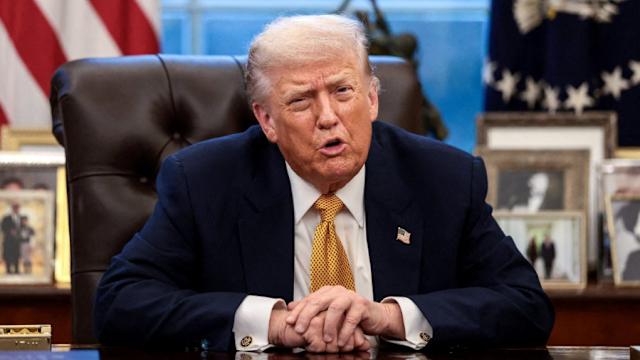
United States President Donald Trump has once again placed Greenland at the center of international attention after firmly restating his position that the territory should fall under U.S. control, declaring there would be “no turning back” on the issue.
His remarks, delivered during a press interaction, have sparked concern in the Arctic region and prompted strong reactions from Europe and other Western allies.
Trump defended his stance by arguing that Greenland holds growing strategic importance for American national security and global stability. He pointed to the territory’s location in the Arctic, saying it is increasingly vital as global powers compete for influence over emerging shipping routes, military positioning, and access to natural resources. According to Trump, these geopolitical realities make Greenland central to future security planning, particularly as interest in the Arctic continues to rise.
Leaders in Greenland responded with visible unease. Senior officials emphasized that the island’s population does not wish to become American and remains deeply committed to preserving its cultural identity and political autonomy. They stressed that Greenlanders value their traditions and strongly believe in their democratic right to determine their own future without outside pressure.
Also Read; Trump’s Greenland Push Linked to Nobel Peace Prize Snub
The remarks quickly drew international reactions. Several European nations, alongside Canada, publicly reaffirmed their support for Greenland and Denmark, under whose sovereignty the territory currently falls. Officials made it clear that Greenland’s status is not open for negotiation and that respect for territorial integrity remains a cornerstone of international relations, particularly within the European Union.
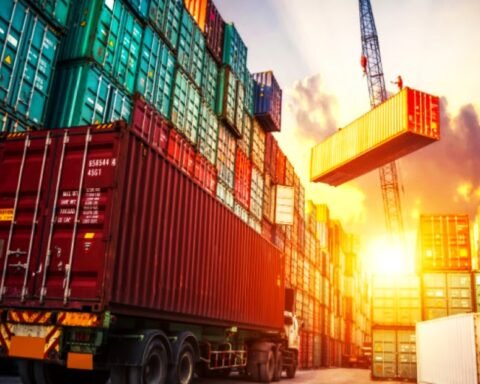
Tensions escalated further after Trump suggested that countries opposing his position could face trade consequences. He warned of potential tariffs of up to 10 percent on selected European exports, a move that European leaders sharply criticized. Senior officials in Europe described the threat as an improper use of trade policy for political leverage and cautioned that any continued pressure would be met with a unified response.
Political analysts note that the renewed dispute reflects broader competition linked to Arctic geopolitics. Climate change has made the region more accessible, increasing global interest in its shipping lanes and mineral wealth. As a result, Greenland has become a focal point in the wider struggle for influence among major world powers.
Despite the heated rhetoric, Greenland’s leadership has continued to call for calm dialogue and adherence to international law. They maintain that the future of the territory must be decided solely by its people, warning that escalating political and economic pressure could undermine long-standing diplomatic relationships.