MWE Correspondent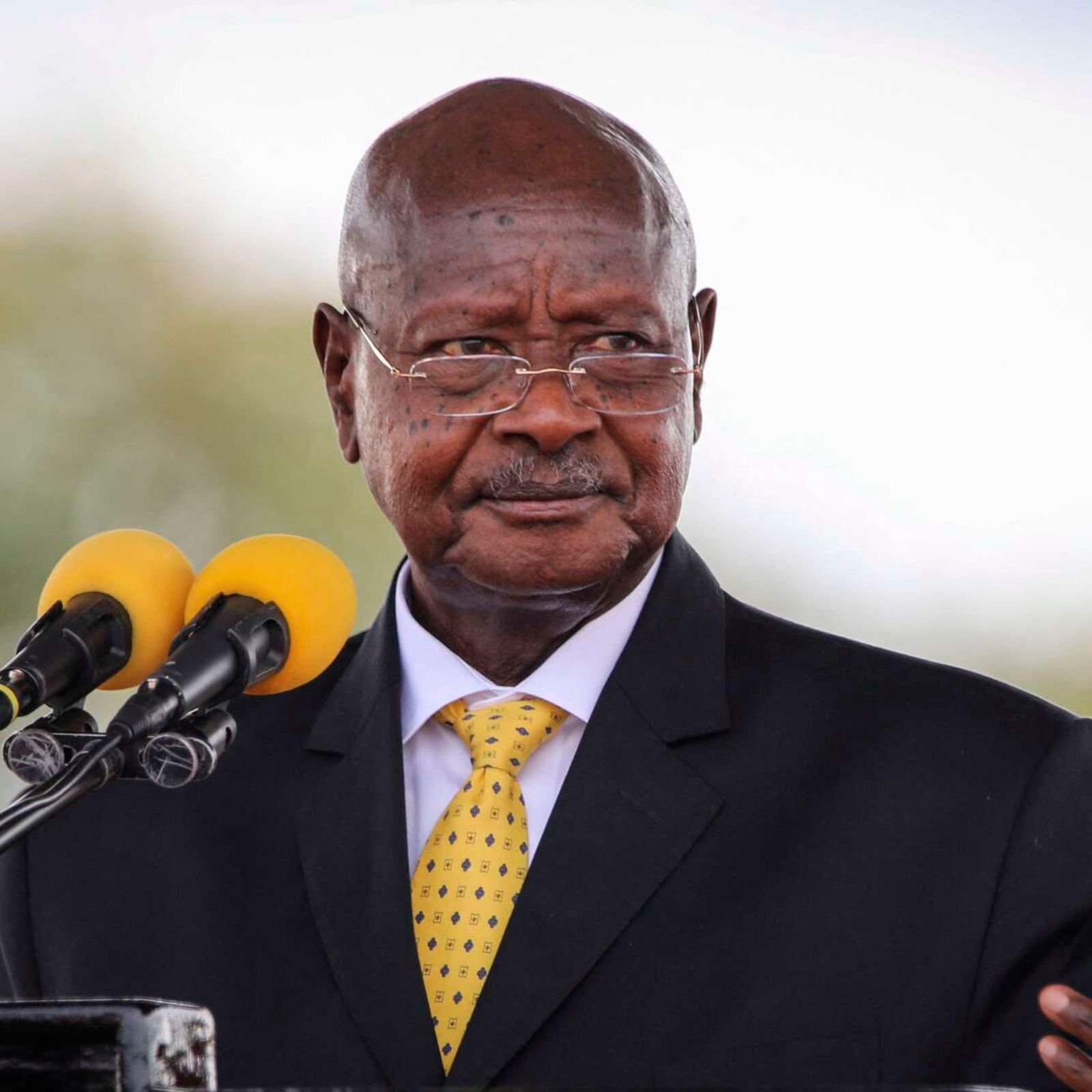
Ugandan President Yoweri Museveni has called on African nations to strengthen collective military and strategic cooperation, warning that the continent’s long-term security depends on unity rather than fragmented national approaches.
Speaking to a gathering of young people in Uganda, the veteran leader argued that while global powers continue to dominate modern warfare in the air and at sea, Africa still holds untapped potential on land—potential that can only be realized through coordinated action.
President Museveni noted that major powers possess overwhelming advantages in advanced military domains, including air superiority, naval power, and sophisticated technology. By contrast, he said, African states remain significantly behind in these areas, a gap he described as a serious risk to the continent’s future security. Without joint planning, shared resources, and integrated command structures, he warned, Africa could remain vulnerable to both external pressure and internal instability.
In his address, Museveni emphasized that military weakness is not merely a technical problem but a strategic one rooted in political choices made over decades. He criticized what he described as a historical tendency among some African leaders to prioritize narrow national influence over continental cooperation. According to Museveni, this mindset has prevented Africa from pooling resources that could otherwise support strong air forces, naval capabilities, and defense industries.
Also Read;Late Night Tension Grips Burkina Faso Capital
The Ugandan leader argued that Africa’s true advantage lies in its people, geography, and capacity for land-based defense. He suggested that with proper coordination, African countries could build formidable ground forces capable of defending sovereignty and deterring aggression. However, he stressed that such strength cannot be achieved in isolation, as modern security threats increasingly cross borders and require regional or continental responses.
Museveni’s remarks come amid renewed debates across Africa about security cooperation, regional defense arrangements, and the future role of continental institutions. Ongoing conflicts, terrorism, and geopolitical competition have intensified discussions about whether African states should rely on external partners or invest more heavily in homegrown solutions. In this context, his call for unity echoes broader conversations about Pan-Africanism and collective self-reliance.
Analysts note that the president’s focus on youth is significant, as younger generations are expected to shape Africa’s political and security landscape in the coming decades. By framing unity as a long-term investment rather than a short-term political gain, Museveni sought to appeal to a generation that will inherit both the risks and the responsibilities of leadership.
The idea of a unified African defense approach is not new. Institutions such as the African Union have long promoted cooperation in peacekeeping and conflict prevention. However, progress toward deep military integration has been slow, often hindered by funding constraints, political differences, and concerns over national sovereignty.
Still, Museveni maintained that the cost of disunity is far greater than the challenges of cooperation. He argued that without a shared strategic vision, Africa risks remaining dependent on external powers for security guarantees, a situation he described as unsustainable in an increasingly competitive global environment shaped by shifting global geopolitics.
Concluding his remarks, the Ugandan president urged African leaders and citizens alike to rethink security not as an individual national issue but as a collective continental responsibility. Only through unity, he said, can Africa secure its future and protect coming generations from emerging threats.