MWE Correspondent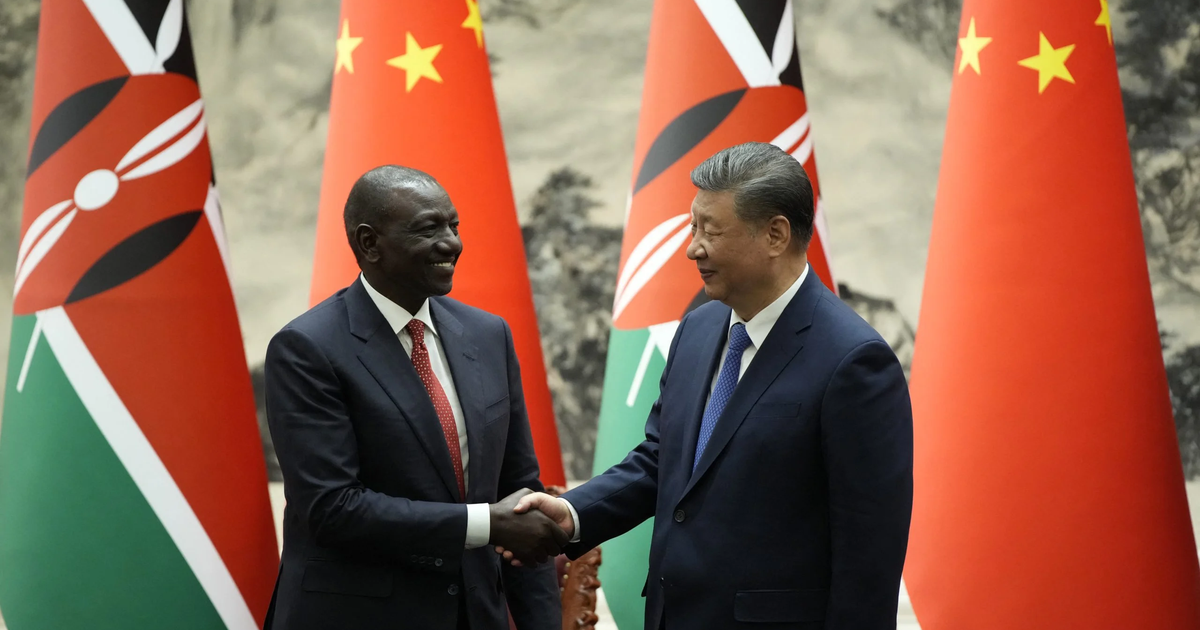
Kenya has temporarily halted plans to sign a proposed trade agreement with China, a move that underscores the delicate diplomatic and economic balancing act Nairobi is facing amid growing pressure from the United States.
The decision, according to sources familiar with the discussions, reflects concerns about the timing of the deal as Kenya seeks to safeguard its long-standing trade relationship with Washington.
The proposed agreement with Beijing has not been abandoned, but officials say it will not move forward until it receives full approval from the Cabinet, Parliament and President William Ruto. Behind the delay is Kenya’s urgent push to secure renewed access to the African Growth and Opportunity Act (AGOA), a U.S. trade programme that has for more than 20 years allowed eligible Kenyan exports to enter the American market without import duties.
AGOA expired on September 30, 2025, and the U.S. Congress has yet to agree on a replacement or extension. Since then, Kenyan exporters have been hit hard. Goods that once enjoyed duty-free entry into the United States are now subject to tariffs, significantly raising costs for businesses already grappling with global inflation and weaker demand. The apparel industry, one of Kenya’s largest export earners, has been particularly affected, with annual shipments worth over $600 million now facing duties of up to 28 percent.
Industry leaders warn that prolonged uncertainty could have serious consequences for employment. Estimates suggest that more than 66,000 jobs are at risk, especially in the textile and agricultural sectors, which depend heavily on preferential access to the U.S. market. Factory operators say even a short-term loss of competitiveness could lead to reduced orders, layoffs and, in some cases, plant closures.
Also Read; China Urges Diplomacy, Rejects Foreign Interference Pressure
Against this backdrop, Kenyan policymakers had been looking to China as a potential alternative market. The draft China deal reportedly includes plans to eliminate tariffs on key exports such as tea, coffee and avocados, offering Kenyan producers a chance to diversify beyond the U.S. market. China is already one of Kenya’s most important trading partners, and deeper economic ties were seen as a way to cushion the economy from external shocks. This relationship has grown steadily within the broader framework of China–Kenya relations.
However, analysts say the United States is increasingly cautious about China’s expanding influence in Africa and may be using trade leverage to discourage closer economic alignment with Beijing. Kenya now finds itself navigating competing interests, trying to protect jobs at home while maintaining strong ties with both global powers. The situation highlights how geopolitics is reshaping international trade, particularly for developing economies.
Government officials maintain that securing clarity on U.S. market access remains the immediate priority. Diplomatic engagements are ongoing, with Kenya urging American lawmakers to act swiftly to restore or replace AGOA. At the same time, economists argue that Kenya cannot afford to delay diversification indefinitely, warning that overreliance on a single market leaves exporters vulnerable to political and policy shifts.