MWE Correspondent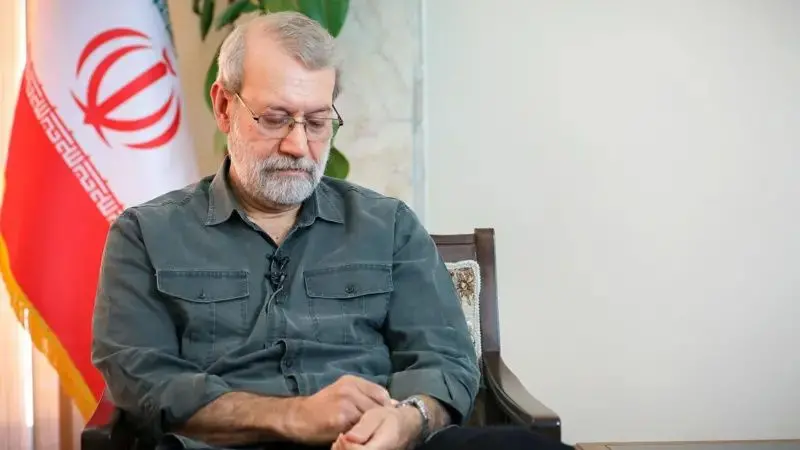
The Islamic Republic of Iran confirmed on Tuesday, March 17, 2026, that Ali Larijani, former Secretary of the Supreme National Security Council, was killed in an alleged Israeli attack. Larijani, 68, died alongside his son, Morteza, and several aides, sending shockwaves across Iran’s political and strategic landscape.
A veteran politician and influential statesman, Larijani had a career spanning decades. From his early work in the Islamic Republic of Iran Broadcasting to leadership roles in the parliament, he became a key figure in shaping Iran’s domestic and foreign policies. He played an essential role in managing relations with major powers like Russia and China, as well as overseeing armed groups supported by Iran across the Middle East.
Born in Najaf, Iraq, into the prominent Amoli family, Larijani pursued studies in philosophy at the University of Tehran and computer science at Sharif University of Technology. His intellectual grounding allowed him to combine ideological conviction with technical expertise, which later guided his decisions in media, government, and national security.
Larijani rose through the ranks of Iran’s government, initially serving in the Revolutionary Guards and later holding deputy ministerial posts. By 2008, he became Speaker of the Parliament of Iran, representing Qom for three consecutive terms, a position from which he influenced Iran’s nuclear policy and foreign diplomacy. His oversight during the parliamentary approval of the Joint Comprehensive Plan of Action (JCPOA) in 2015 demonstrated his capacity to bridge domestic politics with international negotiations.
In the final weeks of his life, Larijani remained actively engaged in high-level diplomacy. Reports indicate he participated in secret negotiations in Oman aimed at reducing tensions with the United States, warning that Tehran would respond decisively to any external interference. In one of his last public statements, he declared: “Iran will stand strong, no one will break us,” underscoring his lifelong commitment to protecting Iranian sovereignty.
Also Read; Congo Launches Special Court to Fight Corruption
His death comes amid heightened regional tensions following military skirmishes involving Israel and Iran. Intelligence sources suggest that Larijani was targeted for his pivotal role in national security and military planning. In response, the United States reportedly offered rewards for information on Iranian officials, further escalating the geopolitical stakes.
Beyond politics, Larijani’s influence extended to Iran’s judiciary and cultural sectors, with family members holding senior positions across government ministries. His legacy in governance, media, and diplomacy combined strategic foresight with ideological conviction, enabling him to survive shifts in presidential leadership under Rafsanjani, Khatami, Ahmadinejad, Rouhani, and Raisi.
International analysts warn that his death could have long-term effects on Middle East geopolitics, potentially altering Iran’s approach to regional conflicts and its interactions with Israel and the United States. Tehran has yet to announce a successor, but Larijani’s networks and strategies are expected to continue influencing decision-making behind the scenes.