MWE Correspondent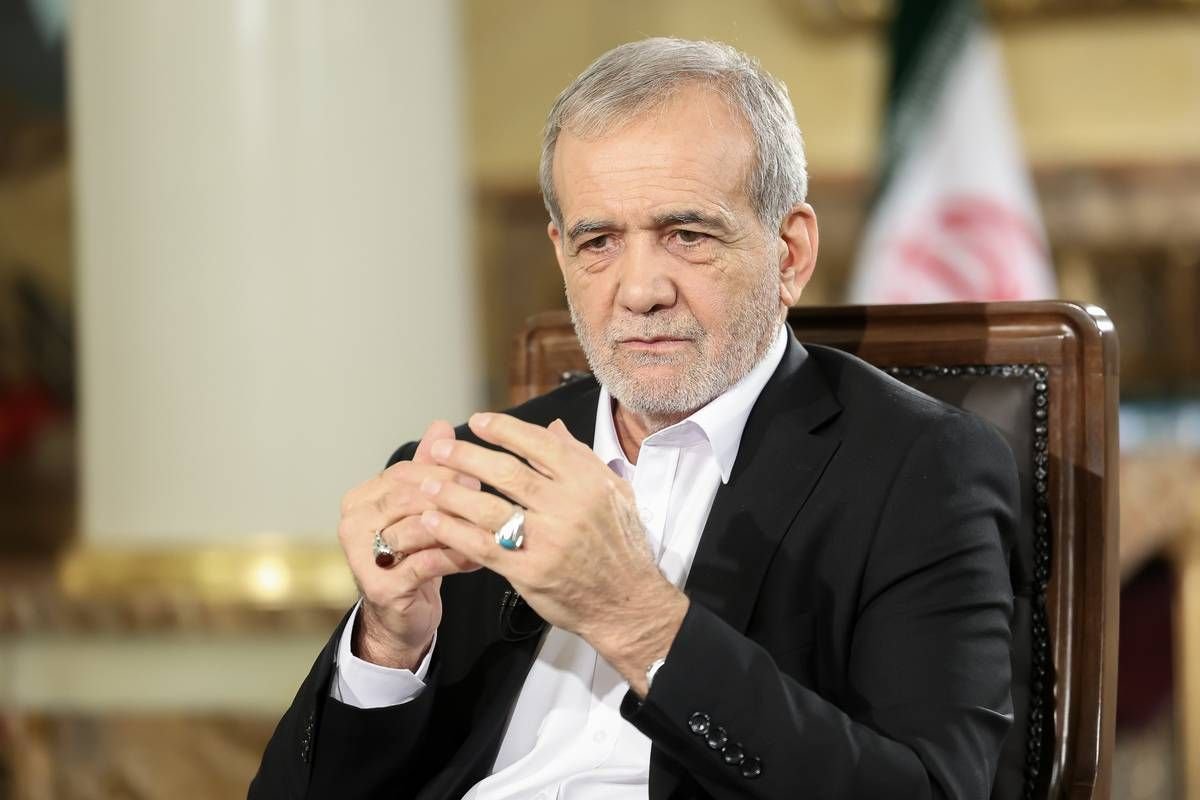
Iran’s President Masoud Pezeshkian has firmly stated that his country has no intention of developing nuclear weapons, rejecting long-standing accusations from the United States and Israel.
Speaking amid heightened regional tensions, President Pezeshkian emphasized that Iran’s position is rooted not only in political policy but also in religious doctrine. He pointed to a long-standing decree issued by former Supreme Leader Ayatollah Ali Khamenei, which explicitly forbids the development and use of nuclear weapons under Islamic law.
According to Pezeshkian, the religious ruling — often referred to as a fatwa — remains binding and reflects the country’s official stance on nuclear armament. He argued that such weapons are considered morally unacceptable and inconsistent with Iran’s principles.
“The religious leader of a society cannot contradict such a declaration,” Pezeshkian said in recent remarks, reinforcing that Iran’s leadership is committed to maintaining a non-nuclear weapons policy.
The statement comes as the conflict involving Iran, the United States, and Israel continues to escalate, raising global concerns about the potential for a wider regional confrontation. Western governments have repeatedly accused Tehran of pursuing nuclear capabilities, citing uranium enrichment activities and missile development programs.
However, Iranian officials insist that their nuclear program is strictly for civilian purposes, including energy production and scientific research. This position has been reiterated in multiple international forums, even as tensions with Western powers persist.
Analysts note that the reference to religious authority is a significant aspect of Iran’s argument, as decisions made by the Supreme Leader carry both political and spiritual weight within the country’s governance structure. The prohibition of nuclear weapons, therefore, is framed not only as a policy choice but as a matter of religious obligation.
Despite these assurances, skepticism remains among international observers, particularly in Washington and Tel Aviv, where concerns over Iran’s nuclear ambitions continue to shape foreign policy and security strategies.
The issue has been at the center of diplomatic disputes for years, including negotiations and agreements aimed at limiting Iran’s nuclear activities. However, recent military developments and escalating hostilities have complicated efforts to revive dialogue.
Experts suggest that Iran’s continued emphasis on its anti-nuclear stance may be intended to counter mounting pressure and justify its position on the global stage. At the same time, ongoing conflict dynamics make it increasingly difficult to separate political messaging from strategic realities.
As tensions remain high, the question of Iran’s nuclear intentions continues to play a central role in shaping regional and international relations. Whether diplomatic efforts can regain momentum will depend largely on trust, verification mechanisms, and the willingness of all parties to re-engage in meaningful negotiations.