MWE Correspondent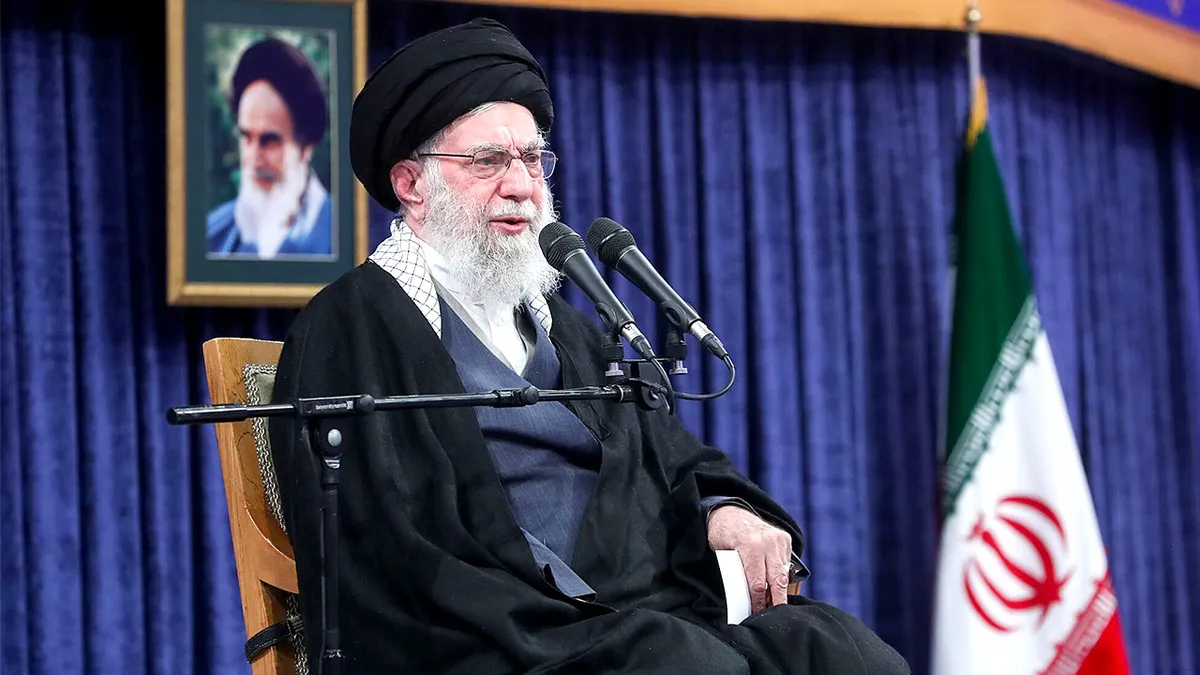
Iran’s Supreme Leader, Ayatollah Ali Khamenei, has strongly criticized protesters opposing the government, accusing them of acting as agents of foreign interests as nationwide demonstrations driven by economic hardship continue to unfold.
In a televised address broadcast nationwide on Friday, Khamenei described the protesters as lawless elements seeking to damage public property and undermine national stability. He claimed the demonstrations were being encouraged by the President of the United States, Donald Trump, and warned that the Iranian state would not tolerate what he termed foreign-backed efforts to destabilize the country. Khamenei said the Islamic Republic, which he noted was founded through immense sacrifice, would not retreat in the face of internal unrest or external pressure. More background on the Supreme Leader can be found in the profile of Ali Khamenei.
“The Islamic Republic was established through the blood and struggle of countless honorable people,” Khamenei said, adding that the government would respond firmly to any actions that threaten national unity. He also accused foreign powers of exploiting economic grievances among citizens to provoke unrest, a narrative Iranian leaders have frequently used during periods of domestic tension.
The remarks come as Iran, a country of more than 90 million people, faces growing internal pressure and partial isolation. In recent days, authorities have imposed restrictions on internet access, saying the move is intended to prevent the spread of unrest. Human rights groups and digital freedom advocates, however, argue that such measures limit access to information and restrict communication during a critical period.
The current wave of demonstrations began on December 28 at Tehran’s historic bazaar, an area long associated with economic influence and political activism. Protesters initially voiced anger over worsening economic conditions, including the sharp decline of the national currency, rising inflation, and the increasing cost of living.
Also Read; Venezuela Begins Releasing Political Prisoners Amid Transition
As the protests spread to other cities, they evolved to include broader criticism of governance and economic management, reflecting deep-seated public frustration. Similar episodes are documented in the wider history of protests in Iran.
Independent monitoring groups report that the scale of the unrest makes it one of the most significant protest movements in Iran in recent years. According to such reports, dozens of people have been killed since the demonstrations began, while thousands have been arrested or detained by security forces. Iranian authorities have not released comprehensive official figures, instead emphasizing the need to restore order and protect public infrastructure.
The unrest has also heightened tensions between Tehran and Washington. Earlier this month, U.S. President Donald Trump warned that the United States would respond if Iranian authorities used excessive force against peaceful demonstrators. Iranian officials condemned the remarks as interference in domestic affairs, further straining already fragile Iran–United States relations.
A senior adviser to Iran’s Supreme Leader later warned that any foreign involvement in Iran’s internal protests could risk triggering wider instability across the Middle East. mwe