MWE Correspondent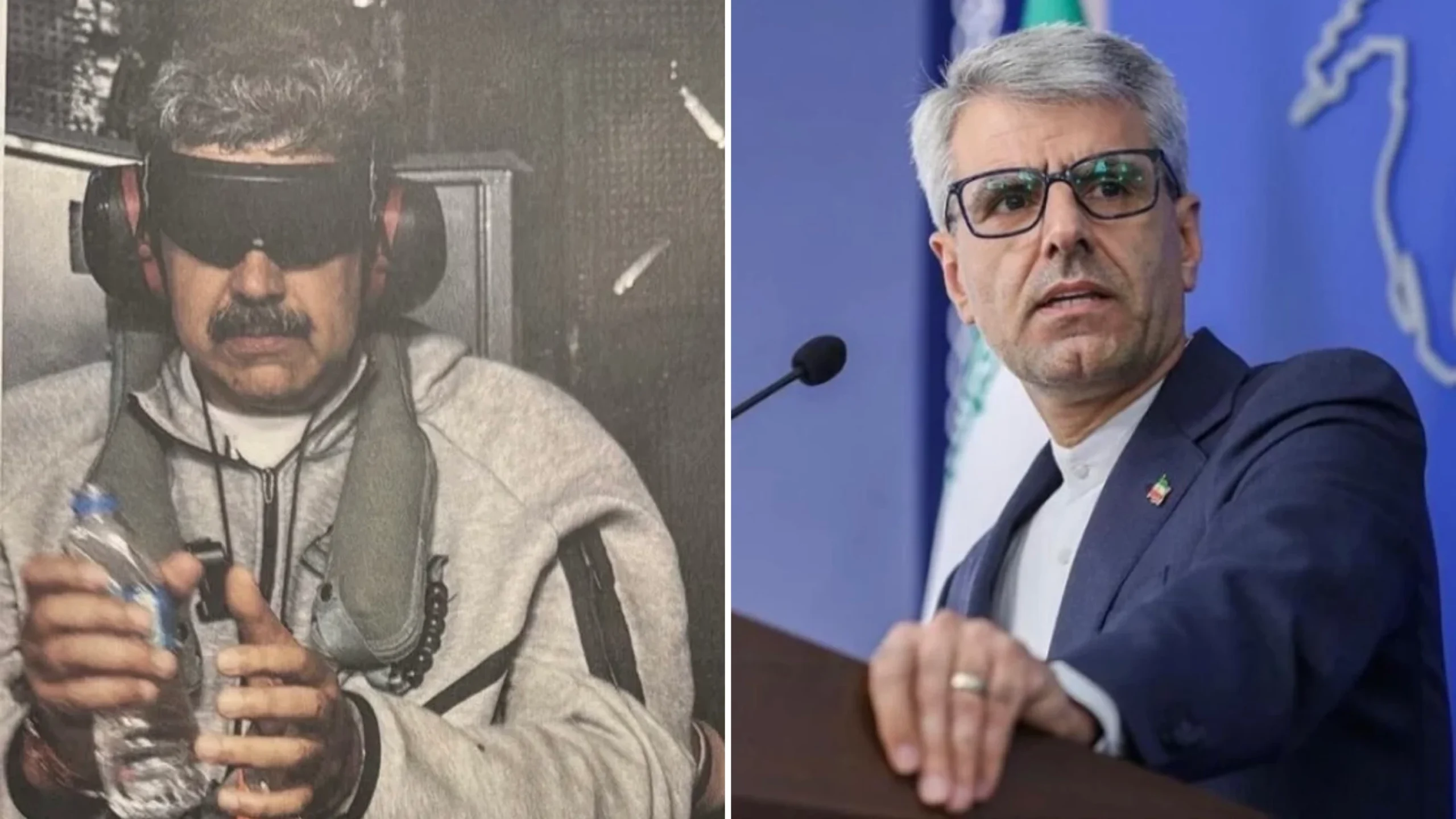
Iran has publicly demanded the release of Venezuelan leader Nicolás Maduro, condemning his arrest by the United States as unlawful and warning that the move could set a dangerous precedent in international relations.
The statement from Tehran adds a new diplomatic dimension to a case that has already drawn global attention and sharp divisions among world powers.
Speaking through its foreign ministry, Iran described Maduro’s capture and transfer to New York as a violation of international law and national sovereignty. Iranian officials argued that detaining the leader of a sovereign state through a military-style operation undermines the foundations of the global legal order and weakens trust between nations. Tehran urged international institutions to intervene, calling on them to defend the principles of state sovereignty and non-interference.
Maduro, a close political ally of Iran, was taken into U.S. custody during an operation carried out by American forces and later flown to New York, where he faces multiple criminal charges. He has pleaded not guilty and has told the court that he was forcibly captured, a claim that has been echoed by several governments critical of Washington’s actions. His legal team is expected to challenge both the substance of the charges and the legality of his arrest.
Iran’s reaction reflects the long-standing ties between Tehran and Caracas. Over the years, the two countries have strengthened cooperation in energy, trade and diplomacy, often framing their partnership as resistance to external pressure. Iranian leaders have repeatedly described Venezuela as a strategic ally and have portrayed the case against Maduro as politically motivated rather than purely legal. More background on Maduro’s political career can be found through Nicolás Maduro.
Also Read; Venezuela Oil Wealth Reshapes Global Energy Politics
In its response, Iran also appealed to the United Nations, urging the global body to address what it called a serious breach of international norms. Iranian officials warned that allowing such actions to go unchallenged could encourage similar interventions elsewhere, increasing instability and confrontation worldwide. They stressed that disagreements between states should be resolved through diplomacy and legal mechanisms, not force.
The United States, for its part, maintains that the arrest was justified and carried out in line with its laws, arguing that the charges against Maduro involve serious crimes with international consequences. Washington has framed the case as part of broader efforts to combat transnational crime, insisting that no individual is above the law. Information on the U.S. legal system and its global reach is outlined by the United States Department of Justice.
Reactions to Iran’s statement have been mixed. Some countries have echoed concerns about sovereignty and due process, while others have avoided taking a clear position, reflecting the politically sensitive nature of the case. Analysts say the dispute highlights deep divisions in global politics, particularly between nations that support a rules-based international system led by Western powers and those that argue the system is applied selectively.
As the legal proceedings move forward in New York, the diplomatic fallout continues to grow. Iran’s call for Maduro’s release underscores how the case has moved beyond the courtroom, becoming a symbol of wider geopolitical tensions. Whether international pressure will influence the outcome remains uncertain, but the controversy has already reinforced debates about power, sovereignty and justice in an increasingly polarised world.