MWE Correspondent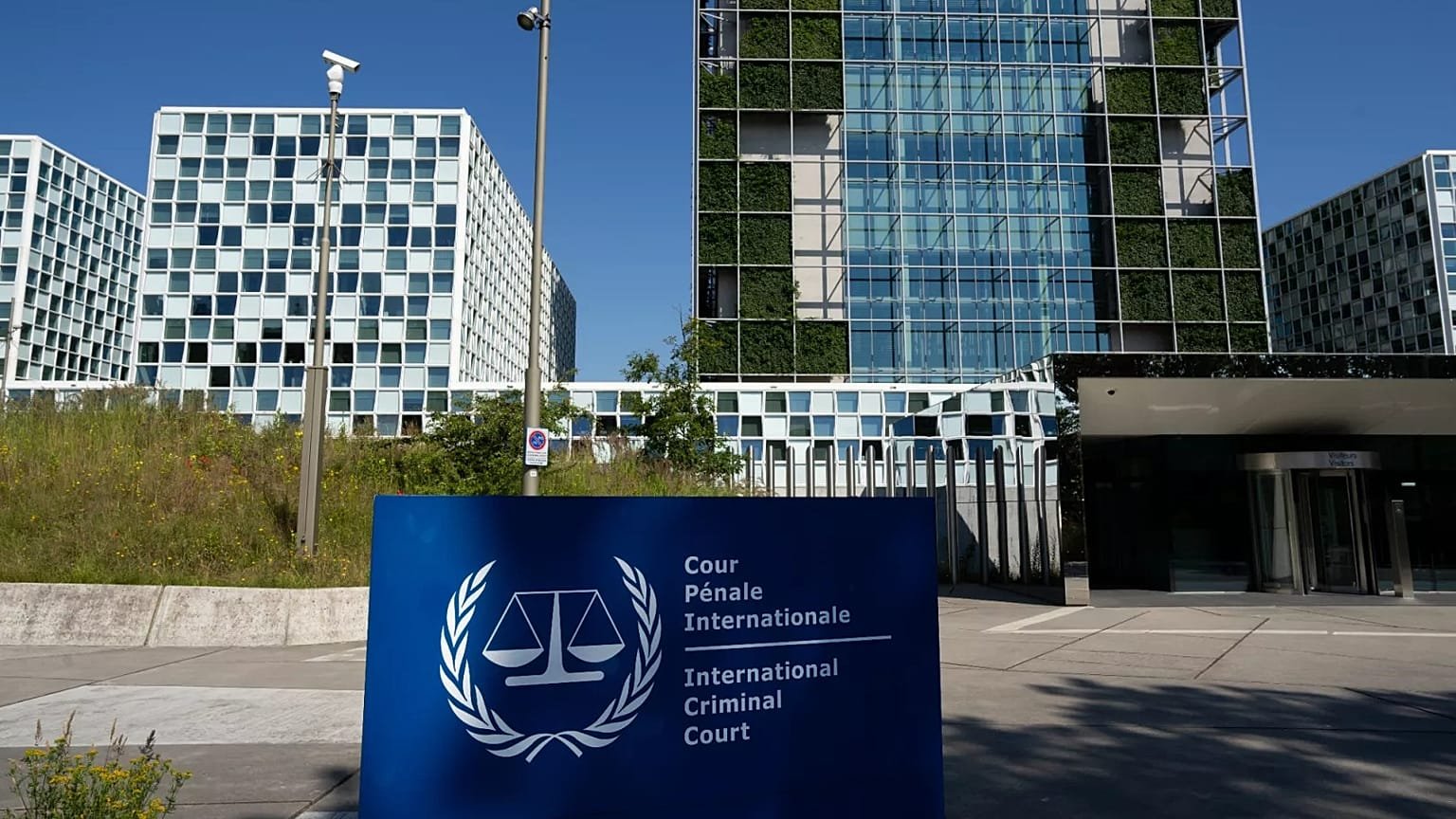
The International Criminal Court is once again at the center of a heated global debate, and for many African governments, this moment feels familiar.
The court, originally promoted as a neutral institution of last resort for the world’s gravest crimes, is facing renewed scrutiny over credibility, internal turmoil, and accusations that its justice system still reflects unequal global power. Across Africa, the latest developments are reviving an old but increasingly urgent question: can international justice remain legitimate if major powers stay partially shielded while weaker states continue to bear the heaviest legal pressure?
The immediate trigger for that debate is the fresh crisis surrounding ICC Chief Prosecutor Karim Khan. Reuters reported this week that ICC member states voted to move ahead with disciplinary proceedings against Khan over sexual assault allegations, despite divisions among member countries and competing interpretations of internal judicial findings. According to Reuters, 15 states voted in favor of continuing the process, two abstained, and four opposed. Khan, who has denied wrongdoing, is already on leave, and the controversy has deepened institutional instability inside the court at a time when the ICC is also under external geopolitical pressure. Notably, Reuters reported that a group of African states argued the disciplinary process should end, saying judges had effectively cleared him, while other major backers insisted the case should continue. That split is politically important because it shows Africa is not merely reacting to the court — African states are actively shaping the argument over its legitimacy and governance.
This is not just an internal ethics story. It has reopened a broader conversation about whether the ICC applies justice evenly across regions and power blocs. For years, African critics have argued that the court’s early case profile created a damaging perception: that the ICC was quick to prosecute leaders, militias, and political actors from African states while often moving more slowly, or facing structural limits, when dealing with powerful nations or their allies. That perception remains politically potent because legitimacy in international law depends not only on legal texts but also on whether institutions appear consistent.
At the same time, the court is clearly trying to demonstrate a wider geographic reach. Reuters reported in March that the ICC opened an investigation into alleged crimes against humanity by Belarus, focusing on the deportation of political opponents into neighboring Lithuania. Although Belarus is not a member of the court, the case proceeds through Lithuanian jurisdiction, showing that the ICC is expanding its legal creativity and willingness to act beyond Africa when jurisdictional pathways exist. That matters because it directly weakens the argument that the court only looks south. Yet it does not automatically erase older political grievances, especially in Africa, where many leaders and legal scholars still believe the burden of enforcement has historically fallen disproportionately on the continent.
The sovereignty issue is where this story becomes most important for Africa. Many African states are not rejecting accountability itself. Rather, they are increasingly demanding stronger legal sovereignty meaning the ability to prosecute grave crimes domestically or through African institutions instead of depending almost entirely on a court based in The Hague. This is a critical distinction. The debate is not simply “justice versus impunity.” It is increasingly “external justice versus sovereign justice.” If African states can build credible national courts, specialized war crimes chambers, and regional legal mechanisms with real enforcement power, then the continent gains more control over both justice and political narrative.
Also Read: Peace Diplomacy Reshapes Russia-West Global Balance
This is why many analysts say the next phase of African legal strategy should focus less on symbolic anger at the ICC and more on institution-building. Complaints alone will not change the global system. But stronger domestic prosecutorial systems, constitutional safeguards, anti-corruption enforcement, and investment in forensic and judicial capacity can reduce the argument that only external courts can handle the continent’s most serious crimes. A court of last resort becomes less politically intrusive when local courts are strong enough to act first.
The politics of international law also cannot be ignored. The ICC is operating in a world where not all major powers are equally bound by the same rules. Some influential states remain outside the Rome Statute entirely, while others support the court selectively depending on the target and the geopolitical moment. That inconsistency fuels accusations of neo-imperial judicial influence, whether fully fair or not. In practice, global justice is often shaped by diplomacy, sanctions, donor politics, arrest cooperation, and military realities — not just by legal principle. African countries understand that well, which is why many are increasingly skeptical of any system that claims universal neutrality while functioning inside an unequal global order.
Still, abandoning the ICC entirely would be a serious and risky step. For many victims of mass violence, the court remains one of the few institutions capable of pursuing accountability when national systems collapse or political elites protect perpetrators. That is why the more strategic African approach may be reform rather than rupture. Reform could mean demanding greater transparency in case selection, stronger oversight of prosecutors, clearer standards on jurisdiction, and more meaningful support for complementarity the principle that national courts should lead whenever they are able and willing.
This moment also offers a deeper lesson for African diplomacy. Just as countries are rethinking dependence in finance, trade, and security, they are now also rethinking dependence in justice. A continent that wants stronger sovereignty in minerals, banking, and foreign policy will eventually seek the same in law. That does not mean rejecting international cooperation. It means refusing to let justice become another arena where external institutions define African political outcomes without equal African control.
The ICC remains an important institution, but it is no longer immune from scrutiny. The disciplinary crisis around its top prosecutor, the expansion of investigations beyond Africa, and the continued complaints about uneven enforcement have together reopened a foundational question: who controls the meaning of justice in a multipolar world? For Africa, the answer may increasingly lie not in total withdrawal, but in building legal systems strong enough to make outside intervention the exception rather than the norm.