MWE Correspondent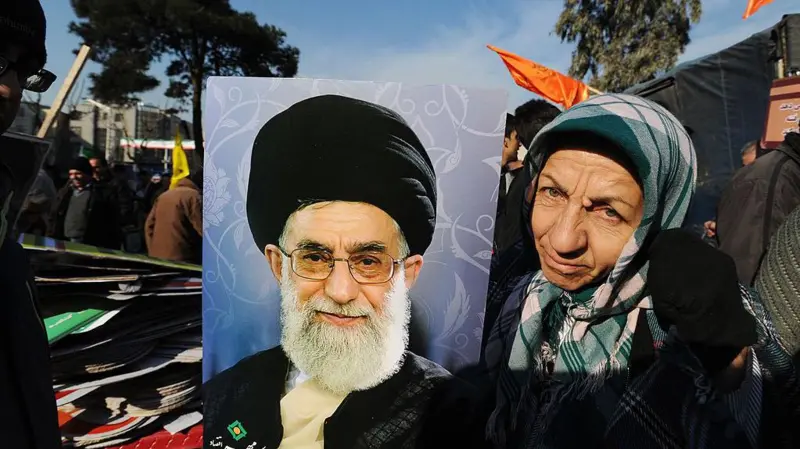
For nearly four decades, Iran’s political direction has been defined by one man — Ayatollah Ali Khamenei.
As the country’s Supreme Leader since 1989, he has stood at the center of power in the Islamic Republic, guiding decisions that stretch from domestic governance to regional geopolitics.
Khamenei rose to the top office following the death of revolutionary founder Ruhollah Khomeini. His appointment came at a critical moment, just ten years after the Iranian Revolution transformed the country’s political system. That historic upheaval dismantled the monarchy and established a religious-based governance structure that still defines Iran today.
Unlike an elected president, the Supreme Leader holds ultimate authority over the military, judiciary, and key state institutions. Under Khamenei’s leadership, the office expanded its influence, becoming the decisive force in shaping Iran’s long-term policies. Supporters describe him as a guardian of revolutionary principles. Critics argue that the concentration of power has limited political flexibility within the country.
A significant pillar of his authority has been his close relationship with the Islamic Revolutionary Guard Corps (IRGC). Originally formed to defend the revolution, the IRGC has grown into one of the most powerful institutions in Iran, playing major roles not only in national defense but also in economic and regional affairs. Its influence has been central to Iran’s projection of power beyond its borders.
Regionally, Iran has maintained strategic alliances that have often drawn international attention. Among them is its backing of Hezbollah, the Lebanese political and armed movement. Tehran views such partnerships as part of a broader strategy to counterbalance regional adversaries, while critics see them as contributing to prolonged instability in parts of the Middle East.
Another defining chapter of Khamenei’s leadership has been Iran’s nuclear policy. Tehran insists its nuclear activities are peaceful and aimed at energy development and scientific progress. However, enrichment programs have triggered international negotiations, sanctions, and diplomatic tensions. The nuclear file remains one of the most sensitive and closely monitored aspects of Iran’s global relations.
Domestically, Khamenei’s tenure has spanned economic fluctuations, sanctions pressure, and waves of public protest. Authorities have often framed unrest as influenced by external actors, emphasizing national unity and resilience. Meanwhile, economic reforms and sanctions relief efforts have continued to shape public debate within the country.
Now in his mid-80s, speculation about succession has intensified, though no official transition has been announced. Iran’s constitutional mechanism assigns the responsibility of choosing a future Supreme Leader to the Assembly of Experts, making any eventual change a moment of profound national significance.
Through shifting global alliances, regional conflicts, and internal challenges, Ayatollah Ali Khamenei has remained the defining figure of Iran’s political era. Whether viewed as a stabilizing authority or a symbol of centralized power, his influence on Iran’s modern history is undeniable — and its impact continues to resonate far beyond the country’s borders.