MWE Correspondent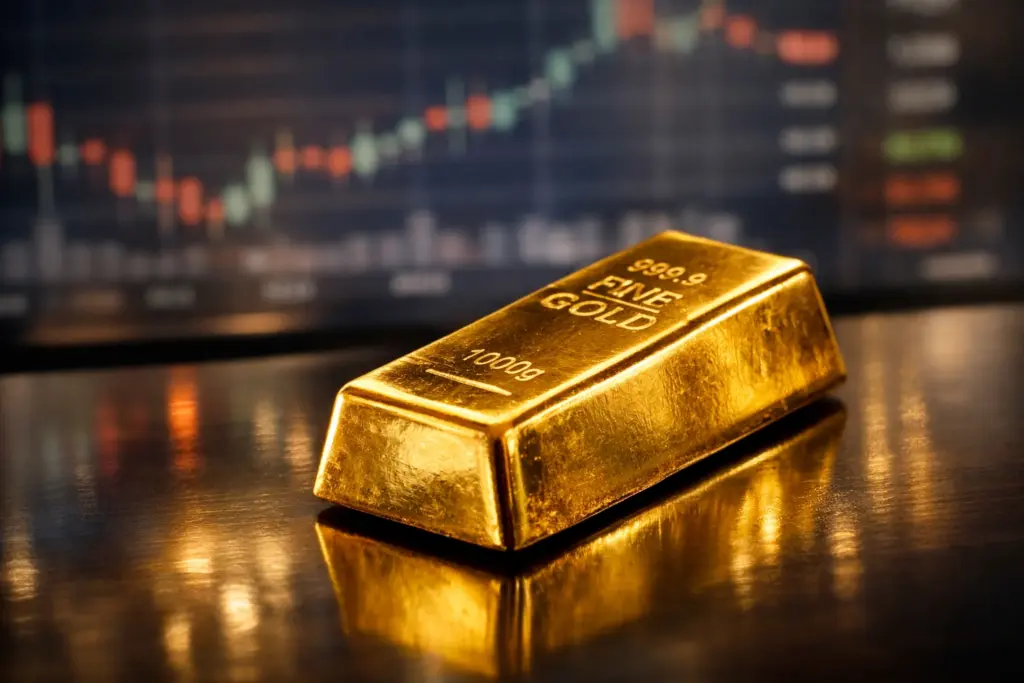
Gold is quietly returning to the center of global financial attention, not through sudden spikes, but through steady, consistent demand driven by uncertainty across multiple sectors.
As markets navigate shifting currency dynamics, geopolitical adjustments, and cautious investment sentiment, the appeal of gold is strengthening once again.
This is not a short-term reaction. It is a strategic move.
Recent market data shows that gold prices have remained elevated, holding above $2,200 per ounce in recent trading sessions. What makes this trend significant is not just the price level, but the underlying demand structure. Central banks, institutional investors, and even retail buyers are increasingly turning toward gold as a way to protect value in a changing global environment.
That is where gold reserves become a key signal.
Central banks across multiple regions have continued to increase their gold holdings, reflecting a broader strategy of diversification. Instead of relying heavily on a single reserve currency, monetary authorities are gradually expanding their asset base to include more physical gold. This trend has been building over the past few years, but recent developments suggest it is gaining stronger momentum.
The reasoning behind this shift is straightforward.
Gold is not tied to any single economy, policy decision, or currency system. It acts as a neutral store of value, especially during periods of uncertainty. When inflation risks rise, when currencies fluctuate, or when geopolitical tensions create instability, gold often becomes a preferred asset for preserving wealth.
This is where safe-haven asset behavior becomes visible.
Investors tend to move toward assets that are perceived as stable during uncertain times. Gold has historically played this role, alongside assets like government bonds in stable economies. What is different now is the breadth of demand. Instead of being limited to specific regions, the current interest in gold is more global and more coordinated.
There is also a strong connection to currency dynamics.
As discussions around dollar dependence and currency diversification continue, gold provides an alternative that does not rely on exchange-rate exposure. This makes it particularly attractive for countries seeking to reduce vulnerability to external financial pressures. While the global financial system remains anchored in major currencies, the gradual increase in gold holdings suggests a parallel strategy is developing.
That is where commodity markets come into focus.
Gold’s performance often influences broader commodity sentiment. When gold strengthens, it can signal a shift in how investors view risk and stability across markets.
Also Read: Diplomatic Signals Show Gradual Path Toward Stability
This can have indirect effects on other commodities, including energy and agricultural products, as investment flows adjust based on perceived global conditions.
However, the current gold trend is not without complexity.
Higher prices can reduce affordability for some buyers, particularly in retail markets where gold is used for jewelry or small-scale investment. At the same time, sustained high demand may encourage increased production, which could eventually influence supply dynamics. Markets rarely move in a straight line, and gold is no exception.
Still, the underlying direction remains clear.
The renewed strength in gold demand reflects a broader search for stability in a world where multiple uncertainties exist simultaneously. It is not driven by a single event, but by a combination of factors — economic adjustments, currency shifts, and geopolitical considerations.
For policymakers, this trend carries important implications.
Rising gold reserves can strengthen financial buffers and improve confidence in national balance sheets. For investors, it highlights the importance of diversification in uncertain environments. And for the global economy, it signals a subtle but meaningful shift in how value is being stored and protected.
The key takeaway is not just that gold is rising.
It is why it is rising.
Because when markets begin to move toward stability-focused assets, it often reflects deeper questions about the direction of the global system.
And in that context, gold is not just a commodity.