MWE Correspondent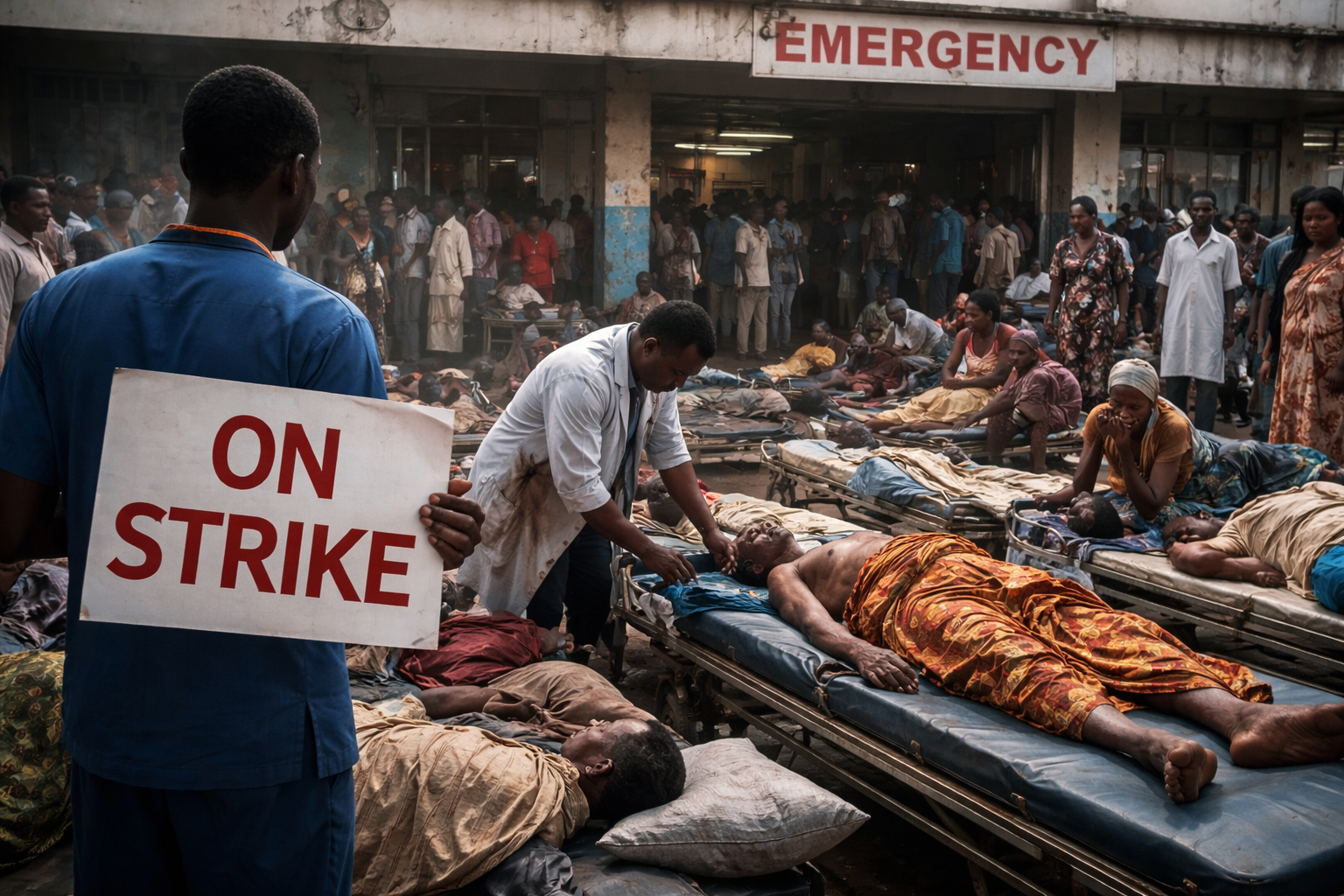
In the heart of Central Africa, a silent crisis is unfolding—one that is not driven by war or disease alone, but by the absence of those meant to save lives.
In Kasai province of the Democratic Republic of Congo (DRC), at least 35 patients have reportedly died following a nurses’ strike that has crippled essential medical services, exposing deep fractures in one of the world’s most fragile healthcare systems.
The deaths, according to local health sources, occurred over several days as hospitals struggled to operate without sufficient personnel. Emergency units slowed, maternity wards went unattended, and patients requiring urgent intervention were left waiting—some fatally. While official figures remain fluid as the situation develops, the implications are already severe: a healthcare system pushed to its breaking point.
This is not an isolated incident. The DRC has a history of healthcare disruptions linked to industrial action. A 2021 nurses’ strike, for instance, forced multiple facilities across provinces—including Kasai—to shut down or scale back operations, significantly reducing access to care and delaying vital health programs.
Across Africa, the pattern is disturbingly familiar. In Kenya, prolonged doctors’ strikes in recent years have paralyzed public hospitals, leaving thousands without treatment. Uganda has similarly witnessed repeated industrial actions by medical workers over low pay and poor working conditions.
Also Read: Africa Reclaims Trade Power Through Value Addition Strategy
Even in Tanzania, tensions over healthcare funding and staffing shortages have periodically raised concerns about system resilience, though large-scale strikes have been less frequent.
Globally, the crisis reflects a broader structural problem. According to international health bodies, the world faces a shortage of more than 10 million healthcare workers, with Africa bearing a disproportionate burden. In many low-income countries, nurse-to-patient ratios remain critically low, and strikes—while often a last resort—can have immediate and deadly consequences.
In the DRC, the stakes are even higher. The country continues to grapple with recurring health emergencies, from Ebola outbreaks to cholera epidemics. In 2025 alone, an Ebola outbreak in Kasai resulted in dozens of deaths, underscoring how fragile and overstretched the system already is. When healthcare workers withdraw services, even temporarily, the impact is magnified.
The current strike stems from longstanding grievances: delayed salaries, inadequate infrastructure, and lack of government commitment to reform. For many nurses, the protest is not just about wages, but about dignity and the ability to provide safe, effective care. Yet for patients caught in the middle, the consequences are immediate and unforgiving.
Experts warn that unless structural reforms are implemented—ranging from better funding to workforce retention strategies—the cycle will continue. Healthcare strikes, once rare, are becoming a recurring feature in several developing regions, signaling deeper systemic failures rather than isolated labor disputes.
What is unfolding in Kasai is, therefore, more than a local tragedy. It is a warning—a stark reminder that healthcare systems are only as strong as the people who sustain them. When those people step away, even briefly, the cost is measured not in policy debates, but in human lives.