MWE Correspondent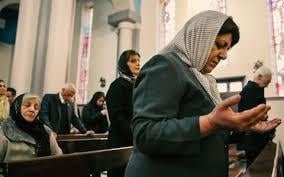
New reports on the number of Christians in Iran are drawing attention to significant discrepancies between official government figures and independent research estimates, underscoring the complexity of measuring religious demographics in the country.
According to a range of international studies and assessments by religious research organizations, the Christian population in Iran is believed to fall anywhere between 100,000 and over 500,000 individuals. Some estimates suggest the number could be even higher—potentially exceeding one million—driven in part by the growth of informal worship networks commonly referred to as house churches, as well as reported conversions from Islam to Christianity.
These findings contrast sharply with official figures published following Iran’s 2016 national census, which recorded approximately 117,000 Christians in the country. Analysts say such differences are not uncommon in societies where religious identity can be sensitive, particularly for minority groups operating outside formally recognized structures.
Iran is an اسلامی republic where the majority of the population adheres to Shia Islam. However, the constitution formally recognizes certain minority religious communities, including Christians, Jews, and Zoroastrians, granting them limited rights to worship and representation. Within the Christian population, historically rooted communities such as Armenian and Assyrian Christians make up a significant portion of officially recognized believers.
Also Read; Global Power Alliances Quietly Rewire The System
Reports also indicate that there are more than 600 churches across the country, many of which serve these long-established communities. In addition, smaller Protestant congregations and independent fellowships are believed to operate, although some of these may not be officially registered. The expansion of house churches—often held in private homes—has been cited by researchers as a key factor contributing to higher unofficial estimates.
Observers note that gathering precise data on religious affiliation in Iran remains challenging due to legal, social, and political sensitivities. Conversion from Islam to another religion is a particularly delicate issue and may not always be reflected in official statistics. As a result, independent organizations often rely on indirect methods, surveys, and anecdotal evidence to estimate population size.
The differing figures highlight broader questions about religious freedom, transparency, and demographic reporting in the region. While government data provides a baseline, independent estimates suggest a more dynamic and evolving religious landscape, shaped by both historical communities and newer forms of worship.
As discussions continue, experts emphasize the importance of approaching such figures with caution, recognizing both the limitations of official data and the uncertainties inherent in external estimates. The case of Iran illustrates how religious demographics can remain fluid and contested, particularly in contexts where faith intersects with legal and cultural constraints.