MWE Correspondent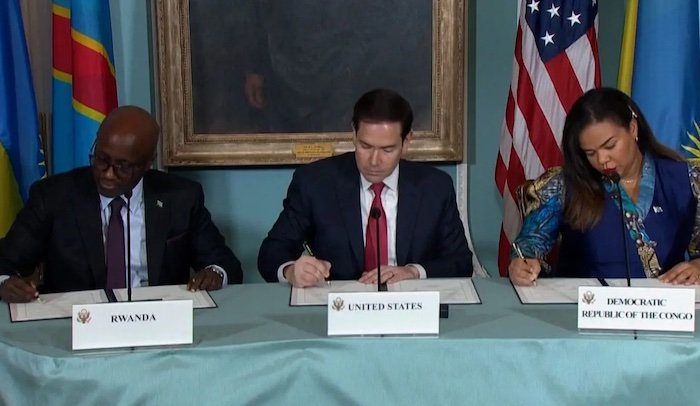
Leaders of the Democratic Republic of the Congo and Rwanda are set to meet in Washington this week to sign a new peace agreement aimed at ending ongoing conflict in eastern DRC.
The summit, hosted by the United States, comes months after an earlier US‑brokered deal in June failed to stop clashes in the mineral‑rich eastern provinces.
The previous accord, signed by the countries’ foreign ministers, was intended to halt hostilities, withdraw troops, and disarm armed groups. Despite those commitments, fighting persisted, with both sides accusing each other of failing to uphold the ceasefire. Observers noted that the unresolved issues, including Rwanda’s support for the M23 rebel movement, continue to fuel tensions and complicate efforts for lasting peace.
U.S. President Donald Trump will oversee the formal signing, bringing international attention to the high‑stakes diplomatic effort. Congolese President Felix Tshisekedi confirmed through his spokesperson that he will attend, while Rwandan President Paul Kagame has expressed cautious optimism, signalling a willingness to commit to the agreement even amid lingering mistrust.
In preparation for the talks, President Kagame appointed Dr. Usta Kayitesi as Rwanda’s Minister for Regional Affairs, replacing a former military chief. Analysts interpret this move as an effort to strengthen diplomatic coordination while ensuring security concerns remain central to the peace process.
Also Read; Algeria’s Pivotal Conference: Call for Justice and Reparations
The Washington meeting is expected to reaffirm commitments to territorial integrity, civilian protection, and disarmament, while also fostering economic and political cooperation between the two nations. Many analysts emphasize that signing the accord is only the first step; effective implementation, monitoring, and mutual trust will determine whether it can bring a meaningful reduction in violence.
This renewed diplomatic push highlights the international community’s concern about instability in eastern DRC, which has caused displacement, humanitarian crises, and economic disruption over decades. A successful outcome in Washington could pave the way for broader regional stability, offering hope to communities long affected by conflict and insecurity.
Observers caution, however, that lasting peace will require sustained effort, transparent enforcement, and cooperation from both governments. As both countries prepare for the signing, the eyes of the world remain focused on Washington, hoping that the latest initiative can finally deliver stability in a region where peace has long been elusive.