MWE Correspondent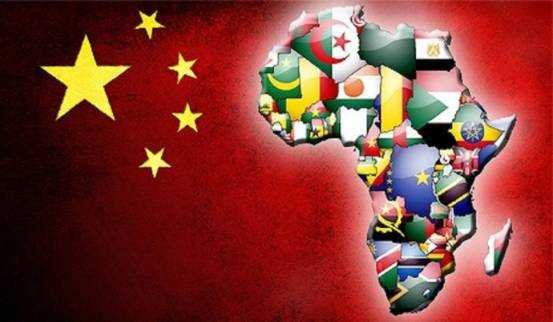
The competition for influence in Africa is becoming sharper in 2026, and it is no longer limited to speeches, summit declarations or development slogans.
It is now being fought through railways, factories, critical minerals, digital trade rules, strategic financing and industrial partnerships. China remains deeply embedded across much of the continent through infrastructure, manufacturing and commodity access, while the United States and Europe are trying to rebuild their strategic position by focusing on critical minerals, trade rules, supply-chain security and new investment frameworks. The result is a more intense geopolitical contest in which African countries have more leverage than before — but only if they negotiate carefully and avoid becoming passive arenas for great-power rivalry.
One of the clearest examples of China’s continued long-term push came in Kenya, where construction resumed last month on the long-delayed extension of the Standard Gauge Railway after a six-year halt. Reuters reported that the railway, which began with the Mombasa–Nairobi section completed in 2017, had stalled when Chinese funding was cut back. Now, the project has been revived through a new financing model based on securitizing revenue from a railway development levy expected to raise around $270 million annually, while China Road and Bridge Corporation remains the contractor. This is a significant shift. It shows that China-Africa cooperation is evolving away from the older debt-heavy model of the Belt and Road Initiative toward a more risk-sharing and investment-driven structure rather than disappearing altogether.
That matters because many Western narratives over the past few years predicted a broad Chinese retreat from Africa. The facts on the ground suggest something more complicated. Beijing has indeed become more selective, but it is not stepping back from strategic sectors. Instead, it is moving toward projects that preserve influence while reducing direct sovereign lending exposure. In Kenya’s case, the revived railway is still central to East African regional integration and could eventually link deeper into Uganda, strengthening China’s continued presence in transport corridors that matter for trade, logistics and political influence. For African leaders, the lesson is clear: Chinese capital may be changing form, but Chinese strategic interest remains firmly in place.
China is also expanding its industrial footprint, not just its construction footprint. Reuters reported this week that Chinese automaker Chery plans to begin production by the end of 2027 at a newly acquired plant in Rosslyn, South Africa, formerly owned by Nissan. The company said it has already become a top-10 player in South Africa after re-entering the market four years ago, selling around 50,000 vehicles annually through a network of 150 dealers nationwide. More importantly, Chery said it plans to manufacture not only internal combustion vehicles but also hybrids, plug-in hybrids and battery electric vehicles, with an eye toward exports across Africa and into Europe. That is not just a sales story — it is a strategic manufacturing story. It shows how Chinese firms are using Africa as a production base, a market and a supply-chain platform all at once.
While China strengthens its industrial and infrastructure position, the West is increasingly focusing on a different battlefield: strategic minerals and supply chains. Reuters reported that the European Union and the United States used the recent WTO ministerial meeting in Cameroon to deepen cooperation on critical minerals, with EU Trade Commissioner Maros Sefcovic saying both sides agreed to “further advance work” in that area. This is highly significant because the West’s new Africa strategy is increasingly tied to reducing dependence on Chinese-controlled mineral processing, especially in materials essential for batteries, defense technologies and the energy transition. In practical terms, Africa is being viewed not just as a trade partner, but as a decisive supplier in the race for critical minerals and industrial resilience.
That shift also overlaps with a broader crisis in the global trade system. Reuters reported that at the WTO ministerial conference in Yaoundé, Cameroon, talks failed to renew the 28-year-old moratorium on e-commerce tariffs after Brazil and Turkey blocked an extension. In response, the United States signaled it may pursue alternative trade agreements outside the WTO framework. This is important for Africa because it suggests the West may increasingly use flexible coalitions, regional deals and “like-minded” partnerships rather than relying solely on global institutions. That could create new opportunities for African countries — but also new fragmentation if major powers begin bypassing multilateral rules and negotiating more selectively.
Also Read: Africa Confronts Debt Traps With Sovereign Solutions
The broader geopolitical context makes this rivalry even more important. A joint report by U.N. agencies, the African Union and the African Development Bank warned this week that if the Middle East conflict continues for more than six months, Africa could lose 0.2 percentage points of GDP growth in 2026 due to disruptions in trade, energy and fertilizer supplies. The report also noted that the Middle East accounts for 15.8% of Africa’s imports and 10.9% of its exports. Crucially, it warned that a wider regional conflict could intensify competition for influence in Africa involving the United States, Gulf states, China, Russia, Iran and Turkey. In other words, the struggle for Africa is not happening in isolation — it is unfolding inside a wider global reordering where external powers increasingly view the continent as strategically indispensable.
For Africa, this creates a rare but difficult opportunity. The continent is no longer in the same bargaining position it held two decades ago. Today, it has what global powers urgently need: ports, logistics routes, young consumer markets, manufacturing potential, critical minerals, rare earths, energy corridors and digital growth. That means African governments can negotiate harder. They can demand local processing instead of raw extraction, supplier development instead of import dependency, technology transfer instead of turnkey projects, and local-currency settlement instead of permanent exposure to foreign exchange shocks. The rise of the African Continental Free Trade Area gives them an even stronger platform to coordinate these demands at regional scale rather than country by country.
But the risks are just as real. If African states treat this rivalry as a short-term auction for loans or ribbon-cutting ceremonies, they may repeat old mistakes under new branding. A Chinese railway without industrial spillover, a Western mineral pact without local refining, or a digital trade deal that weakens tax sovereignty can all become updated versions of the same dependency trap. That is why the real issue is not whether China or the West “wins” Africa. The real issue is whether African governments convert this competition into durable national and regional power.
In 2026, the China–West contest in Africa is entering a more serious phase. China still holds deep structural advantages in infrastructure, manufacturing and long-term commercial presence. The West is moving faster on minerals, trade frameworks and strategic re-engagement. Both sides want access, influence and positioning in the emerging multipolar order.
For Africa, the smartest response is neither blind alignment nor ideological hostility. It is strategic non-subordination — engaging every power, but on terms that build African industry, strengthen sovereignty and keep the continent from becoming the battlefield of someone else’s economic future.