MWE Correspondent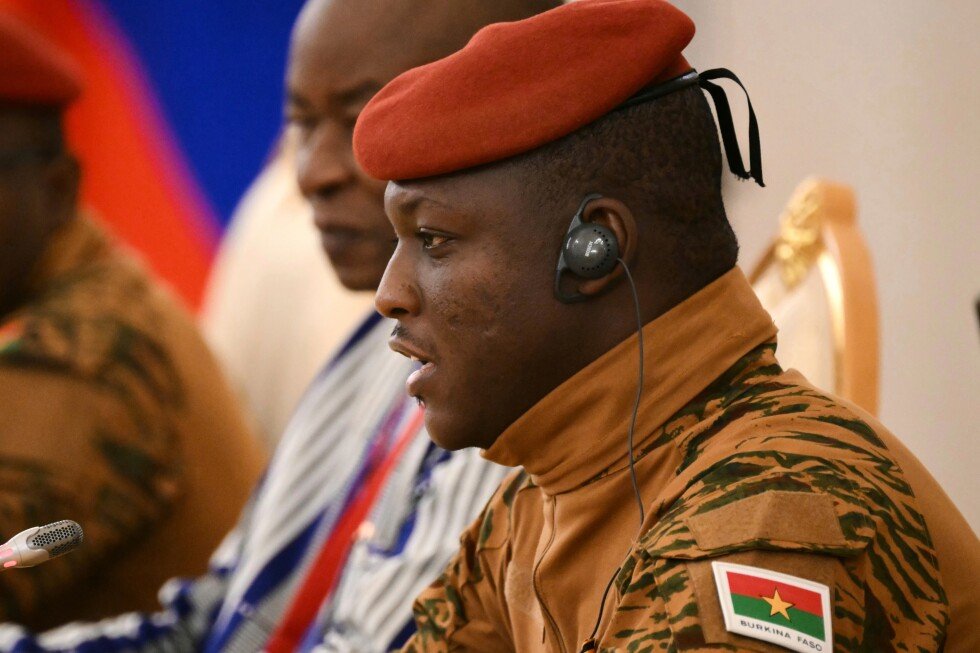
The military-led authorities in Burkina Faso have officially dissolved all political parties and repealed the legal framework that governed their operations, marking one of the most sweeping political changes since the armed takeover of power in 2022.
The decision was adopted through a decree approved by the country’s council of ministers, effectively ending the existence of more than 100 registered political parties that previously operated under the multiparty system. It also cancels laws related to party financing and the formal recognition of opposition leadership.
Interior Minister Emile Zerbo announced the move, describing it as part of a broader effort to “rebuild the state” following what authorities claim was years of dysfunction, abuse, and political fragmentation. According to Zerbo, a government review concluded that the rapid growth of political parties had deepened divisions within society and weakened national unity.
“The multiparty system, as it was structured, no longer served the stability of the country,” Zerbo said, adding that reforms were necessary to restore cohesion and effective governance.
Burkina Faso has been under military rule since a military coup in September 2022, when officers overthrew the civilian government citing failures to contain Islamist insurgencies that have plagued the country for more than a decade. Since then, political activities have largely been suspended, and transitional institutions have replaced elected bodies.
Before the takeover, Burkina Faso’s political landscape was crowded, with over 100 parties registered and 15 represented in parliament following the 2020 general elections. Critics of the system had long argued that the sheer number of parties created unstable coalitions and weakened governance.
Under the new decree, all political organizations — regardless of size or influence — are formally disbanded. Their assets, including offices, vehicles, and financial holdings, will be transferred to the state. A separate law repealing statutes related to party operations and public funding will be presented to the current transitional council for formal adoption.
The move has sparked concern among democracy advocates both inside and outside the country, who warn that dissolving political parties removes a key pillar of representative governance and risks entrenching military rule indefinitely.
Also Read; Tanzania Begins Local Production of Lifesaving HIV Medicines
Supporters of the transitional government, however, argue that the decision is necessary to reset the political system and focus national efforts on security and development. Burkina Faso continues to battle militant groups linked to extremist networks, with large parts of the country facing displacement, school closures, and economic disruption.
Analysts say the dissolution signals a clear shift toward centralized authority, as the military leadership consolidates control over political life. While officials insist the measures are temporary and aimed at reform, no clear timeline has been provided for the restoration of civilian rule or the reintroduction of party politics.
For ordinary citizens, reactions remain mixed. Some express relief, blaming political infighting for years of instability, while others fear the loss of political freedoms and accountability.
As Burkina Faso navigates its transitional period, the latest decree represents a defining moment — one that could reshape the nation’s political future for years to come. Whether it leads to meaningful reform or prolonged authoritarian control will depend largely on how the military authorities manage the promised rebuilding of state institutions and whether space for democratic participation eventually returns.