MWE Correspondent
Every February, Black History Month returns with a familiar rhythm. Schools organize commemorative activities, media houses curate special features, and public institutions issue statements of remembrance. Social media, too, becomes a stream of portraits, quotations, and celebratory tributes.
In many cases, the intention is genuine, and the mood is uplifting, yet one cannot escape the sense that the commemoration has become routine. The same names are repeated, the same themes are recycled, and the same moral conclusions are drawn, sometimes without the deeper historical grounding that gives remembrance its true weight.
Yet, Black History Month was never intended to be a routine observance. It was conceived as an intervention, a deliberate correction to a world that had normalized the erasure of Black contribution from the story of civilization. It emerged not as a festival of nostalgia but as an act of intellectual resistance, and it was built upon a recognition that historical distortion is itself a form of oppression. When a people are denied their history, they are denied their dignity, their legitimacy, and ultimately their confidence in the future. That is why Black commemoration has always carried a political purpose, even when it is expressed through cultural celebration.
Also Read:Double Standards or Strategy? MWE Analyzes Western Human Rights Violations
This year’s global theme, “A Century of Black History Commemorations,” invites a more reflective approach. It asks us to step back from the familiar portraits and ask a deeper question: how did Black history become something that required organized commemoration in the first place? The answer is not found in one country, one struggle, or one generation. It lies in a century-long movement of memory, built by scholars, activists, writers, churches, trade unions, and ordinary communities who understood that freedom is incomplete if it is not accompanied by historical recognition.
It is this larger question that shapes the eight-part series that will run throughout February on this platform. The essays are not designed as tributes in the usual sense, nor are they written as simple biographies of celebrated personalities. They are written as historical reflections that trace the making of Black commemoration itself, examining the milestones and intellectual traditions that turned remembrance into a global movement, while also placing Ghana’s Pan-African story within its rightful place in that wider history.
Black history as a struggle over memory and meaning
One of the most important lessons any student of African history learns early is that history is never simply about the past. It is about power. It is about who has the authority to define what is remembered, what is forgotten, and what is considered worthy of being taught. Empires have always understood this truth. Colonial rule did not only seize land and resources; it also seized narrative. It trained the colonized to see themselves through the eyes of the colonizer, to admire foreign civilization as superior, and to treat African identity as something to be escaped rather than embraced.
The Atlantic slave trade deepened this rupture. It did not only remove Africans from their homelands; it fractured family memory, disrupted languages, and interrupted the cultural continuity through which people normally preserve their identity. The enslaved were not merely exploited for labour; they were also subjected to a violent project of forgetting. The long-term effect was that millions of people of African descent across the world were forced to live with a painful historical gap, knowing they came from somewhere, yet unable to fully trace the story of that origin.
Black commemoration emerged as a response to this historical injury. It was an attempt to rebuild continuity where history had been violently broken. It was a refusal to accept the colonial narrative that Africa had no civilization, no intellectual tradition, and no meaningful contribution to modernity. In that sense, Black History Month is not merely a celebration of achievement; it is part of a broader struggle for historical justice. It is the assertion that Black people are not footnotes in the world’s story, but central actors in shaping its politics, economies, cultures, and ideas.
Why this series takes a different approach
Many Black History Month programmes, particularly in media spaces, focus primarily on individual greatness. They highlight political heroes, civil rights activists, scientists, writers, musicians, and sports icons. Such storytelling has value because it restores visibility to figures who were often marginalized. However, it also has limitations. When history is reduced to a parade of heroic names, the reader may be inspired, but they may not understand the deeper mechanisms that made change possible.
History is not only shaped by great individuals. It is shaped by systems. It is also shaped by networks, institutions, movements, intellectual traditions, and cultural tools that allow communities to organize and endure. It is further shaped by conferences that produced strategies, by publishing platforms that produced ideas, by songs that preserved memory, and by political solidarities that crossed oceans. Black commemoration itself is a product of such systems. It did not appear by accident. It was built deliberately, over decades, by people who understood that remembrance is not automatic.
This series, therefore, shifts the lens. It is less interested in offering another catalogue of famous figures and more interested in tracing how Black historical consciousness became institutionalized. It examines how memory became a movement, how Pan-Africanism developed through multiple languages and regions, and how Ghana became one of the most significant stages upon which the Black world negotiated its identity in the twentieth century.
Ghana’s Pan-African significance and the responsibility of memory
Ghana occupies a unique place in the history of Black commemoration, not simply because it gained independence in 1957, but because its independence carried meaning beyond the borders of the Gold Coast. For Africans still living under colonial rule, Ghana’s independence was proof that empire could be defeated. For Black communities in the diaspora, particularly in the United States and the Caribbean, it represented something equally powerful: evidence that Black sovereignty was possible in the modern world.
This is why Ghana quickly became a symbol of Black hope. It became a site of pilgrimage for diaspora intellectuals and activists, a meeting point for liberation movements, and a diplomatic stage for Pan-African politics. Ghana’s role in Pan-African history is therefore not only symbolic; it is historical. It shaped the imagination of the Black world at a time when that imagination was urgently searching for new possibilities.
Nevertheless, symbolism is not enough. A country cannot live permanently on the glory of historical reputation. If Ghana wishes to remain a credible Pan-African centre in the twenty-first century, it must treat memory as responsibility. This requires more than festivals and tourism campaigns. It requires serious investment in museums, archives, scholarship, cultural preservation, and public education. It requires a willingness to treat slave castles not as tourist attractions but as sites of solemn historical reckoning. It requires a commitment to Pan-African engagement that is intellectual and institutional, not merely ceremonial. This series will therefore explore Ghana’s Pan-African role with both pride and seriousness, acknowledging its historical contributions while also recognizing the demands that such a legacy places on the present generation.
Also Read:ICC Future Looks Bleak, As Erosion of Trust Deepens
A multilingual Black world and the neglected stories of Francophone and Lusophone Africa
Another important aim of this series is to broaden the map of Black commemoration beyond the familiar Anglophone narrative. Too often, Pan-Africanism is remembered primarily through English-speaking figures and events, with the impression that Black liberation history was shaped mainly through the British colonial world and the American civil rights tradition. That version of history is incomplete.
The Black world is multilingual. The African liberation struggle was multilingual. Black intellectual thought was shaped not only in English but also in French and Portuguese, and in the lived experiences of Francophone and Lusophone Africa. Some of the most influential Black thinkers of the twentieth century wrote in French, and some of the most disciplined liberation movements emerged from Portuguese-speaking Africa, where colonialism was resisted through long and costly wars.
The Francophone intellectual tradition, shaped in places such as Paris, Martinique, and Senegal, produced movements like Négritude that challenged the psychological foundations of colonialism. The Lusophone liberation tradition, shaped in Guinea-Bissau, Cape Verde, Mozambique, and Angola, produced revolutionary thinkers who understood that liberation was as much about culture and discipline as it was about political independence.
These traditions are often neglected in mainstream African commemoration, not because they are less important, but because language barriers and colonial educational legacies have limited how widely they are taught. This piece will bring them into focus, not as side stories, but as central chapters in the global making of Black historical consciousness.
The modern dilemma: when commemoration becomes performance
Perhaps the most urgent reason for this series is that Black history is once again at the centre of global conflict. In the United States, debates over how slavery and racism should be taught have become intense. In Europe, colonial history is increasingly contested, with demands for museum restitution, reparations, and the removal of imperial monuments. Even in Africa, where colonialism is part of living memory, there is an ongoing struggle over how independence narratives are told and whether the post-colonial state has honored the promise of liberation.
In such an environment, Black History Month is no longer simply a celebration. It is contested terrain. Some institutions embrace it, but often superficially, treating it as a seasonal display of inclusiveness. Others resist it, arguing that it threatens national unity or encourages division. Social media amplifies commemoration, but it also risks reducing history to short slogans and viral quotations, stripping complex struggles of context and turning deep historical narratives into quick entertainment.
This creates a serious danger: that Black History Month becomes performative rather than educational. A society may celebrate Black achievement for one month while ignoring Black inequality for the rest of the year. A corporation may publish tributes while maintaining discriminatory structures. A school may organize an assembly without teaching the hard truths that Black history demands. The result is a commemoration that looks impressive on the surface but loses its moral and intellectual seriousness. This series is designed, in part, to resist that dilution. It insists that commemoration must remain rooted in historical clarity, because remembrance without understanding is not remembrance at all.
What readers should expect
Over the coming days, this series will explore key milestones and themes that shaped Black commemoration across the last century. It will examine the scholar who laid the foundation for Black History Month itself, the congress that transformed Pan-Africanism into a strategic blueprint for independence, Ghana’s extraordinary years as a hub of Black global hope, and the long journey from Du Bois’ relocation to Ghana to the modern Year of Return.
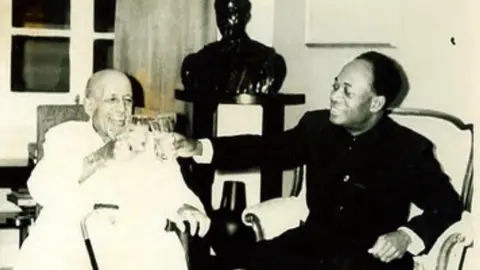
It will also explore the Francophone intellectual revolution that reshaped Black consciousness through culture and language, the Lusophone liberation tradition that produced some of Africa’s most disciplined thinkers, and the role of music as a living archive that carried Black history across oceans. Finally, it will confront the modern debate over whether Black History Month has lost some of its seriousness in an era of branding, digital performance, and political denial.
Each essay is written to stand alone, yet together they form a single narrative about the making of Black commemoration itself. The aim is not merely to inspire, but to educate, to provoke reflection, and to restore complexity to a history that is too often simplified.
commemoration must lead somewhere
A century of Black history commemorations is not merely a story of celebration. It is a story of struggle, persistence, and the refusal to be erased. It is the story of scholars building archives when institutions denied them space, of activists turning conferences into blueprints, of writers turning poetry into political weaponry, and of communities preserving memory through song when official history refused to acknowledge their humanity.
However, commemoration must lead somewhere. Otherwise, it becomes ritual. The purpose of remembering is not only to honour the past but to understand the present, because the past continues to shape how power is distributed, how identity is constructed, and how inequality is justified. Historical memory is not a luxury. It is a form of protection. It is one of the ways a society defends itself against the repetition of injustice.
If this article achieves anything, it should be to remind us that Black history is not a seasonal event. It is a continuing project of dignity and responsibility. It is the insistence that Africa and the Black diaspora are not marginal to civilization, but central to it. Perhaps, the most important lesson of a century of commemoration is one that Africans, and indeed all peoples, must never forget: those who control history often control the future. That is why Black history had to be defended. That is why it must continue to be defended.
By: Jimmy Kutin
(The writer is an award-winning media executive, historian, educator, and leadership consultant with graduate training in business, communication, education, and African studies)