MWE Correspondent
Africa’s battle against debt pressure in 2026 is becoming more urgent, but it is also becoming more creative. For years, the continent has been described mainly through the language of borrowing, bailouts and external conditions.
Yet that old framing is starting to crack. Across Africa, governments, regional institutions, banks and entrepreneurs are increasingly searching for homegrown ways to manage debt, finance growth and reduce dependence on systems that often leave countries vulnerable to currency shocks, harsh refinancing cycles and politically conditioned capital. The challenge is still serious — in some places, severe — but the response is no longer limited to waiting for rescue from abroad.
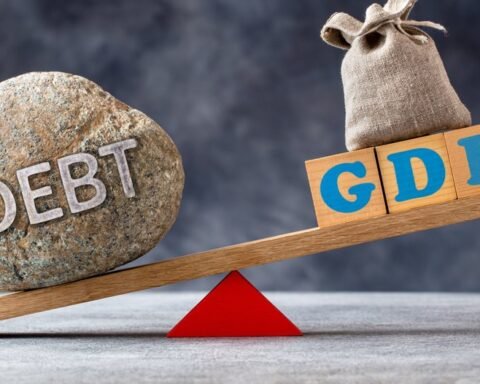
The numbers explain why this issue now sits at the center of economic sovereignty. The African Development Bank said this week that Africa’s total public debt had reached $1.9 trillion in 2024, while debt-service obligations were consuming more than 31% of government revenues across the continent. That means huge amounts of public money are being diverted away from schools, hospitals, transport and industrial investment just to keep debt payments current. At the same time, the Bank warned that foreign direct investment flows to Africa were already 42% lower in the first half of 2025, making it harder for countries to replace shrinking aid and more expensive borrowing with productive external capital. Even so, the AfDB still projects the continent can grow 4.3% in 2026 and 4.5% in 2027, which tells us something important: Africa is under pressure, but it is not without momentum.
That pressure is growing, not easing. S&P Global Ratings estimates African nations will borrow $155 billion in long-term commercial debt in 2026, a 10% increase from last year, largely to refinance maturing obligations and handle rising fiscal demands. This is the dangerous part of the cycle: countries can end up borrowing not to build new capacity, but simply to keep old obligations from becoming crises. When that happens repeatedly, debt stops being a development tool and becomes a mechanism of dependence. That is why many African policymakers now speak less about “access to capital” in the abstract and more about who controls the terms, the timing and the strategic purpose of that capital.
You can already see the different paths countries are taking. In Senegal, the government announced in March that it would shut down 19 state agencies, saving about 55 billion CFA francs (roughly $97.95 million) over the next three years as part of a broader fiscal clean-up. The move came after the International Monetary Fund said Senegal’s debt had climbed to 132% of GDP by the end of 2024, a startling figure that forced the government to tighten spending and reassert control over public finances. This is not a glamorous reform, but it reflects an important principle: sovereignty is not only about rejecting bad external deals; it is also about fixing domestic inefficiencies that make countries more vulnerable in the first place.
Mozambique shows the harder side of the story. Reuters reported this week that the country hired Alvarez & Marsal to help manage public debt under its 2025–2029 strategy after public debt rose 6.8% in 2025 to 474 billion meticais (about $7.49 billion). Another Reuters report noted that central bank advances to the government surged 176.1% last year to 49.6 billion meticais, a warning sign that traditional financing channels are tightening. Investors are watching closely, with Mozambique’s sovereign spread rising to 1,304 basis points, a level associated with severe financial distress. Yet even here, the lesson is not just about crisis. It is about capacity. Countries that strengthen debt management, negotiate more professionally and build credible institutions are better placed to avoid being trapped by expensive emergency borrowing later.
There is also a more hopeful example in Ethiopia. Reuters reported today that Ethiopia reached a resolution with China on debt treatment under the G20 Common Framework, a step that could help the country move forward after its 2023 Eurobond default. What makes this especially interesting is that Ethiopia is not relying on one channel alone. It is simultaneously pushing WTO accession, deeper African trade integration and broader financing diversification. In other words, it is trying to widen its strategic options rather than tying its recovery to a single external power or institution. That is exactly the kind of balanced diplomacy many African economies will need in the years ahead.
Also Read: BRICS Expansion Reshapes Africa’s Financial Future
But governments are only part of the solution. The deeper long-term answer to financial colonialism is not endless renegotiation — it is building stronger domestic and regional engines of capital. Reuters reported last week that Standard Bank, Africa’s largest lender, is doubling down on trade and infrastructure financing across the continent, projecting 8%–12% annual earnings growth between 2026 and 2028 and targeting sectors like energy, logistics and critical minerals. The bank highlighted annual African investment needs of $130 billion to $170 billion in energy and around $170 billion in infrastructure. That matters because when African banks finance African trade corridors, ports, energy systems and industrial supply chains, more value stays inside the continent instead of leaking outward through dependency-heavy structures.
This is where the African Continental Free Trade Area becomes more than a slogan. If African countries can trade more with each other, invoice more regionally, process more goods locally and reduce the habit of exporting raw materials only to re-import finished products, they can gradually weaken the structural reasons they borrow so much in foreign currency. A continent that produces more fertilizer, refines more minerals, assembles more machinery and settles more trade regionally is a continent that becomes harder to trap.
The private sector matters too — especially fintech. African entrepreneurs are increasingly building payment systems, digital wallets, trade-finance tools and cross-border settlement platforms that reduce friction for small businesses. This is one of the most overlooked fronts in the fight against financial dependency. If small exporters still struggle to receive payments, access working capital or hedge currency volatility, then grand speeches about sovereignty will remain incomplete. But if local financial technology helps businesses move money faster and cheaper across borders, then economic independence starts becoming practical, not theoretical.
Still, Africa must be realistic. Not every “alternative” is automatically better. A predatory loan is still predatory whether it comes from East, West or a private fund wrapped in friendly language. A flashy infrastructure project can still become a burden if it lacks local economic spillover. A sovereign bond can still become a trap if the borrowed money funds consumption instead of production. Real independence requires discipline: transparent contracts, strong tax collection, efficient public spending, better customs systems, smarter industrial policy and the courage to reject bad deals even when the cash looks attractive.
In 2026, the real shift is this: Africa is beginning to understand that escaping debt traps is not just about borrowing less. It is about building more — more domestic revenue, more regional trade, more local finance, more productive industry, and more institutional confidence.
That is the path away from neocolonial economics. Not slogans. Not anger. Not blind alignment with any bloc. But steady, strategic construction of African systems that can finance African priorities on African terms.
If that momentum continues, the continent’s story will start to change. Instead of being seen mainly as a place where debt crises happen, Africa could increasingly become a place where new models of financial sovereignty are built — patiently, imperfectly, but with far more control than before.