MWE Correspondent
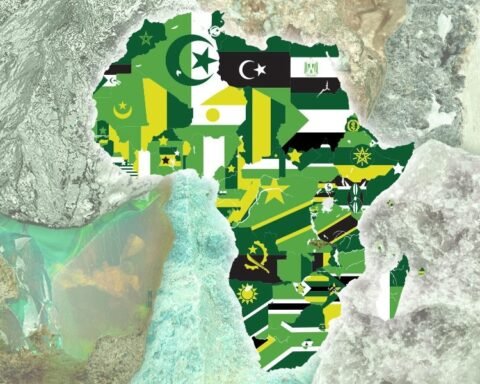
Africa is no longer just part of the global economy’s supply chain it is emerging as a central stage in the race for critical minerals and energy resources.
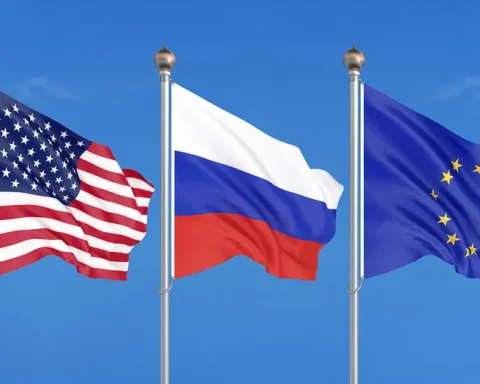
From cobalt, copper, and lithium to strategic ports, rail networks, and energy corridors, the continent has become one of the most contested arenas for global powers. Western nations are intensifying efforts to secure access to key minerals while reducing dependence on Chinese processing, whereas China is deepening long-term partnerships, expanding industrial presence, and strengthening state-backed mining agreements. Russia is also increasing its economic diplomacy, particularly through food and energy channels. The real question is no longer whether Africa matters in the global resource race, but whether African nations can convert this competition into genuine sovereignty rather than repeating past patterns of external dependence.
Recent reports highlight the scale of this contest. Two multi-billion-dollar railway projects in Africa — one backed by Western nations and the other by China — are designed to transport massive quantities of strategic minerals to international markets. Analysts describe this as a “new scramble for Africa,” but unlike the colonial era, the competition now revolves around securing materials crucial for electric vehicles, renewable energy, batteries, and industrial technology. Key minerals such as cobalt, copper, lithium, and rare earths are driving both investment and geopolitical influence.
Also Read: Africa Fights Debt Traps With Local Solutions
The United States has ramped up efforts with state-backed financing and offtake agreements, aiming to compete with China for access to minerals essential for the clean-energy transition. Rather than attempting to match China mine-for-mine, Washington is focusing on redirecting supply flows through investment, trade, and commercial commitments. The approach acknowledges that China holds a structural advantage through its long-term control over mining, processing, and logistics in key African regions.
China, however, is reinforcing its strategic depth. The Democratic Republic of Congo recently signed a new mining cooperation agreement with China, further securing Chinese involvement in one of the world’s most vital mineral jurisdictions. This partnership strengthens China’s foothold in cobalt and copper production, sending a clear message to competing powers: where trust, infrastructure, and operational experience already exist, China maintains a strong advantage.
African leaders are increasingly aware of their leverage. Congo’s mines minister stated that if mineral cooperation agreements with the United States fail to produce tangible projects, Kinshasa will explore alternative partners. This shift reflects a broader continental trend: African nations are demanding concrete outcomes, not just memorandums or promises. When managed strategically, this leverage can enhance sovereignty, giving African countries the ability to negotiate better terms, build domestic capacity, and retain more value within their economies.
Resource sovereignty, however, is not just about contracts — it is also about critical minerals and ensuring that the continent benefits fully from its own resources. Extracting raw ore without developing domestic refining, processing, and manufacturing capabilities leaves Africa vulnerable to dependency. Countries that build regional value chains can capture higher-value stages of production, create jobs, and strengthen industrial sovereignty.
Environmental and social impacts are another key concern. Mining booms can drive economic growth, but they can also produce water pollution, degraded land, unsafe labor conditions, and community displacement. Effective resource governance requires environmental audits, mine rehabilitation, transparent contracts, and agreements that ensure local communities benefit. Without these measures, the global green transition risks becoming a local environmental burden.
Russia’s engagement highlights the multifaceted nature of Africa’s strategic importance. Recent reports indicate President Vladimir Putin proposed a “grain and energy hub” in Egypt, reflecting Russia’s growing role in African food and energy supply chains. Egypt imported approximately 7.6 million tons of Russian wheat this season, highlighting the scale and influence of this partnership. Russia’s energy exports further integrate Africa into global resource and logistics networks, demonstrating that competition for influence is broader than mining alone.
For African nations, the strategy must be careful and deliberate. The African Continental Free Trade Area provides a framework for regional coordination, enabling countries to negotiate better deals collectively rather than individually. African governments must focus on building local processing, refining, and industrial capacity while protecting public revenues. The competition between global powers should serve as leverage to secure long-term economic benefits, not a short-term extraction opportunity.
Africa’s position as a global resource hub presents both immense opportunity and responsibility. By emphasizing value addition, regional coordination, and sustainable governance, the continent can transform external interest into genuine power.
The challenge is not who arrives, but whether Africa finally claims control of its own resources and shapes its economic future on its own terms.