Agencies
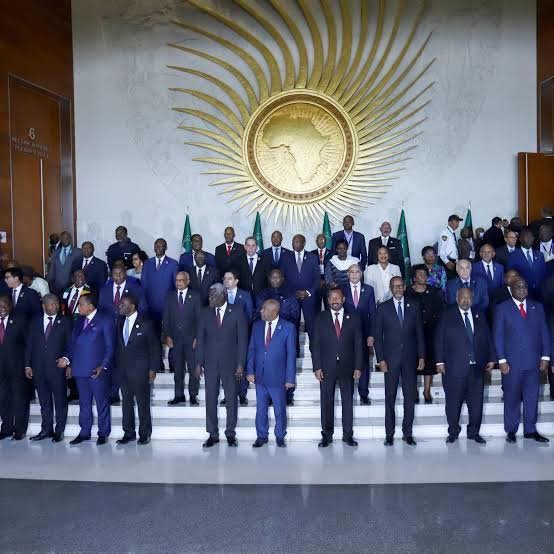
Africa’s future in an increasingly competitive world will depend not only on the strength of its relationships with global powers, but also on its ability to negotiate those relationships from a position of unity, economic confidence and strategic independence. As the United States, China, Russia, the European Union, India and other powers expand their political and economic interests across the continent, African countries face an important choice: remain primarily suppliers of raw materials and recipients of external assistance, or become equal partners shaping the global economic and political order.
The debate is increasingly important as international competition extends beyond traditional trade into critical minerals, energy, technology, infrastructure, security and access to strategic markets. For Africa, these developments present opportunities to attract investment, technology and new markets. However, they also create risks when external interests influence national policy choices, control strategic resources or deepen divisions between African countries.
At the heart of this debate is the principle that international cooperation should strengthen African development priorities rather than replace them. Partnership does not mean rejecting foreign investment or assistance. It means ensuring that agreements deliver measurable benefits to African citizens, respect national sovereignty and allow governments to make decisions according to their development objectives.
The African Union’s Agenda 2063 provides a continental framework for this ambition. It envisions an integrated, prosperous and peaceful Africa capable of playing a significant role in global affairs. The framework places emphasis on economic transformation, regional integration, democratic governance, self-determination and collective prosperity. However, translating these ambitions into reality requires stronger implementation by African governments and institutions.
One of the continent’s biggest challenges is its continued dependence on exporting unprocessed commodities. Minerals, agricultural products and energy resources generate substantial international trade, but many African economies capture only a limited share of the value created after extraction. UN Trade and Development’s State of Commodity Dependence 2025 identifies the vulnerability created when economies rely heavily on commodity exports, exposing them to international price fluctuations and external economic shocks. The report argues for economic diversification and greater value addition.
This imbalance is particularly significant as global demand for critical minerals increases because of the energy transition, electric vehicles and advanced technologies. African countries possess substantial mineral resources, yet the long-term benefits will depend on whether they can develop local processing industries, technical expertise, infrastructure and manufacturing capacity instead of relying mainly on exporting raw materials.
The financing challenge is equally important. A United Nations report on Africa’s debt situation estimates that the continent’s external debt has exceeded $650 billion, while debt-servicing costs reached nearly $90 billion in 2024. It also warns that more than 40 per cent of African countries spend more on debt servicing than on healthcare. These pressures reduce the resources available for infrastructure, education, industrial development and public services.
Read More: Tanzania and EU Seek Reset Amid Funding Dispute
The changing global financing environment makes this challenge more urgent. In April 2025, African Development Bank President Akinwumi Adesina argued that the continent must reduce aid dependency and build its development future through self-reliance, strategic partnerships and the productive use of its natural resources. In a separate address in July 2025, he said: “Africa must chart its future, relying not on the benevolence of others, but on its own determination.”
African leaders have also called for a shift from aid-centred relationships towards investment and trade. Speaking at the United States-Africa Business Summit in June 2025, Angolan President João Lourenço said: “It is time to replace the logic of aid with the logic of investment and trade.” His argument reflects a wider continental demand for partnerships that support manufacturing, infrastructure, technology transfer and employment rather than concentrating exclusively on the extraction of natural resources.
More recently, Ghanaian President John Dramani Mahama reiterated this position at the third Russia-Africa Summit in Moscow on October 29, 2026. He described Africa’s objective as building mutually beneficial partnerships rather than maintaining aid dependency and raw-material extraction arrangements. He identified agriculture, agro-processing, healthcare, energy security and digital services as areas offering opportunities for cooperation between African and Russian businesses.
At the 3rd Russia–Africa Summit in Moscow, today, I reaffirmed Africa’s firm commitment to ending longstanding dependency on foreign aid and raw material extraction, urging our global partners to embrace investment models that deliver equitable, long-term returns for all.
Our goal as Africa’s current leaders is to eliminate administrative bottlenecks and transform historic goodwill into robust, sustainable commercial ties. Africa is a continent of the future. Immense opportunities abound for mutual investment between African and Russian enterprises, particularly in agriculture, agro-processing, healthcare, energy security, and digital services.
To address trade imbalances and create direct market access for African goods, we must deploy modernised trade settlement mechanisms, including the use of local currencies and integrated digital payments. Better market information, predictable quality standards, resilient logistics, and closer cooperation between our respective private sectors can make trade far more balanced, reliable, and mutually rewarding.
— John Dramani Mahama (@JDMahama) October 29, 2026
However, Africa’s negotiating power cannot be strengthened through national initiatives alone. The continent’s fragmented markets and inconsistent implementation of regional agreements continue to limit its economic influence. The 2025 African Integration Report, developed by the African Union Commission, the United Nations Economic Commission for Africa and the African Development Bank, identifies barriers to the movement of goods, services, capital and people, alongside inadequate infrastructure and uneven implementation of regional commitments.
The African Continental Free Trade Area offers an important response to these challenges. By connecting African markets, expanding regional value chains and encouraging intra-African trade, it can create stronger industries and give African businesses greater opportunities to compete internationally. The United Nations Economic Commission for Africa’s 2025 Economic Report on Africa similarly identifies AfCFTA as a major instrument for industrialisation, economic diversification and reducing commodity dependence.
A World Bank report published in August 2026 further argues that Africa’s next major integration gains will come from connecting production across borders, reducing trade barriers and developing regional production hubs. Its recommendations include interoperable customs, transport, energy, digital and payment systems to make cross-border business more efficient.
The policy implications are clear. African governments need to coordinate their positions when negotiating major trade, investment, mineral and infrastructure agreements. They should establish transparent contractual arrangements, strengthen local-content requirements, support technology transfer and ensure that foreign investment contributes to domestic industrial capacity. Strategic resources should be negotiated as instruments for long-term development, not simply as sources of short-term government revenue.
African institutions must also strengthen accountability and public participation. Governments should disclose the terms of major agreements, assess their social and environmental consequences and ensure that communities benefit from projects taking place in their areas. At the same time, stronger domestic revenue collection, responsible borrowing, effective public institutions and investment in education and research are essential to reducing dependence on external financing.
The international community also has responsibilities. Global partners should respect African countries’ right to determine their development priorities, avoid treating economic cooperation as a tool for political pressure and support fairer access to finance, markets and technology. Respect for sovereignty, however, must go together with transparency, democratic accountability and the protection of citizens’ rights.
Ultimately, Africa does not need to choose between global partners. It needs the capacity to engage all of them on fair and clearly defined terms. Cooperation with Europe, China, Russia, the United States, India and other emerging economies can contribute to development when it is based on mutual respect and shared economic benefits.
Africa’s future will therefore be determined not simply by which global power offers the largest investment or the most attractive political relationship, but by how effectively African countries use their collective resources, markets and institutions to negotiate better outcomes. The continent must move beyond being a theatre of geopolitical competition and become an active participant in shaping the rules, opportunities and direction of international cooperation.