
 MWE Correspondent
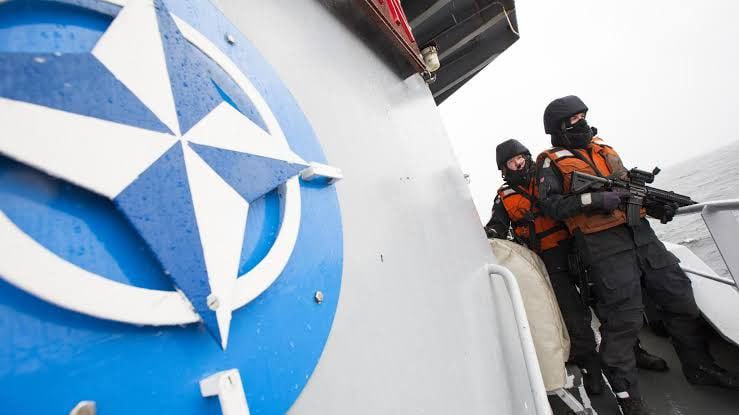
Russia has accused NATO of turning the Baltic region into a military staging ground for potential confrontation with Moscow, warning that the alliance’s growing military infrastructure and exercises could deepen tensions along Russia’s western borders.
Vladislav Maslennikov, director of the Russian Foreign Ministry’s Department of European Issues, said NATO had repeatedly conducted military exercises simulating operations against an “adversary of comparable strength,” which he identified as Russia.
His remarks reflect Moscow’s longstanding objections to NATO’s expanding military presence in northern and eastern Europe. Russia argues that the alliance’s deployments, exercises and defence infrastructure strengthen its ability to operate close to Russian territory.
NATO, however, describes its military posture in the region as defensive, intended to deter aggression and protect its member states. The alliance has strengthened its eastern flank following Russia’s annexation of Crimea in 2014 and its full-scale invasion of Ukraine in 2022. Its measures include multinational forces, air and missile defence, improved military coordination and exercises designed to test rapid reinforcement capabilities.
The Baltic Sea has become increasingly important to European security because it borders several NATO members and lies close to Russia’s strategically significant Kaliningrad exclave and the Gulf of Finland. Military access to the sea, protection of undersea infrastructure and the movement of naval forces have consequently become major security concerns.
In January 2025, NATO launched Baltic Sentry, an initiative intended to strengthen protection of critical undersea infrastructure following incidents involving cables and other installations in the Baltic Sea. The initiative uses naval forces, aircraft and other surveillance capabilities to improve monitoring and response.
Read More: Russia’s Africa Pledge Raises Questions Over Influence and Sovereignty
For Moscow, these deployments contribute to a broader pattern of military pressure. Russian officials have repeatedly warned that additional NATO troops and infrastructure near Russian territory could increase the risk of incidents and escalation. NATO members counter that their deployments respond to security threats and are necessary to deter potential Russian action.
The competing positions create a security dilemma in which measures described by one side as defensive are interpreted by the other as preparation for confrontation. As each side expands its readiness and capabilities, the other faces pressure to respond, potentially producing a cycle of military build-up that becomes increasingly difficult to reverse.
Military exercises are not, by themselves, proof that an attack has been decided or is imminent. They are routinely used by alliances to test logistics, communications, command structures and operational readiness. However, exercises conducted near opposing forces can increase the risk of miscalculation, particularly when aircraft, warships and surveillance systems operate in close proximity.
The wider consequences extend beyond the Baltic region. A serious confrontation between Russia and NATO could disrupt European trade, energy markets, shipping and investment, while increasing defence spending and political uncertainty. Any direct conflict between Russia and NATO members would carry far greater risks because of the military capabilities involved, including nuclear weapons.
For countries in Africa, including Tanzania, the growing tensions are a reminder that international security rivalries can affect economies far beyond the immediate conflict zone. Disruptions to energy supplies, shipping routes, fertiliser markets and global trade can contribute to higher costs for governments, businesses and households.
The immediate challenge for Europe is to maintain credible security arrangements while preserving channels for communication and crisis management. Without such safeguards, military activity intended to deter conflict could inadvertently increase the danger of confrontation.
Although Russia’s accusations represent Moscow’s assessment rather than independently established proof of NATO’s intentions, the expansion of military activity in the Baltic highlights the importance of transparency, restraint and diplomatic engagement between nuclear-armed powers.


