MWE Correspondent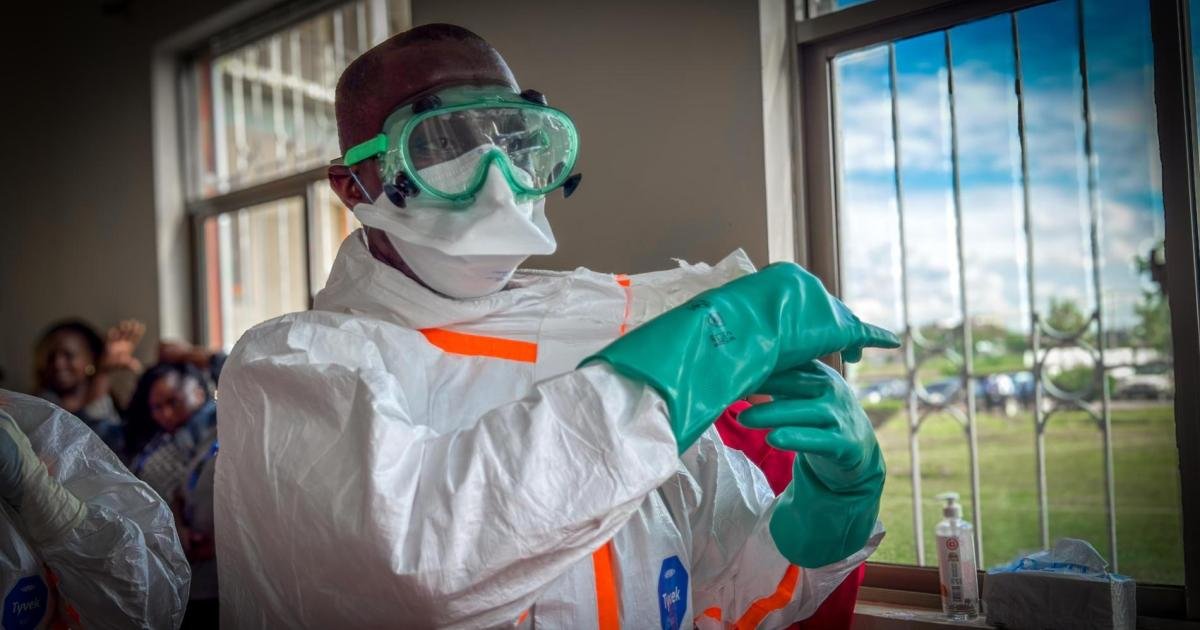
Kenya has confirmed its first imported case of Bundibugyo Ebola virus disease after a Kenyan citizen who had been living in the Democratic Republic of Congo (DRC) travelled through Uganda and later died in Nairobi, prompting an intensified regional response led by Kenyan health authorities and the World Health Organization (WHO).
The patient fell ill while in the DRC and received treatment at several health facilities before travelling by road through Beni to Kampala, Uganda, on October 2. He then flew to Nairobi on October 3, where he was taken to hospital and rapidly isolated after developing symptoms including fever, chills, fatigue, muscle pain, sore throat and bleeding beneath the skin.
Laboratory tests conducted independently by Kenya’s National Virology Reference Laboratory and the Kenya Medical Research Institute confirmed infection with Bundibugyo virus. Despite receiving supportive care, the patient died on the night of October 5 and was buried under safe and dignified burial procedures on October 6.
The WHO says it is working with the Kenyan Government to strengthen case investigation, contact tracing, surveillance and screening at high-risk points of entry. WHO Regional Director for Africa Dr Mohamed Janabi said Kenya’s preparedness measures provide an important advantage, but stressed that rapid detection and coordinated action remain critical to preventing further transmission.
Kenyan authorities have so far identified 28 contacts, including family members and health workers who cared for the patient. Authorities are also tracing 23 passengers and four crew members who travelled on the same flight, with quarantine and follow-up arrangements being prepared for people considered at risk.
Kenya had already been preparing for the possibility of Ebola reaching the country. Since May, health authorities have screened more than 652,000 travellers, tested 267 suspected samples and trained around 5,000 health workers in Ebola prevention and management. Isolation facilities have also been identified in 27 high-risk counties.
Kenya’s case comes as the DRC continues to battle a major outbreak of Bundibugyo Ebola. The WHO says the current outbreak is occurring amid high population movement, trade links, insecurity and humanitarian pressures, making cross-border surveillance and community engagement central to containment efforts.
Also Read: Iringa Tests Health Emergency Readiness Through Rapid Response Training
Uganda, which shares a border with the DRC and recorded imported Ebola cases earlier this year, was declared free of the latest outbreak in August. WHO says most Ugandan cases were linked to infections imported from the DRC, with some secondary transmission occurring among contacts and healthcare workers. France also reported a travel-related Bundibugyo case in June after a doctor returned from the DRC.
The latest developments therefore underline the difficulty of containing Ebola in a region where people routinely cross borders for trade, work, healthcare and family reasons. The Kenyan case also demonstrates why airport and border screening alone cannot eliminate the risk of imported infections, particularly when symptoms may not be apparent at the time of travel.
Bundibugyo Ebola is transmitted through direct contact with the blood or other bodily fluids of an infected person, including after death. People who develop symptoms after having contact with a suspected or confirmed case, or after travelling from an affected area, are advised to seek medical attention and disclose their travel and exposure history.
The WHO is urging countries in the region to maintain surveillance and preparedness while avoiding unnecessary disruption to travel and trade. The organisation has previously advised against general travel or trade restrictions related to the DRC and Uganda, instead emphasising coordinated outbreak control, contact tracing and cross-border cooperation.
For Kenya, the immediate priority is to identify and monitor every person who may have been exposed to the confirmed case. For the wider East African region, the development is another reminder that preparedness cannot stop at national borders.
With WHO, Africa CDC and national health authorities working together, officials are seeking to ensure that the imported case remains a contained event rather than the beginning of sustained community transmission.
The situation remains under close monitoring as contact tracing and surveillance activities continue in Kenya and across neighbouring countries.