Angela Mushi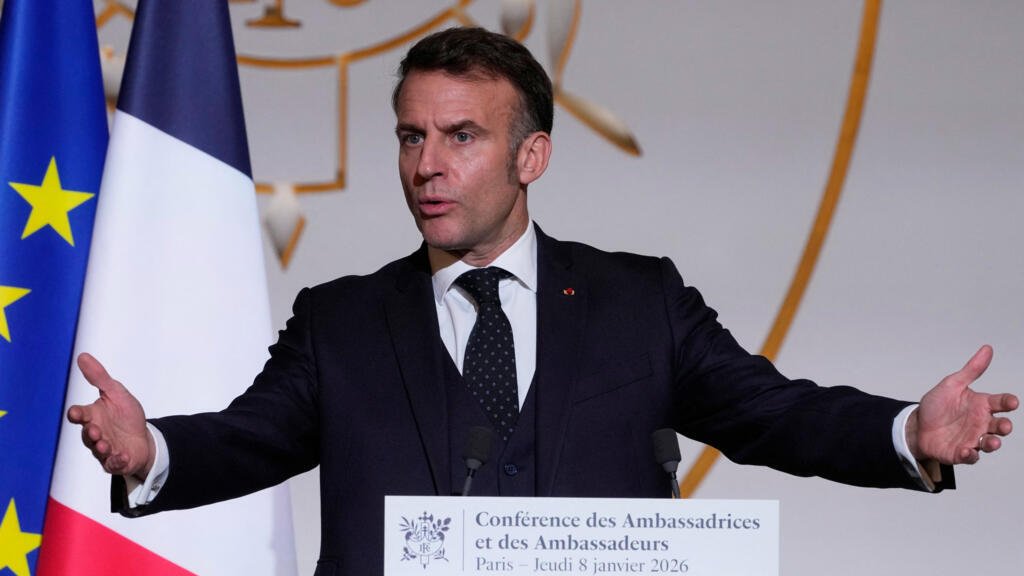
France’s renewed diplomatic offensive in Africa should not be viewed simply as an attempt to repair relations with former colonies, according to political analyst Dr Lupa Ramadhani of the University of Dar es Salaam.
It is also part of an intensifying geopolitical contest for influence in a continent where Russia has increasingly filled spaces left by France’s declining political and military presence.
Speaking to Media Wire Express, Dr Ramadhani said the changing relationship between France and Africa cannot be separated from the emergence of new global powers competing for political, economic and strategic partnerships across the continent.
“France is trying to recover lost influence, but the environment it is returning to has fundamentally changed,” he said. “Russia, China, Türkiye, the Gulf countries and other actors have entered spaces where France previously enjoyed considerable influence.”
France has suffered major setbacks in recent years, particularly in the Sahel. Military governments in Mali, Burkina Faso and Niger expelled French forces and ended longstanding defence arrangements, while Moscow expanded security and political cooperation with several countries in the region.
Russia’s growing role has been facilitated partly by frustration with French-led security interventions and wider dissatisfaction with the legacy of France’s political and economic influence in its former colonies.
International research institutions have documented how Moscow has used security cooperation, arms sales, political engagement and information campaigns to expand its presence in Africa, particularly following the deterioration of relations between France and several Sahel governments.
However, Dr Ramadhani cautioned against interpreting the current competition simply as a battle between France and Russia.
“Africa should not become a battlefield where external powers determine the continent’s future,” he said. “The important question is whether African countries can use this competition to advance their own national and continental interests.”
France’s renewed engagement comes as President Emmanuel Macron attempts to redefine his country’s relationship with Africa through trade, investment, technology and diplomatic partnerships rather than relying primarily on the traditional military and political structures that characterised the Françafrique era.
But the timing is significant.
Russia’s expanding presence has created a new strategic challenge for Western powers seeking to maintain influence in Africa. Moscow has strengthened ties with governments across the continent while presenting itself as an alternative partner without the colonial history associated with European powers.
Dr Ramadhani said France’s new diplomatic strategy could therefore also be interpreted as an attempt to prevent further geopolitical losses.
“When a major power loses influence in a strategically important region, it will naturally attempt to prevent competitors from occupying that space,” he said. “Russia’s growing engagement in Africa creates an additional incentive for France to return with a different strategy.”
Yet he argued that France faces a much more difficult task than simply rebuilding old relationships.
African societies have changed, and younger generations are increasingly questioning the political and economic arrangements inherited from the colonial and post-colonial periods.
Governments are also developing broader foreign policy options.
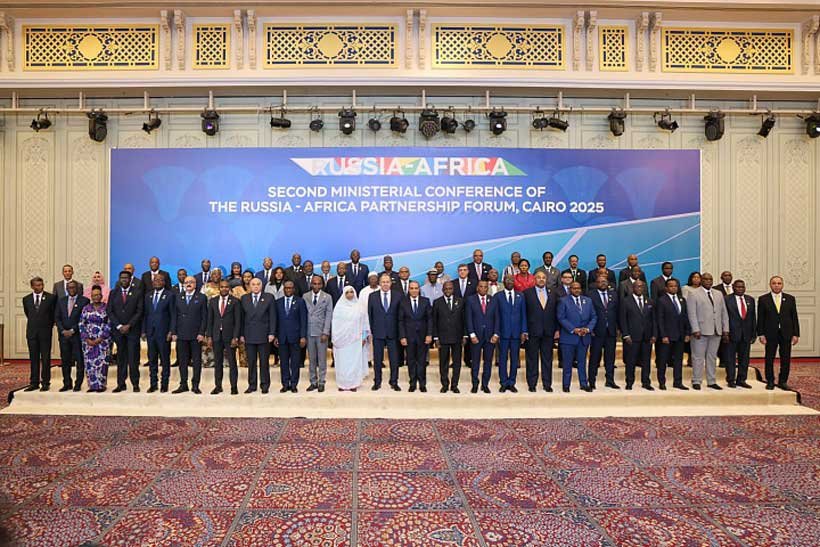
Rather than depending on one traditional partner, African countries can now engage simultaneously with the United States, China, Russia, the European Union, India, Türkiye and Gulf states.
This emerging multipolar environment gives African governments greater negotiating space.
For Dr Ramadhani, that represents the most important transformation.
“The real opportunity for Africa is not to replace France with Russia, or the West with China,” he said. “It is to avoid dependency on any single external power and build partnerships based on clearly defined African interests.”
He said the growing competition should encourage African governments to strengthen domestic institutions, improve their negotiating capacity and develop coherent foreign policy strategies.
Without strong institutions, he warned, competition between global powers could still result in external actors exploiting Africa’s resources and strategic position.
Dr Ramadhani has previously argued that African countries must strengthen domestic governance systems to protect their sovereignty amid increasing geopolitical pressure and foreign intervention.
The contest between France and Russia, therefore, should not be understood solely as a struggle for African territory or political loyalty.
It reflects a deeper transformation in global power.
For decades, France exercised exceptional influence across parts of Africa through military agreements, economic networks and diplomatic relationships. That system is now under unprecedented pressure.
Russia’s arrival has accelerated the transformation, but it is only one part of a much broader shift.
The central challenge for Africa will be ensuring that the decline of one dominant external power does not simply create an opportunity for another to take its place.
“Competition among external powers can benefit Africa,” Dr Ramadhani said. “But only if African countries remain clear about their own interests and refuse to become instruments in the geopolitical struggles of others.”
As France seeks to rebuild its African relationships and Russia continues its push for greater influence, Africa may increasingly find itself at the centre of global competition.
Whether that competition produces greater sovereignty or simply new forms of dependency will depend largely on the choices African governments make themselves.