MWE Correspondent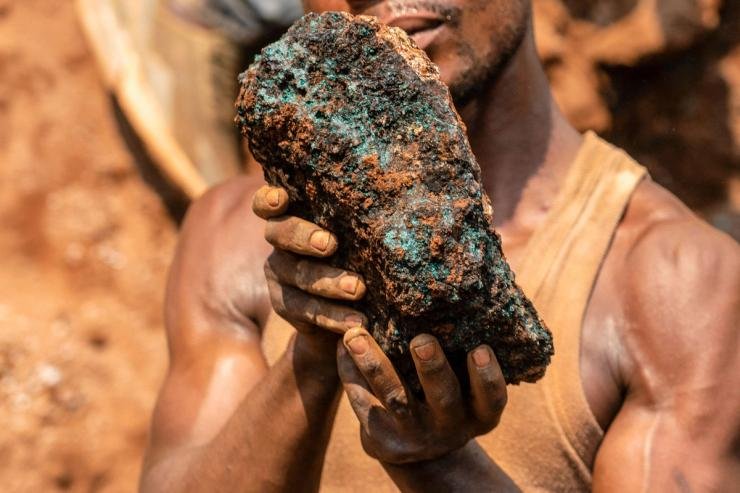
Africa’s strategic importance in the global economy is rising again, but this time the contest is being shaped less by old colonial maps and more by critical minerals, industrial supply chains and the politics of technology.
As Washington and Beijing intensify their competition over rare earths, cobalt, copper and battery metals, African governments are finding themselves in a stronger negotiating position — if they choose to use it wisely. The latest international developments show that the battle for resource security is no longer just about mining rights. It is now tied to trade wars, energy security, defense industries and the race to control the materials behind electric vehicles, semiconductors and advanced manufacturing.
Fresh reporting from Reuters this week shows that tensions between the United States and China are once again escalating ahead of an expected May summit between President Donald Trump and President Xi Jinping. According to the report, what began as a tariff dispute has grown into a broader strategic contest over access to rare earths, technology and industrial supply chains. China’s role in critical mineral processing remains one of Washington’s biggest concerns, especially because those materials sit at the heart of everything from batteries to military systems. The upcoming summit is being watched closely because it could either reduce tensions or deepen the divide between the world’s two largest economies.
That matters greatly for Africa because the continent sits on some of the world’s most important reserves of cobalt, copper, lithium, manganese, graphite and rare mineral inputs. In many cases, the raw materials are African, the processing is foreign, and the highest-value profits are captured elsewhere. This is why the new phase of U.S.-China rivalry is creating both opportunity and danger. Opportunity, because competing powers are willing to pay more attention, offer more financing and negotiate more aggressively. Danger, because without clear strategy, Africa can still be locked into the familiar role of exporter of raw wealth and importer of finished value.
The Democratic Republic of the Congo remains the clearest example of that global struggle. Reuters reported last week that Congo and China signed a new agreement to deepen cooperation in the mining sector, reinforcing Beijing’s already powerful role in one of the world’s most strategic mineral zones. The deal includes geological data sharing, investment protections, and importantly, provisions encouraging local processing of raw materials inside Congo. It also opens the way for duty-free Congolese exports to China starting May 1. For Kinshasa, this is not simply about choosing one side over another — it is about using competition to extract better terms while preserving room to maneuver.
At the same time, the United States has been trying to weaken China’s dominance through a different approach. Reuters reporting from February showed that Washington is relying more on offtake agreements, state-backed financing and strategic partnerships rather than directly planting U.S. operators in every high-risk mining environment. That reflects both realism and urgency. American officials know China’s advantage is not just in owning mines, but in controlling the refining and midstream systems that transform raw ore into industrial power. This means the U.S. is now trying to reroute future African mineral flows into Western-aligned value chains before China’s lead becomes even harder to challenge.
For African nations, the smartest response is not emotional alignment with either bloc. It is disciplined economic statecraft. If governments treat foreign rivalry as leverage instead of dependency, they can demand local refining plants, industrial parks, skills transfer, rail access that serves domestic economies, and tax terms that protect public revenue. If they fail to do that, the result could be another cycle of resource extraction dressed up in the language of green transition and strategic partnership.
This is where resource nationalism becomes a serious policy debate rather than just a slogan. Across Africa, more policymakers are asking whether strategic minerals should be treated like ordinary commodities or like national security assets. That distinction matters. A country that simply exports unprocessed ore earns revenue, yes but a country that builds refining capacity, battery input processing and regional industrial linkages begins to control pricing power, employment growth and long-term industrial resilience. The difference between those two paths is the difference between being used by the new global economy and shaping it.
Environmental pressure is another major test. The more global demand rises, the greater the temptation to rush permits, weaken oversight and prioritize speed over sustainability. Yet mining without strong regulation can poison rivers, displace communities and leave behind degraded land long after foreign investors have moved on. If Africa is to avoid a modern form of neocolonial extraction, local communities must see real benefits — not just in headline investment figures, but in roads, jobs, schools, electricity access, environmental restoration and fair compensation.
Also Read: Africa Confronts Financial Colonialism With Sovereign Strategies
There is also a diplomatic lesson for African leaders. The renewed U.S.-China confrontation shows that global powers often speak the language of partnership while pursuing hard strategic interests. That is not automatically a problem — every major power acts in its own interest. The real question is whether African governments act with the same seriousness. Those that negotiate individually and reactively may win short-term deals. Those that coordinate through regional platforms, use shared standards, and build continental value chains can turn foreign competition into a long-term development advantage.
The continent is no longer a passive bystander in the world’s resource struggle. It is central to it. And with U.S.-China tensions rising again over trade, technology and minerals, Africa’s bargaining power is stronger than it has been in years. The challenge now is not attracting interest that part is already happening.
The challenge is making sure Africa’s mineral wealth builds African industry, African sovereignty and African prosperity before the next global scramble writes the rules once again.