MWE Correspondent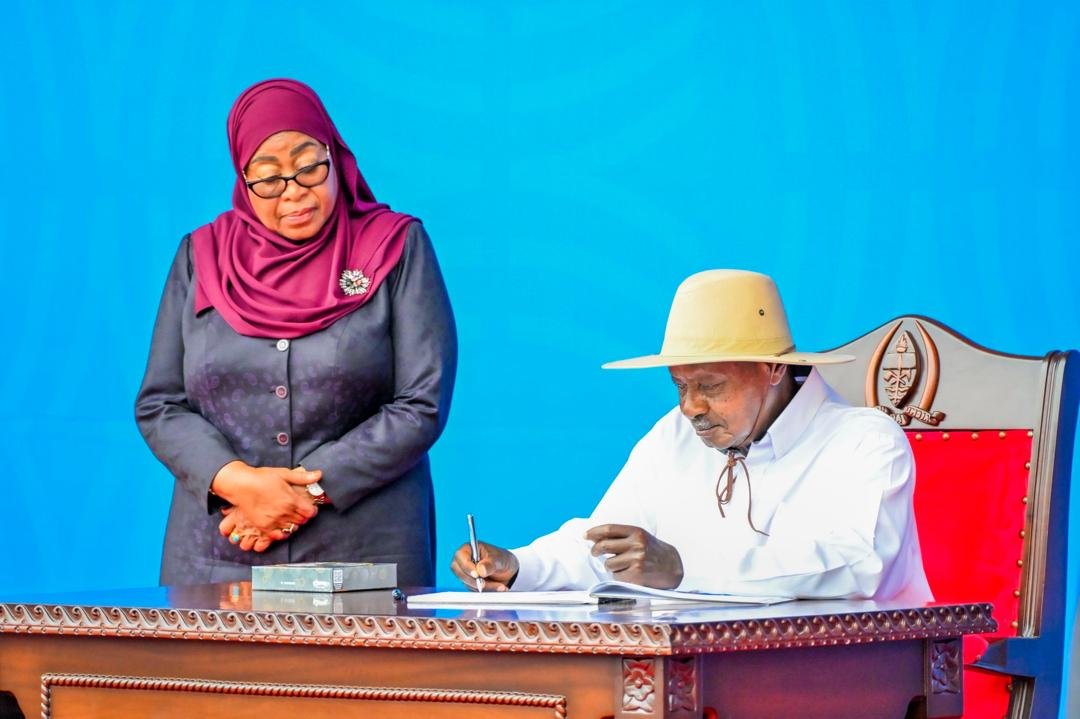
Tanzania has received a major diplomatic boost after Uganda agreed to withdraw from the race for a non-permanent seat on the United Nations Security Council and instead back Tanzania’s bid, a move that strengthens regional cooperation within East Africa.
The understanding was reached during talks between President Samia Suluhu Hassan and Ugandan President Yoweri Kaguta Museveni in Dar es Salaam during Museveni’s official visit.
President Samia said the decision followed open and cordial discussions rooted in the long-standing relationship between the two neighbouring countries. She explained that the contested Security Council seat falls under the East African rotation, making unity among countries in the region both strategic and necessary. Uganda’s decision to step aside was therefore framed as an act of regional responsibility rather than political competition.
Diplomatic observers say such coordination enhances East Africa’s collective influence in global affairs, particularly at the UN Security Council, which plays a central role in decisions on international peace, security, and conflict management. With Uganda’s backing, Tanzania’s bid is now viewed as stronger and more representative of regional consensus.
In return, Tanzania has pledged to support Uganda’s future ambition to seek a similar leadership role within the African Union, reflecting a shared commitment to continental solidarity and long-term diplomatic cooperation. Analysts say the reciprocal support highlights a growing trend among African states to align their strategies in international forums rather than compete against one another.
Also Read; Congo President Seeks Another Term at 82
Beyond the UN bid, the two leaders also held discussions on security challenges facing the Great Lakes region of Africa, which continues to experience instability in some areas. President Museveni, who currently serves as Chairperson of the regional grouping, outlined plans to initiate dialogue aimed at restoring peace and stability.
President Samia reaffirmed Tanzania’s readiness to support these peace efforts, emphasizing that insecurity in the Great Lakes region has far-reaching consequences, including displacement, humanitarian challenges, and economic disruption. She stressed that peace in the region is essential for sustainable development and cross-border cooperation.
The Great Lakes region brings together Tanzania, Uganda, Kenya, Rwanda, Burundi, and the Democratic Republic of the Congo—countries linked by shared borders, trade ties, and major water bodies such as Lake Victoria and Lake Tanganyika. Observers note that instability in one country often spills across borders, making regional collaboration unavoidable.
As the UN election process continues, Uganda’s decision to support Tanzania is widely seen as a strong signal of unity and pragmatic diplomacy. If elected, Tanzania is expected to use its position to advocate for African priorities, promote dialogue, and strengthen multilateral cooperation on the global stage.