MWE Correspondent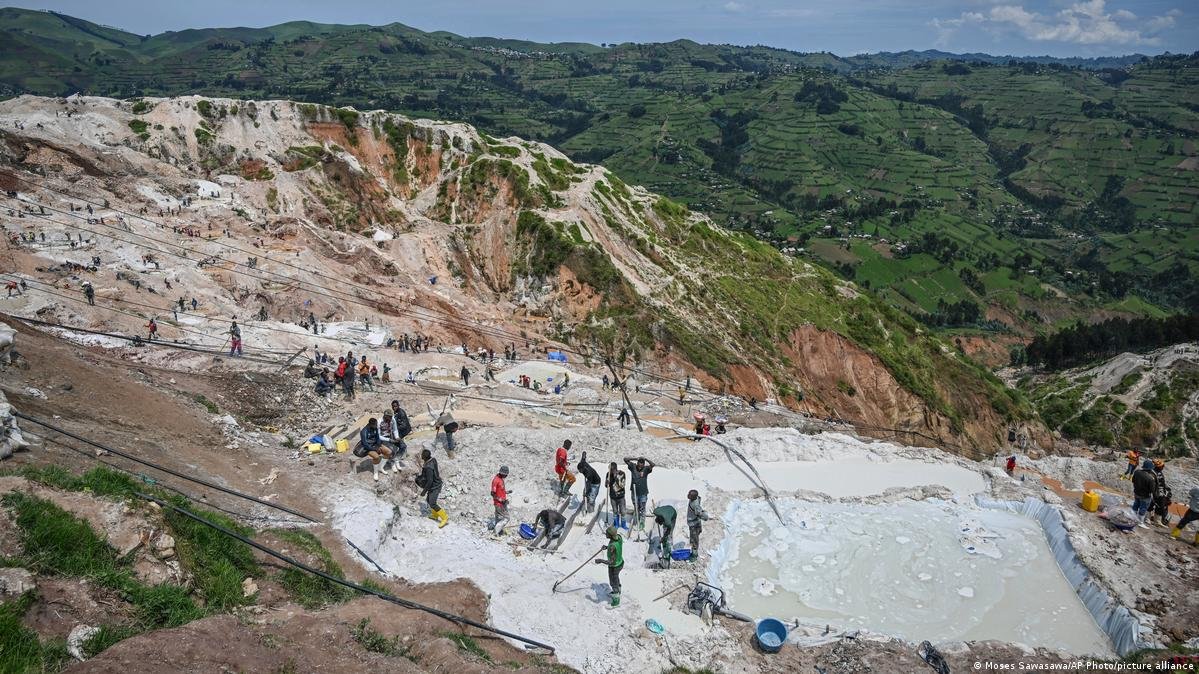
The government of the Democratic Republic of Congo (DRC) has expressed grave concern after reports emerged that approximately 200 people may have died following massive landslides at the Rubaya mine in the eastern part of the country, an area currently under the control of armed groups.
According to official statements, since 2021, the M23 rebel group has controlled large portions of eastern DRC, a region rich in minerals. The Rubaya mine in North Kivu province produces between 15 and 30 percent of the world’s coltan, a mineral critical in the manufacture of electronic devices such as laptops, mobile phones, and other high-tech equipment.
The government reported that thousands of children and youth are employed daily in hazardous conditions at these mines, often equipped with only rudimentary tools like shovels, buckets, and basic footwear.
The Ministry of Communications said that a portion of the hill at the mine collapsed on Wednesday afternoon, followed by a second landslide on Thursday morning. The Rubaya mining area is located on steep mountains with large terraces, and dirt roads that often become inaccessible during rain, creating perilous conditions for workers.
Eraston Bahati Musanga, the North Kivu governor appointed by M23, confirmed that several bodies have been recovered from the debris, but he did not provide an exact death toll. Those injured have reportedly been taken to nearby health facilities for treatment.
Also Read; US Senator Warns of Rift in Uganda Security Ties
Eastern DRC, which borders Rwanda and Burundi, has been plagued by continuous conflict for over 30 years. The M23 group has established a governance system resembling state authority to control the Rubaya mine, reportedly earning about USD 800,000 per month through coltan taxes.
The DRC government has accused Rwanda of exploiting the rebel group to illegally extract Congo’s mineral resources and called on the international community to intervene, emphasizing the scale of the disaster and describing it as a “planned theft” of national wealth.
Experts warn that the combination of armed control, unsafe mining practices, and natural hazards makes the region one of the world’s most dangerous areas for coltan production. The situation has highlighted the vulnerability of child laborers and local communities who are directly affected by mining and conflict.
International humanitarian organizations have urged rapid relief and stricter oversight, warning that failure to secure mines and protect workers could lead to further tragedies. Meanwhile, government authorities are coordinating with local officials and rescue teams to manage the aftermath and prevent additional casualties.