MWE Correspondent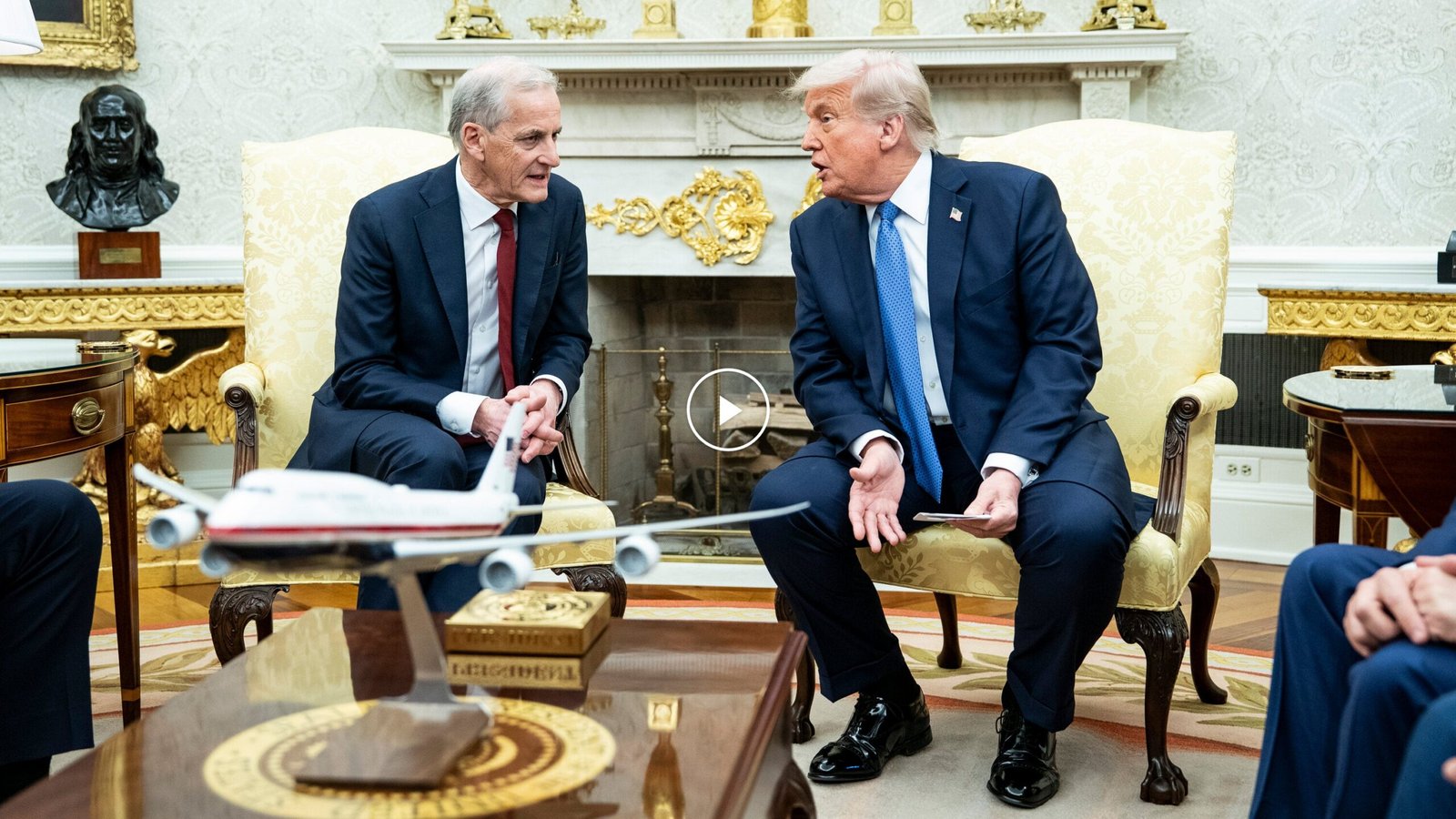
U.S. President Donald Trump has significantly escalated diplomatic tensions with European allies by publicly linking his controversial campaign for control of Greenland to his disappointment over not receiving the Nobel Peace Prize, triggering an international standoff involving Denmark, Norway and the North Atlantic Treaty Organization (NATO).
In what has become one of the most unusual episodes of recent geopolitics, a message sent by Mr. Trump to Norwegian Prime Minister Jonas Gahr Støre has inflamed tensions. In the message and subsequent public statements, Trump said that after being passed over for the Peace Prize, he no longer felt an “obligation to think purely of peace,” and linked this to his determination to secure what he described as “complete and total control” of Greenland.
Greenland is a largely autonomous territory within the Kingdom of Denmark and holds immense strategic importance due to its location in the Arctic and proximity to polar resources and military interests. Trump has argued that the United States must assert dominance in the region to prevent influence from rival powers, including Russia and China — framing this as essential to global security.
The president’s remarks have sparked a sharp reaction from Denmark and other allied governments. Copenhagen has reiterated that Greenland’s sovereignty is non‑negotiable and grounded in international law, while Norwegian officials were quick to clarify that the Nobel Peace Prize is awarded independently of their government, underscoring the factual inaccuracy in Trump’s implication that Norway was responsible for the snub.
European leaders have also expressed concern that Trump’s language, including threats of tariffs against Denmark, Norway, and other NATO members, threatens to unravel decades of transatlantic cooperation.
Also Read; Europe Pushes Back Against Tariff Threats Over Greenland
The European Union is reportedly preparing a coordinated response to what one senior official described as “coercive diplomacy,” with discussions underway about possible trade measures if the threats are carried out.
In addition to diplomatic pushback, protests have taken place in Denmark and Greenland under slogans such as “Hands off Greenland,” where citizens and rights advocates called for the preservation of self‑determination and respect for sovereign governance.
Within the United States, Trump’s stance has drawn both support and criticism. Some political allies hail his assertive approach as safeguarding American strategic interests, while critics warn the rhetoric risks damaging NATO unity, undermining long‑standing alliances, and shifting foreign policy motivations from cooperative security to personal grievance.
Experts say the episode highlights broader geopolitical shifts as global powers vie for influence in the Arctic, with climate change opening new shipping routes and access to untapped natural resources. Analysts stress that any potential change in Greenland’s status or governance must occur through diplomatic negotiation and respect for international norms, rather than unilateral pressure or coercion.