MWE Correspondent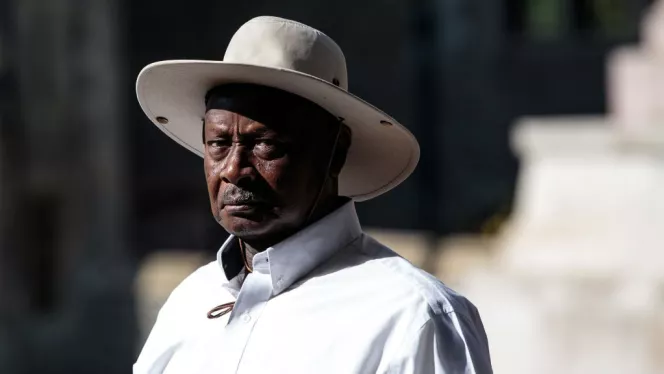
Uganda is once again at a critical political moment as President Yoweri Museveni, who has ruled the country since 1986, positions himself for a seventh term in office, a move that would further extend one of Africa’s longest-serving presidencies.
The development has reignited debate at home and abroad about leadership longevity, democratic governance and the future direction of the East African nation.
Museveni, now in his late seventies, first came to power nearly four decades ago after leading a guerrilla war that toppled a series of unstable governments. His rise marked the end of years of turmoil, and for many Ugandans in the late 1980s, his leadership initially symbolized stability, national rebuilding and economic recovery. Over time, Uganda gained a reputation as a relative anchor of security in a volatile region, while attracting foreign investment and international support.
However, as Museveni’s tenure lengthened, so too did criticism of his style of governance. Constitutional reforms have played a central role in shaping his continued hold on power. In 2005, presidential term limits were removed, clearing the way for him to run indefinitely. More than a decade later, parliament passed another amendment scrapping the presidential age limit, a move widely seen as tailored to allow Museveni to remain eligible for office. These changes fundamentally altered the framework of Uganda’s Constitution and continue to spark heated political debate.
As Uganda prepares for another election cycle, the political environment remains deeply polarized. Opposition figures argue that prolonged rule has weakened democratic institutions, while accusing the government of restricting political freedoms and using state machinery to suppress dissent. Elections under Museveni’s administration have repeatedly been contested, with opposition candidates rejecting results and citing irregularities, intimidation and uneven access to media.
The government has consistently denied these allegations, maintaining that elections are conducted in line with the law and that Museveni’s victories reflect popular support, particularly in rural areas. Officials point to infrastructure development, expanded access to education and health services, and Uganda’s role in regional peacekeeping as evidence of continued public confidence in the president’s leadership.
Also Read; Africa Bears Climate Burden Despite Minimal Global Emissions
Nevertheless, governance concerns persist. Anti-corruption campaigners and civil society groups argue that entrenched power has fostered patronage networks and weakened accountability. International observers have also expressed concern about the shrinking civic space, especially during election periods marked by arrests of opposition supporters and restrictions on public gatherings. Human rights organizations frequently raise alarms about the treatment of political activists and journalists, placing Uganda’s democratic credentials under scrutiny.
Regionally, Museveni remains a significant figure. He has played a key role in East African and Great Lakes diplomacy and has been a prominent contributor to regional security initiatives. Supporters argue that his experience provides continuity in a region facing ongoing security and economic challenges, while critics counter that stability should not come at the expense of democratic renewal.
The question of succession looms large. With Museveni seeking another term, uncertainty surrounds what leadership transition in Uganda might eventually look like, and whether existing institutions are strong enough to manage change peacefully. For many Ugandans, particularly younger voters who have known no other president, the election represents more than a contest of candidates—it is a referendum on the country’s political future.