MWE Correspondent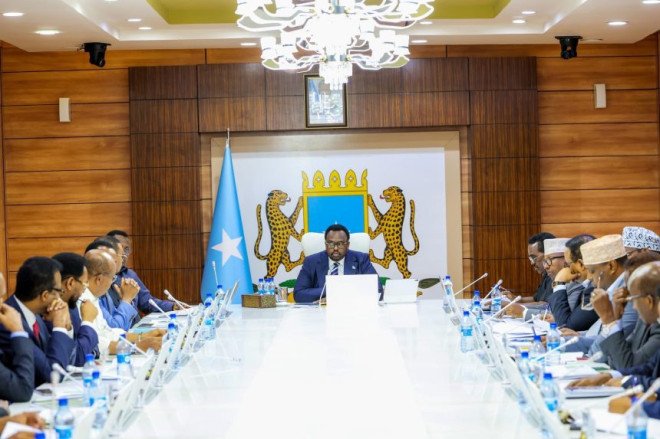
Somalia has taken a decisive step in its foreign relations by cancelling all agreements previously signed with the United Arab Emirates, saying the Gulf state’s recent actions threaten the country’s sovereignty and national unity.
The announcement marks a new chapter in the often-complex relationship between Mogadishu and Abu Dhabi, and reflects Somalia’s growing assertiveness on regional and international issues.
In a statement released on Monday, January 12, 2026, the Somali government said the decision followed a detailed review by the Cabinet of what it described as “recent developments” involving the UAE. The move applies across the board, covering all federal institutions, affiliated agencies, and regional administrations, and effectively nullifies existing cooperation frameworks with the Gulf state.
Information Minister Daud Aweis Aden Duale said the Cabinet acted within its constitutional mandate to protect Somalia’s territorial integrity. He stressed that the cancellation affects agreements linked to port operations, security coordination, and military cooperation, signaling a complete reset rather than a partial suspension.
A major source of tension is Somalia’s longstanding dispute over Somaliland, a self-declared breakaway region that the federal government considers an inseparable part of the country. Officials in Mogadishu believe the UAE has quietly supported initiatives connected to Israel’s reported move to recognize Somaliland as an independent state. Such a development, Somali leaders argue, would undermine the country’s unity and set a dangerous precedent in the Horn of Africa.
The cancelled arrangements include cooperation at three strategically important ports—Berbera, Bosaso, and Kismayo—which are vital to Somalia’s economy and regional trade routes. Control over port agreements has been a sensitive issue for years, with the federal government increasingly pushing back against deals signed by regional authorities without central approval. Analysts say the latest move reflects Mogadishu’s determination to reassert oversight over key national assets.
Also Read; President Samia Calls for Justice, Integrity in Courts
The dispute has also been influenced by wider regional dynamics. Somalia’s decision follows claims by the Saudi Arabia-led coalition in Yemen that the UAE secretly transported a separatist leader out of Yemen through Berbera. While the allegation has not been independently verified, it has fueled concerns in Mogadishu about Somalia being used as a staging ground in the wider Yemen conflict and other regional rivalries.
Relations between Somalia and the United Arab Emirates have been uneven in recent years. The UAE has previously been involved in security training and infrastructure support, but Somali officials have increasingly insisted that all foreign engagement must align with federal laws and respect national sovereignty. This stance has gained traction as Somalia seeks to strengthen state institutions after decades of instability.
Regional observers say the cancellation of the agreements sends a clear message that Somalia is willing to bear diplomatic and economic costs to defend its territorial integrity. At the same time, they note that both sides may eventually seek quiet diplomacy to prevent a prolonged rift that could affect trade and security cooperation in the Horn of Africa.
The UAE has yet to issue an official response to the announcement. As the situation develops, attention will focus on whether dialogue can be restored or whether the decision signals a longer-term shift in Somalia’s foreign policy. For now, the move underscores Mogadishu’s resolve to assert its sovereignty and redefine its partnerships on its own terms.