MWE Correspondent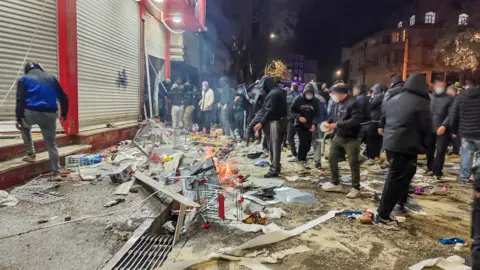
Iran’s government has moved to redefine the wave of unrest sweeping the country, insisting that what many citizens and observers describe as protests should instead be viewed as a coordinated campaign of terrorism aimed at destabilising the state.
In a strongly worded statement, Foreign Minister Abbas Araghchi said the violence unfolding in several cities is not the result of spontaneous public demonstrations but of organised groups deliberately attacking state institutions and economic centres. According to him, these groups have targeted government buildings, police stations and private businesses, actions he said are intended to create fear, disrupt daily life and weaken national authority.
The comments come at a time when Iran is experiencing one of its most serious domestic crises in recent years. Demonstrations initially erupted over the rising cost of living, inflation and unemployment, reflecting deep frustration among ordinary citizens struggling to cope with worsening economic conditions. Over time, the protests have expanded in scale and intensity, spreading to multiple provinces and drawing in a broad cross-section of society, including workers, students and small business owners.
Independent human rights organisations report that more than 500 people have been killed since the unrest escalated, with thousands more injured or detained. Iranian authorities have not confirmed these figures, but they acknowledge that dozens of security personnel have also died in clashes. The government argues that security forces are acting to restore order and protect civilians, while critics accuse them of using excessive force against largely unarmed demonstrators.
Iran’s economic difficulties are widely seen as the root cause of the unrest. Years of sanctions, currency depreciation and reduced oil revenues have taken a heavy toll on household incomes.
Also Read; China Urges Diplomacy, Rejects Foreign Interference Pressure
Prices of basic goods have surged, while wages have failed to keep pace. Analysts say these pressures have created fertile ground for anger and despair, particularly among young people with limited job prospects.
Tehran has also suggested that foreign actors are exploiting the situation to inflame tensions. Officials frequently accuse external powers of backing hostile groups and spreading misinformation, a claim rejected by Western governments. The dispute has added to already strained relations between Iran and parts of the international community, with renewed calls for investigations into alleged abuses under international human rights law.
Historically, Iran has faced several waves of unrest since the Iranian Revolution of 1979, many of them linked to economic hardship. Each episode has highlighted the challenge facing the authorities: how to maintain stability while addressing public demands for better living standards and greater accountability.
Despite the hardline rhetoric, some observers believe the government may eventually be forced to introduce economic reforms or social concessions to calm public anger. For now, however, the official narrative remains firmly focused on security, framing the crisis as a battle against terrorism rather than a popular outcry over daily hardships.